PARIS – Archos SA reported setting up a center of excellence in med-tech. They are working in close partnership with various SATTs – technology transfer acceleration offices, who finance innovative research lab projects in France. Their new division, Medical Devices Venture, is designed to help develop startups targeting the health care disciplines of the future that combine technology, machine learning and a platform for collaboration.
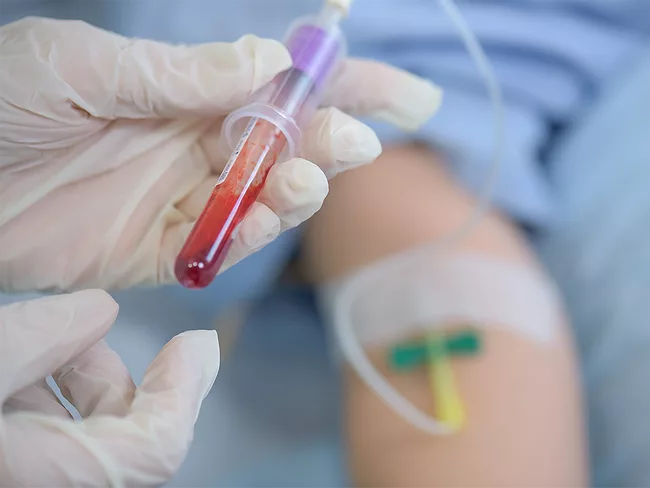
HONG KONG – Celltrion Inc. has received the European CE mark for Tekitrust, its COVID-19 tests kit developed with Mico Biomed Co. Ltd. “Mico, which is a diagnostic device specialist, partnered with Celltrion to combine both companies’ strengths in the test kit sector,” a Celltrion spokesperson told BioWorld. Mico will manufacture the kits, while Celltrion handles marketing and sales.
In a first for the biotech industry, the European Commission (EC) has imposed a €7.5 million (US$9.05 million) fine on Sigma-Aldrich, under the EU’s 2004 Merger Regulation, for providing incorrect or misleading information during a merger investigation.
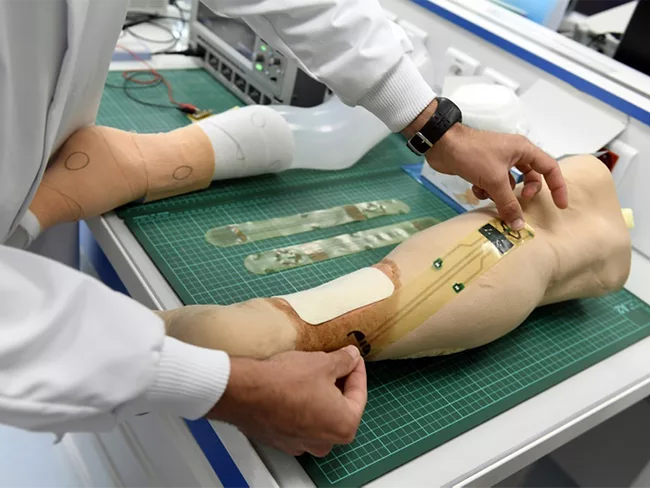
PARIS – Urgo Group SAS has just been awarded $27.7 million in financial support from the French government, to help develop artificial skin for treating deep skin wounds and massive burns.
PARIS – One month before the Medical Device Regulation (MDR) comes into force in the EU, the European Association of Notified Bodies (Team-NB) has released the results of its latest annual survey. This survey of CE-marked medical devices compiled data from 26 notified bodies who were members of Team-NB at the end of 2020. According to Team-NB’s 2020 survey, a total of 18,784 valid CE certificates had been issued by last year, representing an increase of 35% over 2010.
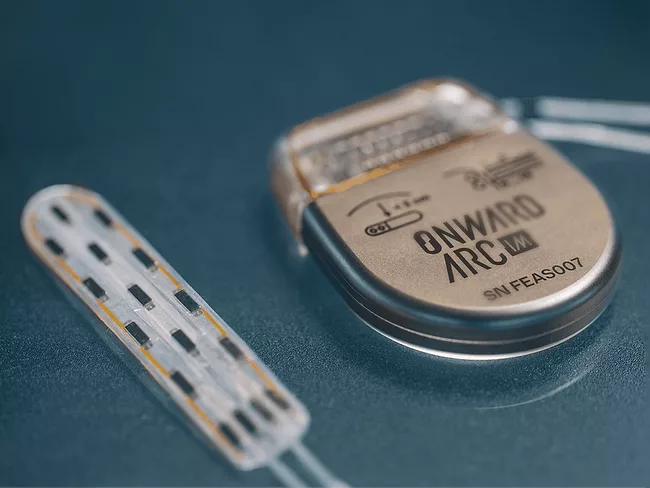
Onward NV secured $32 million in a new financing round led by Invest-NL and Olympic Investments. All the company’s existing investors also participated in the round, including medical technology investors LSP, Inkef Capital, Gimv, and Wellington Partners. The new funds will support Eindhoven, Netherlands-based Onward's development and commercialization of its Arc-Im and Arc-Ex spinal cord systems, designed to provide targeted spinal cord stimulation to help people with spinal cord injuries regain movement and independence.
PARIS – Imageens SAS just raised a $1.4 million seed round to develop its two artificial intelligence (AI) systems in the field of medical imaging in Europe. Its first solution Artfun+, an AI software application, makes it possible to anticipate cardiovascular pathology thanks to new prognostic biomarkers. Its second product is Label, an algorithm which automatically classifies and assesses medical imaging data.
LONDON – Med-tech investor Endeavour Vision reported the final close of its Medtech Growth II fund at $375 million. The fund will invest in commercial stage companies with products that advance the standard of care or bring efficiencies to how health care systems operate. That strategy is expected to result in two-thirds of the money going into device companies and the remainder to digital health specialists.
LONDON – Startup company Glucomodicum Oy is preparing to commercialize a new technique for the needle-free monitoring of blood glucose levels, applying the principles of magnetohydrodynamics to noninvasively extract interstitial fluid through the skin.
Prenetics Ltd. is working with Oxford University researchers again to develop molecular diagnostic testing for the new COVID-19 variants, six months after it acquired Oxsed Ltd., a University of Oxford University spinoff to enable rapid airport testing. On April 19, Hong Kong-based Prenetics inked a multimillion-dollar partnership with the University of Oxford and Oxford Suzhou Center for Advanced Research (OSCAR) to upgrade the molecular testing technology Oxlamp for infectious diseases.
 RSS
RSS