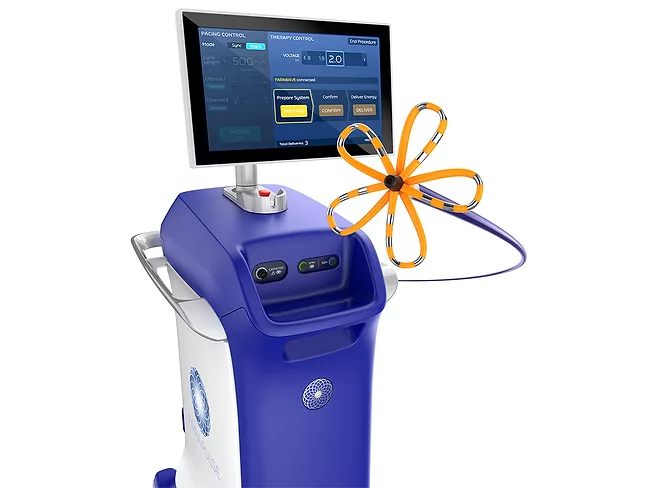
The U.K.’s National Institute for Health and Care Excellence (NICE) recommends the use of pulsed field ablation as an option to treat NHS patients with atrial fibrillation. NICE said evidence shows the procedure reduces atrial fibrillation and its symptoms, increases quality of life in the short term and raises no major safety concerns.
Actithera A/S is poised to bring small-molecule pharmacokinetics to radiopharmaceuticals after closing a $75.5 million series A that will fund initial clinical development of a candidate targeting the elusive fibroblast activation protein (FAP).
Alcon AG plans to acquire Lumithera Inc., adding its photobiomodulation (PBM) device designed to treat early and intermediate dry age-related macular degeneration (AMD) to the Alcon portfolio. The financial terms of the deal were not disclosed.
The move continues Alcon’s strategic expansion in eye care, following on its recent acquisitions of Aurion Biotech Inc. and Lensar Inc.
Glucomodicum Oy reported positive results from a clinical study in which its needle-free continuous glucose monitor, Talisman, was tested in participants across both standard multi-hour glucose tolerance and ambulatory conditions involving exercise and meals.
Representatives of patients’ groups, industry bodies and venture philanthropy funders are calling for a renewal of the U.K. Rare Diseases Framework, to put fresh momentum behind translational research and clinical trials, streamline regulatory oversight and improve access to therapies.
Accunea Ltd.’s bioanalysis technology, Renosure, can measure creatinine clearance in machine perfused kidneys, according to data presented at the recent European Society of Organ Transplantation 2025.
The EU is to harness the “silver economy” of its aging population to help drive innovation and growth as part of a new strategy to make Europe “the most attractive place in the world for life sciences by 2030.”
The U.K. government revealed its much anticipated 10-year plan to get the National Health Service back on its feet and fit for the future. It is betting on five technologies – data, AI, Genomics, wearables and robotics – to drive the change needed to transform the health care system.
The U.K. Medicines and Healthcare Products Regulator Agency dropped a guidance for digital mental health technologies that clarifies several key points, such as when the DMHT qualifies as software as a medical device.
After making a significant strategic investment in Oxganox Ltd. earlier this year, Terumo Corp. returned to buy the company. This morning, the companies announced that Terumo would acquire Organox for $1.5 billion, marking Terumo’s entry into the organ transplant sector. The transaction is one of the largest exits ever for the U.K. med-tech sector.
 RSS
RSS