Medicud Srl received over €1.3 million (US$1.4 million) in seed funding to support clinical trials and secure regulatory approval of Dryum, its incisional negative pressure wound therapy system.
The EU’s Medical Devices Coordination Group (MDCG) issued another revision of its guidance for risk classification for in vitro diagnostics — the fourth such rewrite of a guidance that came out in 2020.
The on-again, off-again U.S. tariffs are off again, at least for now, for more than 75 countries that have reached out to the Trump administration to negotiate instead of retaliating. The 90-day pause will provide some breathing room for the med-tech industry. Pharmaceuticals and active pharmaceutical ingredients were among the few products exempted from the reciprocal tariffs, but that exemption for pharmaceuticals was expected to be short-lived. Meanwhile, pharma CEOs warned European Commission President Ursula von der Leyen April 8 that, unless the EU quickly changes its policy, pharmaceutical research, development and manufacturing is increasingly likely to be directed to the U.S.
In the wake of the pandemic, many leading med-tech companies took steps to on-shore and near-shore manufacturing, a move that could protect significant numbers of players from the worst of the effects of the tariffs announced by the Trump administration last week.
Med tech and diagnostic companies in Europe are considering strategies to navigate the U.S. market following President Trump’s introduction of reciprocal tariffs on imports. While some companies are more exposed than others, there’s no doubt that many will feel the pain.
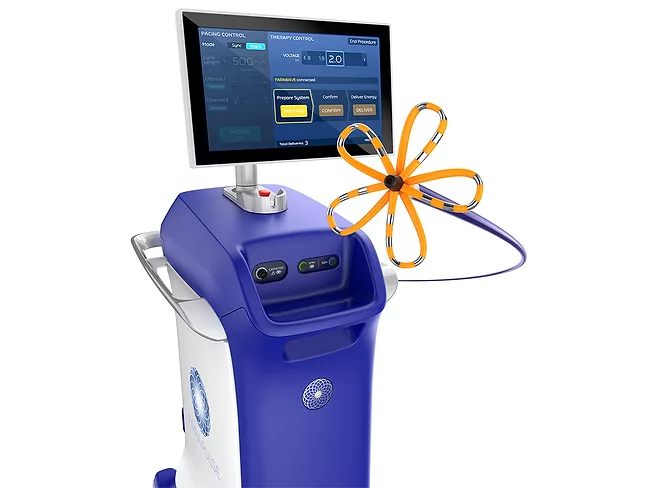
Pulsed field ablation using Boston Scientific Corp.’s Farapulse system was non-inferior and even superior, slightly, to Medtronic plc’s Artic Front Advance cardiac cryoablation system in treating patients with paroxysmal atrial fibrillation.
French venture capital firm Karista led a series B extension financing round for Samantree Medical SA to take the total raised in the round to $20 million. The funds will be used to launch Samantree’s Histolog scanner in the U.S. market.
The Trump administration’s declaration of a new round of tariffs did not sit well with trade associations, but the impact of those tariffs may vary somewhat by company. Analysts said the lack of clarity regarding the impact of tariffs makes it difficult to predict the impact on the device and diagnostics industries, leaving investors and customers alike with a large overhang of uncertainty.
Calla Lily Clinical Care Ltd. secured £1 million (US$1.3 million) in funding from the National Institute for Health and Care Research to begin clinical trials of Callavid, a drug delivery technology which treats women at risk of miscarriage.
At first glance, it appears that biopharmaceuticals dodged the latest U.S. tariff bullet; med-tech, not so much. According to the executive order President Donald Trump signed in the Rose Garden late yesterday, pharmaceuticals are one of the few things exempt from the new country-by-country reciprocal tariffs that will be going into effect over the next week. However, U.S.-based manufacturers of both drugs and devices could face supply chain disruptions, further market restrictions and increased operating costs as the new tariffs take effect and other countries retaliate.
 RSS
RSS