The IPO market for med-tech companies continues to set new records. With one IPO closed the last week of June, two slated for the first week of July and another pending, 2025 will shortly exceed the total number of IPOs closed in the previous two years combined as well as the number completed in 2022.
The U.K. Medicines and Healthcare Products Regulatory Agency reported June 24 it joined a global regulatory network for AI that is part of the Health AI regulatory initiative – a program that will invite another nine regulatory agencies to take part in the initiative in the months ahead.
The U.K. National Health Service may or may not deploy transcatheter aortic valve replacement devices as widely as in the U.S., but the National Institute for Health and Care Excellence officially staked out the position the data are not yet compelling for anyone other than high risk patients.
As the health care industry eagerly awaits the U.K. government’s 10-year plan to transform the national health service, persistent systemic challenges may make change difficult to realize. While the deployment of AI, medical technologies and diagnostic tools are crucial to this transformation, barriers to adoption must be addressed for the plan to be successful.
The U.K. government will soon unveil its 10-year health plan to transform the National Health Service. The aim is to tackle the problems in the 76-year-old system and make it fit for the future. The aim is to tackle the problems in the 76-year-old system and make it fit for the future.
The U.K. government will offer women home-testing kits for cervical screening as part of an effort to tackle barriers and get more of them taking this potentially life-saving test.
Bioprosthetic heart maker Carmat SA shares collapsed on June 23, reaching €0.28 on the Paris Stock Exchange after the company announced it would run out of cash by the end of the month without immediate financial support.
The U.K. Medicines and Healthcare Products Regulatory Agency opened a second round in its AI airlock program although this round, like the first round, will be limited to four applicants.
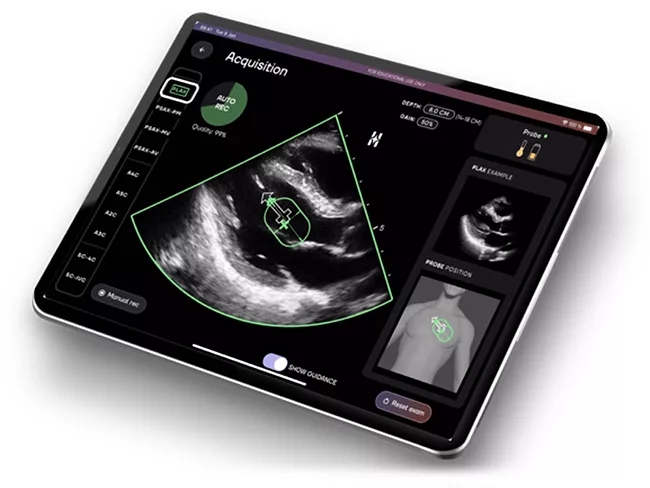
Deski SAS raised $6 million in a seed round to support the launch of its cardiac imaging software, Heartfocus, in the U.S. The AI-driven heart exam tool helps health care professionals perform echocardiograms from any ultrasound probe to enable the early detection of heart disease.
 RSS
RSS