A U.K. real world nationwide study of the clinical effectiveness of hybrid close loop (HCL) insulin administration systems has found they improve glycemic control in type 1 diabetes compared to the earlier generation of devices.
Thirona BV spun out its retina division into a stand-alone business, Thirona Retina BV, focused exclusively on the eye disease market, effective Jan. 1, 2023. The development comes after the recent expansion of Retcad, Thirona’s flagship solution for eye disease screening. Thirona BV will continue to develop artificial intelligence (AI)-driven systems for precision medicine in lung disease.
Bringing notified bodies (NBs) into a med-tech regulatory system has proven to be no mean feat in the European Union, but the U.K. Medicines and Health Care Products Regulatory Agency (MHRA) seems not to suffer from such impediments. The agency just added several in vitro diagnostic (IVD) technological areas to the roster of tests that can be reviewed by UL International UK, an addition that will help ensure patients can obtain the tests they need.
In the absence of a European framework, industry is stepping up with an initiative to help EU patients cross borders to participate in clinical trials.
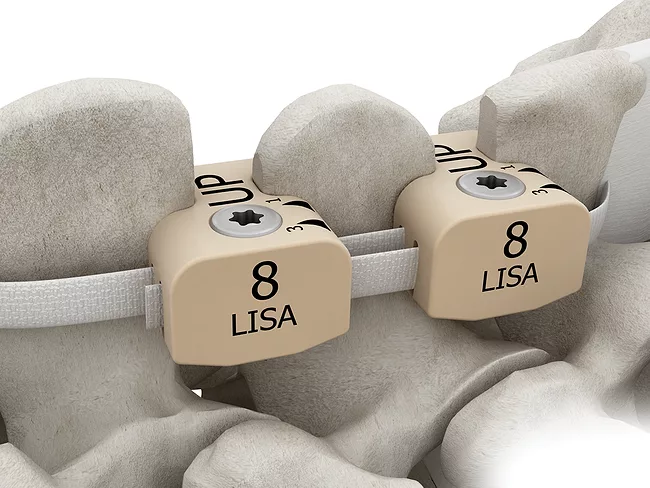
Companion Spine SAS has acquired Backbone SAS, a company that develops implantable functional motion restoration devices for treating spinal disorders. The inclusion of Backbone's flagship medical device, Lisa – a lumbar implant for stiffness augmentation – completes the Companion Spine portfolio.
The European Commission is spending €242 million (US$261 million) to create the first rescEU strategic reserve of chemical, biological, radiological and nuclear (CBRN) medical countermeasures.
Urgo Group SAS has launched, in the presence of the Minister of Health François Braun, the creation of Genesis research laboratory on artificial skin. “Our objective with this novel tissue engineering laboratory is to create artificial skin for helping the health care professionals in the effective treatment of severe wounds and quickly curing the patients,” Guirec Le Lous, CEO of Paris-based Urgo Medical, told BioWorld. Urgo Medical is the advance wound care division of Urgo Group SAS.
The European Union’s Medical Device Regulation (MDR) and In Vitro Diagnostic Regulation (IVDR) each allow a hospital to develop a device or an in vitro diagnostic for use solely in that hospital, but there is no regulatory free pass despite the lack of commercial intent. While the latest guidance on these in-house tests acknowledges that the hospital must determine the degree to which it must comply with the relevant regulation, any hospital that makes and uses an in-house diagnostic or device must develop a risk management mechanism for that device or diagnostic, not an easy lift for entities that may be glancingly familiar at best with conventional regulatory schemes.
In what is claimed as the largest study of how digital technologies were applied to support population level research during the pandemic, scientists at the U.K. Medical Research Council’s epidemiology unit at Cambridge University have reported high, sustained levels of engagement in a fully remote COVID-19 study that ran at a time when visits to a study center were not possible.
French consortium Booster is developing a personalized emergency treatment of ischemic stroke in its work on brain clot personalized therapeutic strategies for stroke emergent reperfusion. The aim is to refine the patient prognosis based on blood clot clinical and radiological characteristics and propose more effective drug treatments with a new generation of intracranial stents.

 RSS
RSS