The U.K.'s Medicines and Health Care Products Regulatory Agency posted a series of draft new regulations that will increase the requirements for device makers doing business in the U.K.
The U.K. National Institute for Health and Care Excellence endorsed the Qb Test by Qbtech AB of Stockholm to aid in diagnosis of attention deficit/hyperactivity disorder in those aged 6 to 17.
The first bispecific antibody to win regulatory approval is about to make a comeback 10 years after being taken off the market in Europe for commercial reasons. Catumaxomab, then called Removab, and now reborn with the brand name Korjuny, received a positive opinion for the treatment of malignant ascites from the EMA’s Committee for Medicinal Products for Human Use (CHMP,) at its monthly meeting Oct. 14 to 17.
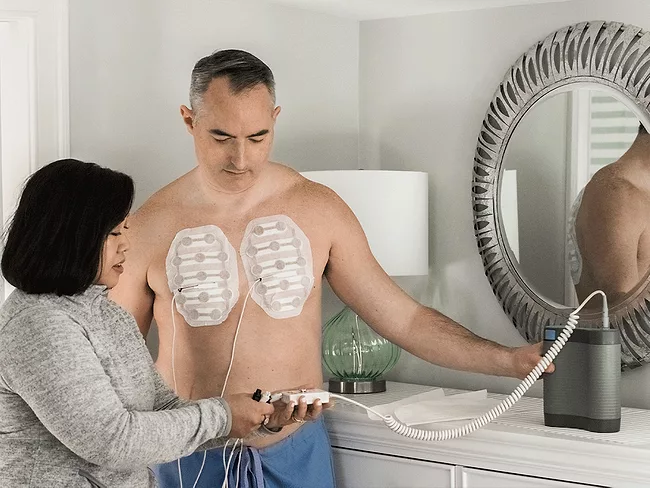
Novocure GmbH secured U.S. FDA approval for Optune Lua, a wearable device that delivers alternating electric fields or tumor treating fields that kill cancer cells. Indicated for use with PD-1/PD-L1 inhibitors or docetaxel in the second or subsequent line for the treatment of metastatic non-small-cell lung cancer following the failure of platinum-based regimens, the approval was driven by the significant improvement in overall survival rates seen in the LUNAR pivotal study for Optune Lua.
The saga of the EU's Medical Device Regulation (MDR) is far from over, but stakeholders were treated to another related dose of reality in a session at this year's Med Tech Conference here in Toronto. Several panelists pointed to a lack of harmonization regarding notified bodies' interpretation of the regulation, but Stryker Inc.'s Michel Marboeuf said this problem flows to some extent from a lack of harmonization among the member states' competent authorities, a condition that is likely to resist treatment in the near term.
Gene and cell therapies will drive innovation for the next 10 years, Claus Zieler, the chief commercial officer at Astellas Pharma Inc., said in the newest episode of the BioWorld Insider podcast. Developers are on the cusp of breakthroughs because a gene can now be replaced “and that means we can potentially cure a disease rather than intervening in a disease.”
Inventiva SA is back on course to complete phase III development of its metabolic dysfunction-associated steatohepatitis (MASH) drug, lanifibranor, after putting in place new financing of up to €348 million (US$379.4 million), including an immediate cash injection of €94.1 million.
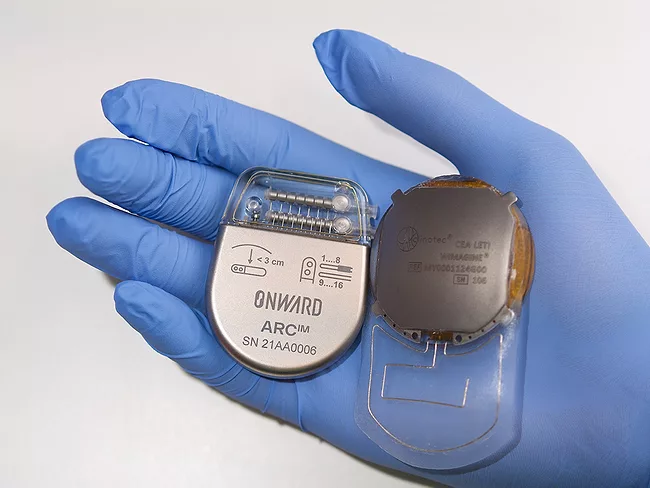
In an effort to shore up its position in a rapidly developing market for brain-computer interface (BCI) technologies, Onward Medical NV signed an exclusive license with France’s CEA-Clinatec to use its BCI chip as part the Arc-BCI system, which restores direct communication from the brain to the spinal cord.
H. Lundbeck A/S is to acquire Longboard Pharmaceuticals Inc. in an all-cash deal valuing the epilepsy specialist at $2.6 billion. The agreed price of $60 per share is a 54% premium to the closing price of Longboard stock (NASDAQ:LBPH) on Oct. 11 and represents the biggest deal in Lundbeck’s 110-year history. The acquisition will give the Copenhagen, Denmark-based pharma company ownership of bexicaserin, which in September entered phase III development in Dravet syndrome. The 5-HT2C agonist has the potential to treat this and other rare developmental and epileptic encephalopathies, for most of which there are no approved therapies.
The $15.3 million Mindpeak GmbH recently raised in its series A funding round will allow the company to be able to accelerate the development and deployment of its AI-based solutions, Felix Faber, CEO of Mindpeak, told BioWorld.
 RSS
RSS