Safe Orthopaedics SAS reported results from a biomechanical study comparing its new surgical technique Sycamore – a pedicle-anchored implant – with standalone balloon kyphoplasty. The results published in summer 2023 in the Journal of Experimental Orthopaedics showed a “significant increase” in compression strength with patients using Sycamore.
Tandem Diabetes Care Inc. obtained reimbursement in France for its Control-IQ technology, an advanced hybrid closed loop system for patients with type 1 diabetes that uses an algorithm to automatically adjust insulin in response to predicted glucose levels.
Fractus SA reported that it has successfully transferred its wireless implantable device technology to improve the way doctors monitor patients remotely, thereby boosting the adoption of implantable health care services by leveraging wireless connectivity.
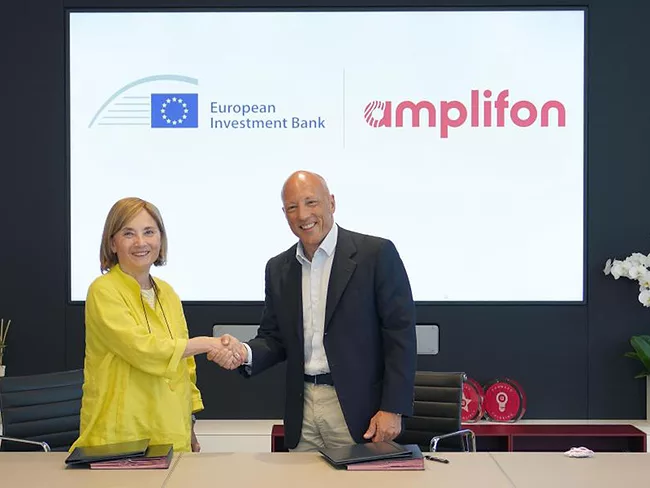
Amplifon SpA has secured $380 million from the EU-backed European Investment Bank (EIB) to accelerate its innovation and digitalization process for its advanced hearing aid technology. “This loan guarantee confirms that we are on the right path towards innovation and digital transformation, which has Italy and the European Union as its starting point,” said Enrico Vita, CEO of Amplifon SpA.
Neckepur SAS signed a licensing agreement with Assistance Publique-Hôpitaux de Paris (AP-HP) to develop an in vitro diagnostic technology to optimize the medical devices used in extracorporeal circulation. The agreement covers the rights to use a patent for a method of evaluating and optimizing the doses of drugs administered to patients admitted to the intensive care unit (ICU) who are undergoing treatment with devices such as hemofiltration, extracorporeal membrane oxygenation (ECMO), continuous hemodiafiltration, and adsorbent column circuits.
A recent bipartisan request for funding of a study on replacing U.S. drug patents with cash prizes is just one more symptom of a larger global malady that makes patents the scapegoat for bigger problems that have nothing to do with intellectual property (IP), David Kappos, board co-chair of the Council for Innovation Promotion (C4IP), told BioWorld.
Exor NV’s acquisition of a 15% stake in Royal Philips NV for approximately €2.6 billion (US$2.8 billion), is a boon for the health care tech company which has been suffering in recent years on the back of a product recall controversy. Netherlands-based diversified holding company Exor will become Philips’ biggest shareholder, and said it is committed to being a “long-term minority investor,” as it grows its investment in the health care sector.
Mdoloris Medical Systems SAS reported it has developed an automated system for regulating perioperative pain based on continuous optimization of parasympathetic tone. Closed-loop control systems are still rare in the anesthesia space, but they provide greater reliability in achieving set objectives, reduce the risk of human error and free the anesthesiologist from the burden of manually adapting the administration of the various therapies required for surgery.
A recent bipartisan request for funding of a study on replacing U.S. drug patents with cash prizes is just one more symptom of a larger global malady that makes patents the scapegoat for bigger problems that have nothing to do with intellectual property (IP), David Kappos, board co-chair of the Council for Innovation Promotion (C4IP), told BioWorld.
Artificial intelligence (AI) has been approved for use in the U.K. National Health Service (NHS) for the first time, after passing an expedited health technology assessment.
 RSS
RSS