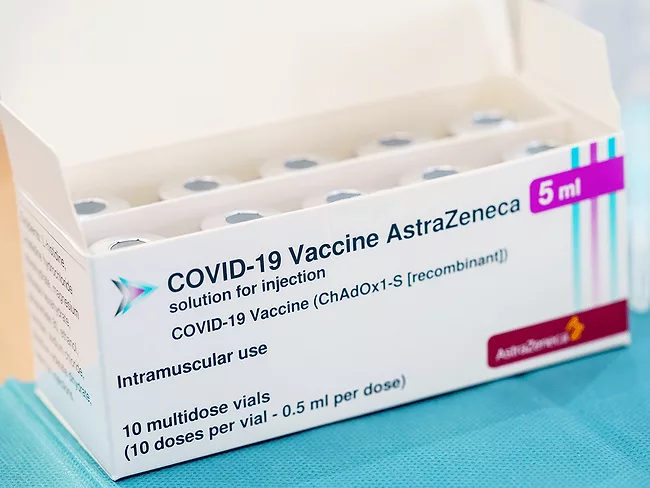
Astrazeneca plc’s saga of its COVID-19 vaccine continued this week with the European Commission (EC) deciding to begin legal action against the Cambridge, U.K.-based company, claiming it has failed to deliver doses in line with its contract.
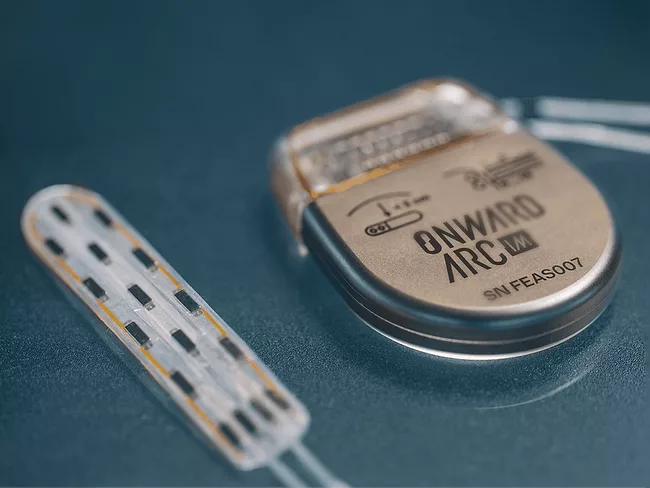
Onward NV secured $32 million in a new financing round led by Invest-NL and Olympic Investments. All the company’s existing investors also participated in the round, including medical technology investors LSP, Inkef Capital, Gimv, and Wellington Partners. The new funds will support Eindhoven, Netherlands-based Onward's development and commercialization of its Arc-Im and Arc-Ex spinal cord systems, designed to provide targeted spinal cord stimulation to help people with spinal cord injuries regain movement and independence.
PARIS – Imageens SAS just raised a $1.4 million seed round to develop its two artificial intelligence (AI) systems in the field of medical imaging in Europe. Its first solution Artfun+, an AI software application, makes it possible to anticipate cardiovascular pathology thanks to new prognostic biomarkers. Its second product is Label, an algorithm which automatically classifies and assesses medical imaging data.
LONDON – Med-tech investor Endeavour Vision reported the final close of its Medtech Growth II fund at $375 million. The fund will invest in commercial stage companies with products that advance the standard of care or bring efficiencies to how health care systems operate. That strategy is expected to result in two-thirds of the money going into device companies and the remainder to digital health specialists.
DUBLIN – The European Medicines Agency (EMA) has reiterated its support for Astrazeneca plc’s Vaxzervia COVID-19 vaccine, following an interim analysis of a data review, which the agency’s Committee on Human Medicinal Products (CHMP) has conducted over the past two weeks.
LONDON – A large scale U.K. study looking at the impact of COVID-19 vaccinations on antibody responses and new infections in 373,402 people in the general population has shown a single dose of vaccine cut infections by 65%. Symptomatic infections fell by 74% and infections with no reported symptoms by 57%, 21 days after receiving the first dose of either Astrazeneca plc’s or Pfizer Inc./Biontech SE’s vaccine.
LONDON – Startup company Glucomodicum Oy is preparing to commercialize a new technique for the needle-free monitoring of blood glucose levels, applying the principles of magnetohydrodynamics to noninvasively extract interstitial fluid through the skin.
Versant Ventures has closed three new funds with an aggregate raise of $950 million to allocate to the next wave of innovative startups across North America and Europe. The money is new, but everything else is more or less unchanged. “It’s the same strategy, same team, same geography, same operational model,” Versant chairman and managing director Brad Bolzon told BioWorld.
Prenetics Ltd. is working with Oxford University researchers again to develop molecular diagnostic testing for the new COVID-19 variants, six months after it acquired Oxsed Ltd., a University of Oxford University spinoff to enable rapid airport testing. On April 19, Hong Kong-based Prenetics inked a multimillion-dollar partnership with the University of Oxford and Oxford Suzhou Center for Advanced Research (OSCAR) to upgrade the molecular testing technology Oxlamp for infectious diseases.
DUBLIN – In keeping with the record-breaking year for biotech fundraising across the globe, the Swiss biotech sector also scaled new heights in 2020, with aggregate investment of CHF3.4 billion (US$3.7 billion), according to the newly published Swiss Biotech Report 2021. It represents almost a threefold increase on the CHF1.2 billion total it logged in 2019.
 RSS
RSS