A second activist investor has questioned the leadership of Glaxosmithkline plc’s CEO Emma Walmsley, after Bluebell Capital Partners Ltd. took a reported £10 million (US$13.7 million) stake in the embattled U.K. pharma.
The U.K. government has doubled down on its overarching strategy for artificial intelligence (AI) with a 10-year plan to sustain the nation’s place in the global AI race. One of the key considerations in this plan is to revisit the criteria for status as an inventor, a clear nod to the dilemma presented by proponents of allowing the DABUS algorithm to be named as an inventor.
The U.K. National Institute of Health and Care Excellence (NICE) has examined the evidence for the use of mitral valve-in-valve procedures and found the evidence for safety is well rounded despite concerns about several complications.
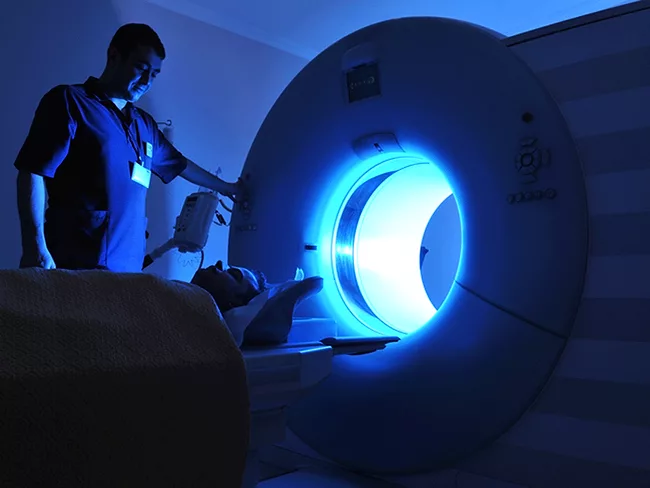
LONDON – A pan European research project is working with manufacturers and clinicians to set measurement standards that will transform magnetic resonance images from 2D and pictorial, to 3D and quantitative, significantly increasing their diagnostic power. The project, led by the U.K. metrology body, the National Physical Laboratory (NPL), aims to introduce consistency and specificity for diagnosing specific conditions, by setting independently verifiable ways of noninvasively measuring lesions and the composition of different tissues and organs.
While European health care systems have historically lagged the U.S. in terms of digital adoption, a report by investment firm Albion VC is highlighting how the pandemic has created the momentum for change.
The med-tech regulatory picture is already in a state of flux thanks to changes imposed by the EU, but device makers and those in the digital health space might soon be facing yet another series of profound changes in Europe. The U.K. Medicines and Health Care Products Regulatory Agency (MHRA) has proposed to revamp its regulatory framework for both traditional medical device and for software/artificial intelligence, adding yet more uncertainty to an already turbulent European regulatory environment.
LONDON – There were well-deserved celebrations in Paris on Sept. 20, as Jeito Capital toasted the oversubscribed close of its first fund at €534 million (US$625.5 million). This is claimed as the largest European venture fund dedicated to life sciences, exceeding the original target of €500 million, and with €340 million of the total raised under the constraints of the pandemic from January 2020 onward.
LONDON – Researchers in the U.K. have applied the heft of national population-level databases to devise a new algorithm that predicts those people who are most at risk of hospitalization and death from COVID-19, despite having received two doses of vaccine.
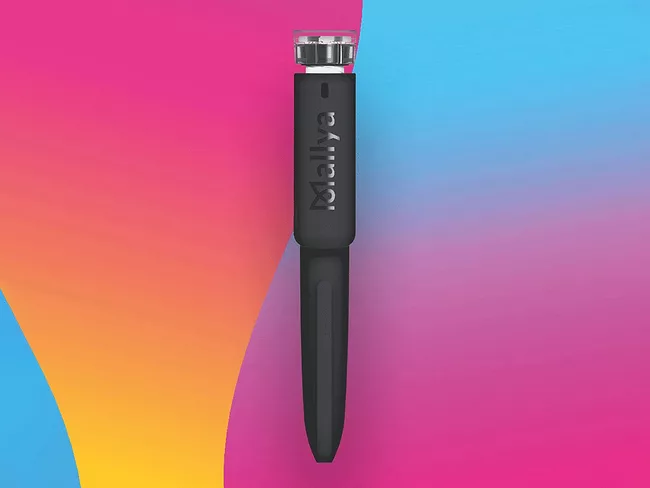
Merck KGaA has signed an agreement with French company Biocorp SA to develop a version of its Mallya smart device for monitoring human growth hormone (HGH) treatment. Mallya is a clip-on device for pen injectors that collects the dose and time of each injection and transfers the information in real time to a companion software using Bluetooth technology. The device is CE marked (Class IIb) and was first launched in France in 2020.
European regulators have rejected Pfizer Inc.’s tanezumab, casting further doubts on whether the FDA will okay the troubled drug that is intended as a non-opioid alternative for osteoarthritis pain.
 RSS
RSS