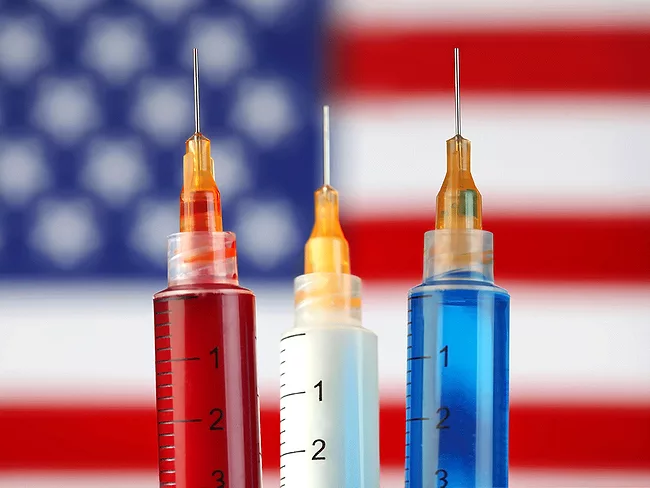
The CDC’s Advisory Committee on Immunization Practices (ACIP) deliberated the matter of third COVID-19 shots, with panel members voting whether to recommend “additional doses of mRNA COVID-19 vaccines as part of a primary [two-shot] series” in certain immunocompromised patients. A work group set up by ACIP decided previously that the desirable consequences outweighed undesirable ones in such a population.
Reiterating prescription drug pricing provisions included in an executive order issued in July, U.S. President Joe Biden provided a bit of context and a little more detail about what he has in mind during a brief Aug. 12 speech on how his “Build Back Better” agenda would lower drug prices. Part of that agenda is to allow Medicare to directly negotiate prescription drug prices. “The only thing Medicare is not allowed to negotiate are prices for prescription drugs. My plan gets rid of that prohibition,” Biden said, adding that Medicare negotiates every other health care cost.
According to the White House, the FDA is poised to allow COVID-19 booster shots from Pfizer Inc. and Moderna Inc., the two mRNA vaccines, but only for those people with compromised immune systems. The FDA announcement was anticipated to be as early as today, Aug. 12, and the boosters could be available as quickly as this coming weekend.
The FDA’s latest version of the intended use rule is a complex, 61-page document that cleaned up a few things from the previous version and added a phrase or two to the regulatory lexicon. Randy Prebula, a partner in the D.C. office of Hogan Lovells U.S. LLP, told BioWorld that while the FDA left itself some wiggle room by avoiding a prescriptive use of language in the rule, the final rule is unlikely to be the final word on the intended use question.
Rather than appeal an April decision by the U.S. Court of Appeals for the District of Columbia Circuit, the FDA is changing how it regulates imaging agents. That means the agency will transition at least some approved imaging agents from drug status to device status and, going forward, it will regulate products that meet both the device and drug definition as devices – unless Congress specifies otherwise.
Rick Bright, who filed a whistleblower complaint last year against the U.S. Department of Health and Human Services (HHS) after he was removed from his position as director of the Biomedical Advanced Research and Development Authority (BARDA), reached an undisclosed settlement with HHS, the U.S. Office of Special Counsel reported Aug. 9.
A three-month delay proved to be of no concern for Nexviazyme (avalglucosidase alfa-ngpt, neoGAA), Sanofi SA’s long-term enzyme replacement therapy (ERT), which gained FDA approval for intravenous infusion to treat patients 1 and older with late-onset Pompe disease.
Novavax Inc. now says it plans to submit an emergency use authorization (EUA) to the FDA for its highly efficacious COVID-19 vaccine, NVX-CoV2373, sometime in the fourth quarter, backing off previous plans of a second-quarter and then a third-quarter filing.
Instead of waiting for Congress to come up with a solution to reduce drug prices, a trio of U.S. lawmakers told the U.S. Department of Health and Human Services (HHS) it needs to tackle drug prices with the tools it already has – compulsory licensing and march-in rights.
Citing a unanimous U.S. Supreme Court ruling in April that denied the Federal Trade Commission’s (FTC) ability to seek restitution or disgorgement, the FTC, on July 30, withdrew its remaining count against Abbvie Inc. involving sham litigation intended to delay generic competition to its blockbuster testosterone replacement drug, Androgel.

 RSS
RSS