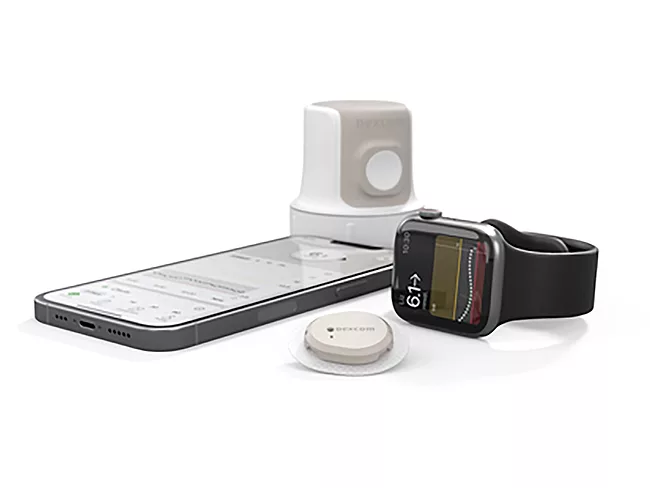
The U.S. FDA’s March 4, 2025, warning letter to Dexcom Inc. is a well-detailed but heavily redacted document explaining the agency’s misgivings about procedures such as monitoring of acetaminophen content in glucose test dishes.
The first disease modifying therapies for Alzheimer’s may have limited utility in some senses, but they will be a force for change, providing momentum and altering the way governments as payers, and health systems as carers, think about the disease.
Acrivon Therapeutics Inc. provided updated phase II data for checkpoint kinase candidate ACR-368, highlighting promising response rates for biomarker-positive patients with endometrial cancer and raising the possibility of an accelerated pathway in the second-line setting.
Ushering in a new class of antibiotics, the U.S. FDA approved GSK plc’s gepotidacin for use in uncomplicated urinary tract infections. Branded Blujepa, the oral triazaacenaphthylene bacterial topoisomerase inhibitor is indicated for treating female adults and adolescents, 12 and older.
The U.S. FDA rejected, for the second time, Elevar Therapeutics Inc.’s NDA of a novel combination therapy for advanced liver cancer, which comprised Jiangsu Hengrui Pharmaceutical Co. Ltd.’s PD-1 inhibitor camrelizumab and HLB Co. Ltd.’s small-molecule tyrosine kinase inhibitor, rivoceranib.
Chinese pharmaceutical companies are making significant inroads into the global oncology market, particularly with the development and approval of immune checkpoint inhibitors. These treatments, which have shown strong efficacy in various cancer indications, are not only transforming the oncology landscape in China but are also gaining traction in high-value international markets, including the U.S.
Nature Cell Co. Ltd. won U.S. FDA breakthrough therapy designation of its autologous adipose-derived mesenchymal stem cell therapy, Jointstem, March 20, becoming the first Korean company to earn the label in the field of cell therapy.
In a move that echoes tariff threats from U.S. President Donald Trump, the Pharmaceutical Research and Manufacturers of America (PhRMA) lobby is taking aim at most of the world for unfair trade practices in its special 2025 Special 301 Report to the U.S. Trade Representative.
The obesity market is driving pharma’s return on investment (ROI) upward, with the projected return rising to 5.9% overall in 2024, but only reaching 3.8% if GLP-1 assets are excluded. At the same time, the average cost of developing a drug continues to rise and now stands at $2.23 billion, compared to $2.12 billion in 2023, according to Deloitte’s 15th annual analysis of the ROI from pharmaceutical innovation.
Losing nearly 60% of its value, Mural Oncology plc backed away from its lead interleukin-2 (IL-2) drug, nemvaleukin alfa, in platinum-resistant ovarian cancer based on interim results showing it failed to reach significance in the overall survival primary endpoint.
 RSS
RSS