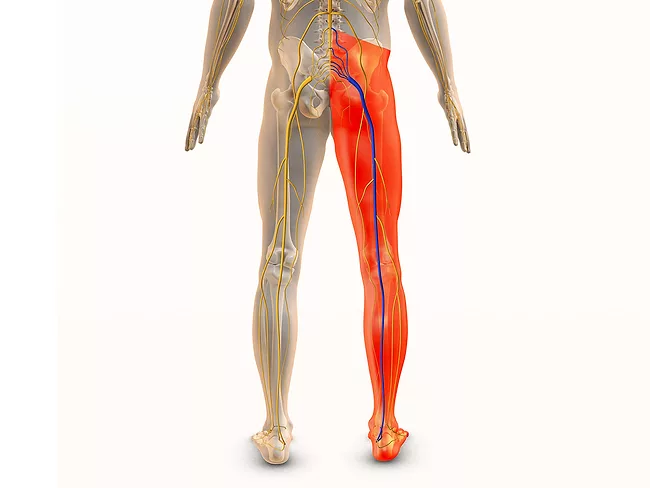
Data from two out of three positive studies faced the U.S. FDA’s Anesthetic and Analgesic Drug Products Advisory Committee as members examined the package submitted by Seikagaku Corp., of Tokyo, for SI-6603 (condoliase), a chemonucleolytic drug for radicular leg pain associated with lumbar disc hernia.
The accelerating pace of U.S. FDA approvals for cell and gene therapies is “great for the field and great news for the patients,” but questions remain over commercialization, with “costs remaining stubbornly high.” That was the glass half-full summary of Tim Hunt, president of the industry group, the Alliance for Regenerative Medicine, reprising progress in 2024, and looking forward to the prospects for further growth and the potential impact of the incoming Trump administration in 2025.
Day two of the J.P Morgan Healthcare Conference rolled on with positive data from Sling Therapeutics Inc. that is leading the company to a phase III study in treating thyroid eye disease. The privately held company posted top-line efficacy and safety results from a phase IIb/III study of its lead candidate, linsitinib, which hits its primary endpoint with statistical significance at the twice-daily, 150-mg oral dose.
The sedate uptake of pulsed field ablation (PFA) in Europe failed to presage the enthusiasm that drove the technology’s extraordinarily rapid adoption in the U.S. in 2024. Used to treat atrial fibrillation, PFA received its first U.S. FDA approval in Dec. 2023. At the time, Clarivate estimated that PFA had 7% of the global cardiac ablation market. By year-end 2024, it had 20% and Boston Scientific Corp. projected that PFA would represent up to half of the market by the close of 2025.
The U.S. FDA posted a draft guidance that would revisit a 2014 final guidance on sex-specific data drawn from medical device clinical trials, expanding the scope to include considerations of gender.
As 2025 makes its debut, one of the topics gaining momentum in health care is the diagnosis and potential treatment of neurodegenerative diseases, a scourge that threatens to overwhelm society and drain treatment budgets around the world. One company looking to find solutions to the oncoming neurodegenerative disease tsunami is privately held Sunbird Bio Inc., which is developing blood-based diagnostic platform for neurological diseases like Alzheimer’s and Parkinson’s disease.
U.S. Medicare coverage of renal denervation (RDN) for uncontrolled hypertension may soon be a fact of life if the manufacturers of these systems have their way. CMS opened a national coverage analysis for RDN, but as is routine practice recently, the agency is asking for comment before posting even a draft coverage memo for this technology.
In a deal potentially worth $810 million for Regenxbio Inc., Nippon Shinyaku Co. Ltd. is partnering on the U.S. and Asian development and commercialization of iduronate-2-sulfatase enzyme RGX-121 for Hunter syndrome and RGX-111 for Hurler syndrome.
Gilead Sciences Inc. is moving further into inflammatory diseases in a potential $1.7 billion deal with Leo Pharma A/S around a preclinical oral signal transduction and activator of transcription 6 (STAT6) program that the Danish dermatology specialist has been working on since 2018.
Shares of Phio Pharmaceuticals Corp. soared 291% Jan. 13 on news that two patients with cutaneous squamous cell carcinoma had a complete response following treatment with the company’s Intasyl siRNA gene silencing candidate PH-762.
 RSS
RSS