The CDC’s Advisory Committee on Immunization Practices (ACIP) deliberated the matter of third COVID-19 shots, with panel members voting whether to recommend “additional doses of mRNA COVID-19 vaccines as part of a primary [two-shot] series” in certain immunocompromised patients. A work group set up by ACIP decided previously that the desirable consequences outweighed undesirable ones in such a population.
The U.S. Federal Trade Commission (FTC) has made no secret of its intent to tighten its oversight of merger and acquisition (M&A) activity, an emphasis that has already been felt in the med-tech space. Soliton Inc., of Houston, said in its latest 8-K filing that the FTC wants to see more information about plans for the company to be acquired by Allergan Aesthetics plc, a demand that at the very least will delay – and potentially derail altogether – the acquisition.
The frequent calls for an expansion of telemedicine have come with relatively hushed advisories about the potential for fraud, concerns that have been borne out by an indictment recently returned by a federal grand jury in New Jersey. A company that presented itself as a provider of telemedicine services has been charged with filing $784 million in false claims for unnecessary durable medical equipment.
Reiterating prescription drug pricing provisions included in an executive order issued in July, U.S. President Joe Biden provided a bit of context and a little more detail about what he has in mind during a brief Aug. 12 speech on how his “Build Back Better” agenda would lower drug prices. Part of that agenda is to allow Medicare to directly negotiate prescription drug prices. “The only thing Medicare is not allowed to negotiate are prices for prescription drugs. My plan gets rid of that prohibition,” Biden said, adding that Medicare negotiates every other health care cost.
According to the White House, the FDA is poised to allow COVID-19 booster shots from Pfizer Inc. and Moderna Inc., the two mRNA vaccines, but only for those people with compromised immune systems. The FDA announcement was anticipated to be as early as today, Aug. 12, and the boosters could be available as quickly as this coming weekend.
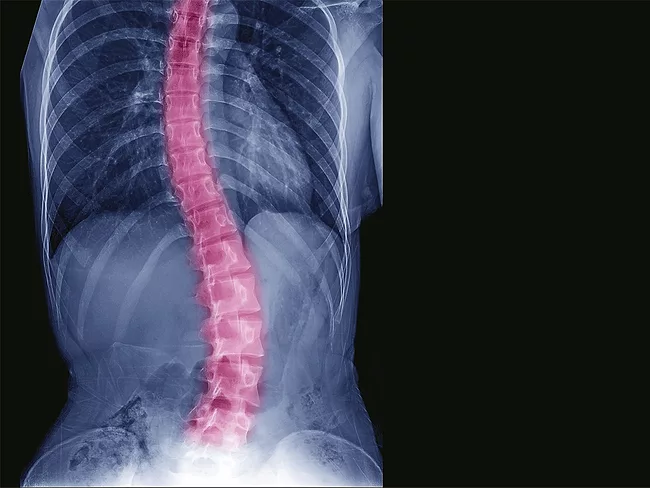
Auctus Surgical Inc. took another step toward straightening out one of the most vexing problems in pediatric scoliosis with the announcement of FDA breakthrough device designation for its vertebral tethering system. The system offers a non-surgical option to correct spinal curvature without use of fusion or braces and its dynamic magnetic technology enables adjustment as a child grows, avoiding the overcorrection that plagues the only other tethering system currently available.
The FDA’s device center has generated a raft of warning letters for products related to the COVID-19 pandemic, and released another six such letters for the week of Aug. 9. However, the ostensible justification for those warnings varies considerably, as does the elapsed time between the date of the warning letter and its issuance on the FDA’s warning letter webpage.
The FDA’s latest version of the intended use rule is a complex, 61-page document that cleaned up a few things from the previous version and added a phrase or two to the regulatory lexicon. Randy Prebula, a partner in the D.C. office of Hogan Lovells U.S. LLP, told BioWorld that while the FDA left itself some wiggle room by avoiding a prescriptive use of language in the rule, the final rule is unlikely to be the final word on the intended use question.
The U.S. Court of Appeals for the Seventh Circuit has affirmed an injunction obtained by Life Spine Inc. against L&K Biomed for the latter’s alleged appropriation of trade secrets obtained by an L&K subsidiary. The outcome affirms that injunctive relief is available to plaintiffs when irreparable harm is plausibly alleged, but also highlights the need for internal controls to avoid accidental use of trade secrets during product development programs.
The FDA has given the green light to Spintech Inc. for its STAGE (strategically acquired gradient echo) magnetic resonance imaging device. The post-processing software platform allows MRI technicians to capture higher-quality brain images in significantly less time than standard approaches.

 RSS
RSS