The voluminous American Rescue Plan – the second largest stimulus package in U.S. history – has something for everyone. Almost. The $1.9 trillion package that passed the Senate over the weekend and is expected to be passed by the House March 9 failed to extend the current moratorium, set to expire April 1, on the 2% Medicare sequestration.
A bad patient experience with telehealth can blunt adoption regardless of the incentives for developers and doctors. Griffin Mulcahey, chief compliance officer at Wheel Health Inc., of Austin, Texas, said during a recent webinar that users of these digital health apps and telemedicine programs may need assistance to get up to speed on an application, a critical effort that may make the difference between success and failure in telehealth.
The so-called pharma bro Martin Shkreli’s trials are far from over. The former hedge fund manager, biopharma CEO and now convicted felon is facing a class action lawsuit led by Blue Cross and Blue Shield.
The U.S. Senate Finance Committee hearing for the appointment of Xavier Becerra as Secretary of Health and Human Services ended in a tie vote, which not unexpectedly ran along party lines. The nomination of Becerra was controversial on several fronts, but the outcome nonetheless sends the nomination to the Senate floor, where Vice President Kamala Harris may cast the deciding vote in what is likely to be a literal 50-50 deadlock.
Several telehealth bills are in circulation on Capitol Hill, but U.S. federal government agencies have expressed concerns about the potential for fraud and abuse, and the impact on Medicare spending. Despite those concerns, two key members of the House Energy and Commerce (E&C) Committee, Reps. Frank Pallone (D-N.J.) and Anna Eshoo (D-Calif.), said during a March 2 hearing that they have misgivings about those cautionary views of telehealth, suggesting that any related legislation will aggressively expand Medicare coverage of telehealth.
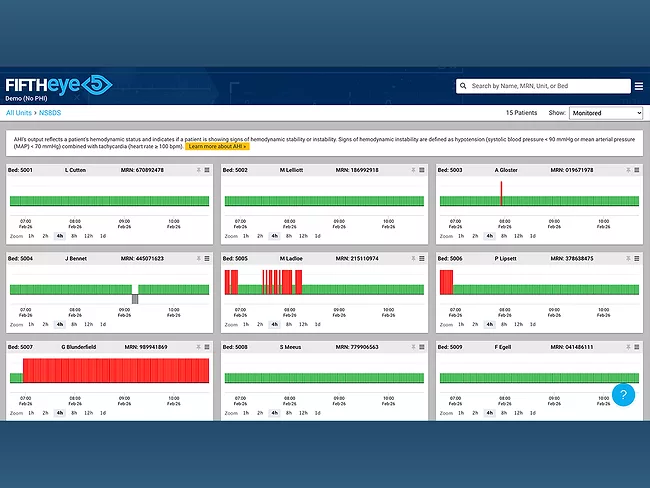
The FDA has granted de novo authorization to Fifth Eye Inc. for its Analytic for Hemodynamic Instability (AHI), a machine learning (ML)-based, real-time indicator of patient deterioration. Commercialization of the software device, which continuously monitors patients with an electrocardiogram (ECG) for signs of deterioration, got underway on March 1.
Months of talks between Johnson & Johnson (J&J) and Merck & Co. Inc. about a COVID-19 vaccine manufacturing partnership came to fruition March 2 with the Biden administration hailing the deal as an “unprecedented historic” agreement between two long-time rivals.
The separate “pass-through” payment Medicare provides for new, high-cost Part B drugs that are part of certain hospital procedures in the U.S. may be an incentive for hospitals to use those drugs rather than less expensive alternatives, according to a new Government Accountability Office (GAO) report.
Rebus Biosystems Inc. introduced the first commercially available spatial omics platform at the Advances in Genome Biology and Technology virtual meeting on March 1. The Rebus Esper builds on the company’s Synthetic Aperture Optics (SAO) technology that enables rapid quantitative analysis of tens of millions of cellular features across hundreds of thousands of cells in their native tissue contexts.
In divvying up U.S. spending on orphan vs. nonorphan indications for drugs approved for both, a new study could fuel future debates and inform policy on orphan drug incentives. The study, led by a team of University of Michigan and Boston University researchers, found that 21% of the total dollars spent in 2018 in the U.S. on the 15 top-selling partial orphan drugs went to the treatment of rare diseases, while more than 70% went to the treatment of common diseases.
 RSS
RSS