President Donald Trump sent letters July 31 to the CEOs of 17 major drug manufacturers doing business in the U.S., giving them 60 days to comply with his May 12 executive order (EO) on most-favored-nation (MFN) pricing. The EO appealed to drug companies to undertake MFN pricing voluntarily to end the freeloading in which other developed countries pay, on average, three times less than Americans are charged for the same medicines.
Soligenix Inc.’s phase IIa study of SGX-945 (dusquetide) for treating oral ulcers in those with Behçet's disease showed biological efficacy in the proof-of-concept study. The positive results propelled the company’s stock (NASDAQ:SNGX) a hefty 134% higher on July 31, with shares closing at $2.93 each.
A month away from the PDUFA decision date for a Leqembi (lecanemab) subcutaneous autoinjector to be used for maintenance dosing for those with early Alzheimer’s disease, Eisai Co. Ltd. and Biogen Inc. presented clinical data at the Alzheimer's Association International Conference (AAIC) 2025 in Toronto, showing comparable efficacy and safety to the FDA-approved intravenous formulation.
The U.S. Court of Appeals for the Federal Circuit recently returned a decision in a case pitting Shockwave Medical Inc. against Cardiovascular Systems Inc. in a decision that adds a new wrinkle to the question of how prior art can and cannot be used to eviscerate a patent.
The U.S. Federal Trade Commission announced a $14.6 million grant it received for an upgrade of its IT infrastructure. The same grant mechanism is leveraged by the Department of Justice, which is a clear sign that U.S. enforcement will be more vigorously enabled by sophisticated analytics going forward.
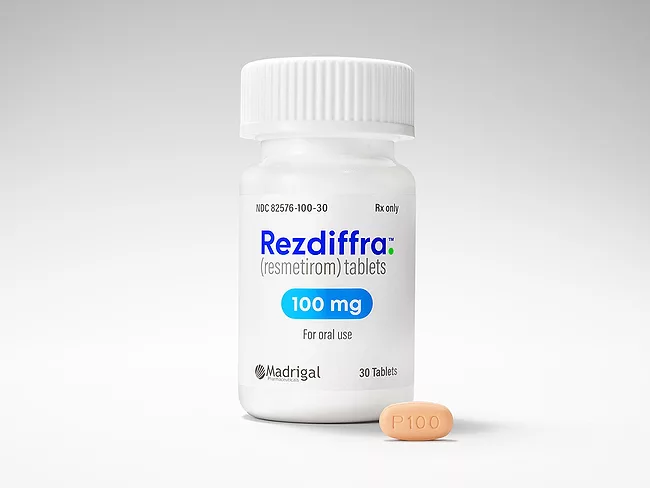
Madrigal Pharmaceuticals Inc.’s long-awaited business development pact became reality by way of an exclusive global license agreement that could be worth more than $2 billion with CSPC Pharmaceutical Group Ltd., of Shijiazhuang, China, for SYH-2086. The candidate is a preclinical oral, small-molecule glucagon-like peptide-1 (GLP-1) receptor agonist and orforglipron derivative.
The news that Vinay Prasad has stepped down as CBER director at the U.S. FDA had some biotech stocks literally jumping in joy as the market opened July 30. Meanwhile, Prasad’s decisions regarding vaccine development, as well as actions by Makary and HHS Secretary Robert Kennedy, are coming under fire.
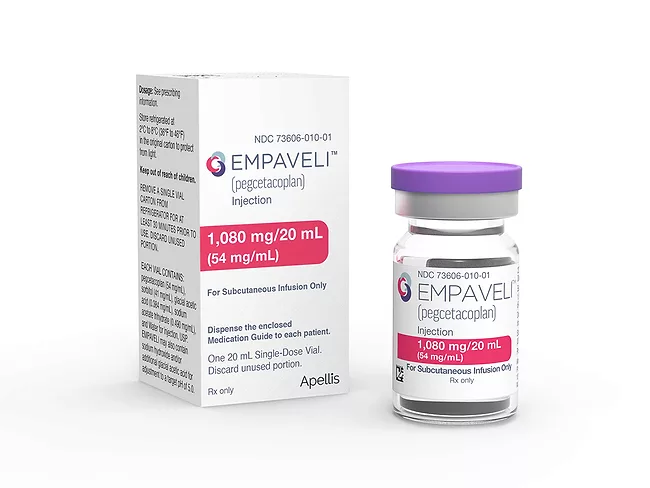
Following a priority review, Apellis Pharmaceuticals Inc. received U.S. FDA approval of a supplemental NDA making pegcetacoplan the second marketed treatment for complement 3 glomerulopathy and the first for primary immune complex membranoproliferative glomerulonephritis.
Med-tech companies raised $8.13 billion in the second quarter of 2025, a modest dip from the $8.32 billion recorded in Q1. While the quarterly total marks a continued improvement over 2023’s lower figures, it still lags behind pre-pandemic peaks and the $22.87 billion raised in 2Q20. Compared to 2Q24’s $7.49 billion, this year’s figure reflects a slight year-over-year gain.
The ink is barely dry on the draft Medicare physician fee schedule for 2026, but three cardiology societies blasted the draft for cutting rates for left atrial appendage closure procedures – a move they said needlessly endangers patients.

 RSS
RSS