The U.S. Department of Justice and the Securities and Exchange Commission have separately indicted Marc Schessel and his company, Scworx Corp., for making false statements about the company’s ability to provide rapid tests for the COVID-19 pandemic. The indictments include allegations that Schessel and his company had been advised that the tests they had intended to procure were no longer available for distribution in the U.S., but that the Schessel did not advise shareholders of this fact for another 11 days.
A start-up rival to Illumina Inc. has emerged from stealth mode, debuting a new low-cost gene sequencing platform, the UG 100. Ultima Genomics Inc. has raised approximately $600 million from investors including General Atlantic, Andreessen Horowitz, D1 Capital and Khosla Ventures to scale development of the whole-genome sequencing, single-cell sequencing technology. Initial data using the platform to sequence more than 200 human genomes will be presented at the upcoming Advances in Genome Biology and Technology (AGBT) conference.
Pivotal in killing the Biden administration’s Build Back Better budget legislation, Sen. Joe Manchin (D-W.Va.) is now working to revive parts of it, including the provision that would require Medicare to directly negotiate prescription drug prices.
The U.S. Court of Appeals for the Federal Circuit has ruled again on the appointments clause questions evolving from a patent dispute between Arthrex Inc. and Smith & Nephew Inc., this time in connection with a former acting director of the Patent and Trademark Office (PTO).
The FDA announced a class I recall of the Dragonfly Opstar imaging catheter by Abbott Vascular, of Santa Clara, Calif., due to the loosening of a band marker that may lead to separation from the catheter. The agency said two instances in which the marker has separated from the catheter have been reported, with another three incidents of loosening without separation.
The U.S. Court of Appeals for the Federal Circuit has ruled again on the appointments clause questions evolving from a patent dispute between Arthrex Inc. and Smith & Nephew Inc., this time in connection with a former acting director of the Patent and Trademark Office (PTO).
About $1.7 trillion in securities of China-based issuers listed on U.S. exchanges could face trading prohibitions in as little as two years, Y.J. Fischer, director of the U.S. SEC’s Office of International Affairs, warned during remarks at the May 24 annual meeting of the International Council of Securities Associations.
Ethicon Endosurgery Inc. and Intuitive Surgical Inc. have been sparring in the courts over patents for robot surgery systems for some time, and the U.S. Court of Appeals for the Federal Circuit has ruled on yet another of those disputes.
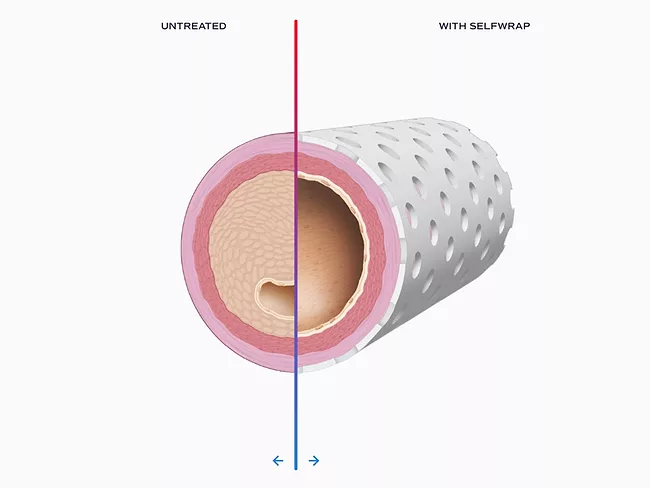
A tissue engineered polymer wrap designed to reduce vein graft failure rates in patients on hemodialysis for chronic kidney disease (CKD) has won FDA breakthrough device designation. Developed by Houston-based Venostent Inc., the Selfwrap bioabsorbable perivascular wrap is macroporous material that wraps around blood vessels and acts as a scaffold to ensure veins and arteries work together seamlessly to filter out toxins in the patient’s blood.
Among the latest guidances pouring out from the U.S. FDA are ones addressing development programs for hormone analogues intended to treat advanced prostate cancer and prescription drug importation from Canada.
 RSS
RSS