The U.S. FTC isn’t waiting to complete its investigation into potentially anticompetitive practices of pharmacy benefit managers to crack down on some of those schemes.
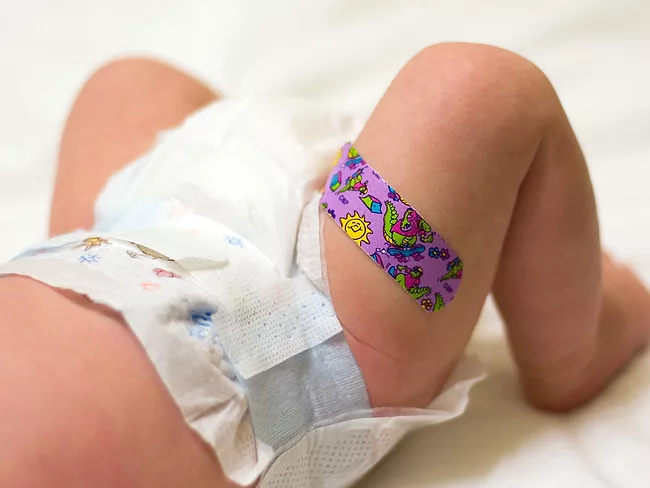
Instead of “Mother, may I” for COVID-19 vaccines for children 6 months through 5 years of age, the U.S. CDC is saying the correct response is “I should.” That was the recommendation June 18 from the CDC’s Advisory Committee on Immunization Practices. CDC Director Rochelle Walensky wasted no time in endorsing the recommendation, which came just a day after the FDA authorized the vaccines from Moderna Inc. and Pfizer Inc.-Biontech SE for babies, toddlers and preschoolers.
Adaptive Biotechnologies Corp. launched T-Detect Lyme, a T-cell-based clinical test to detect immune response activated by Borrelia burgdorferi, the bacterial species of spirochete that causes Lyme disease. The CLIA-validated laboratory-developed test (LDT) is meant to help diagnose early Lyme disease in adults showing signs and symptoms of the tick-borne illness.
The U.S. FDA is among the regulators that are taking account of the views of patients in medical device development and regulation, but artificial intelligence (AI) and machine learning (ML) are terra incognita for many, if not most patients. Rebekah Angove, vice president for patient experience and program evaluation at the Patient Insight Institute, told BioWorld that while some patients clearly want to know more about AI and ML, it is also clear that more than a certain amount of detail is more of a distraction than a help for most patients.
The U.S. FDA’s Psychopharmacologic Drugs Advisory Committee took up the complicated matter of Acadia Pharmaceuticals Inc.’s sNDA for Nuplazid (pimavanserin) to treat hallucinations and delusions associated with Alzheimer’s disease psychosis (ADP).
Just days after U.S. FDA advisors unanimously backed use of both the Moderna Inc. and Pfizer Inc.-Biontech SE COVID-19 vaccines in children 6 months and older, the FDA has expanded emergency use authorizations for the products. Availability could follow as soon as June 21, after a meeting of the CDC’s ongoing Advisory Committee on Immunization Practices, wraps up June 18.
What was billed as a U.S. Senate Health, Education, Labor and Pensions Committee hearing June 16 to get an update from top government health officials on the nation’s response to COVID-19 was, in reality, a concerted effort to get Republicans in the U.S. Senate to open the checkbook so the Biden administration could fill in the amount for more COVID-19 spending, Ranking Member Richard Burr (R-N.C.) charged as he concluded the hearing.
In keeping with the 21st Century Cures Act, the U.S. FDA issued a draft guidance describing a standards recognition program for regenerative medicine therapies at the Center for Biologics Evaluation and Research that’s intended to facilitate the development of the therapies and reduce the regulatory burden.
Outset Medical Inc. dropped 38% during intraday trading to reach its lowest point since going public in mid-2020 following its announcement that it began holding shipments of its Tablo hemodialysis system for home use in late May pending U.S. FDA clearance of a 510(k) submission for changes made to the device since its original clearance in March 2020. The stock which closed June 13 at $20.43, recovered some ground to close June 15 at $14.58, which is still 78% off the stock’s high in November 2020.
After a two-day session of the FDA’s Vaccines and Related Biologic Products Advisory Committee, the U.S. is within days of a long-awaited milestone of having not just one but at least two vaccines available for nearly every American. The VRBPAC voted unanimously, 21-0, June 15 to support amending the emergency use authorizations for both the Moderna Inc. and Pfizer Inc.-Biontech SE COVID-19 mRNA vaccines to allow their use in children 6 months and older.

 RSS
RSS