The first 100 days of the Trump administration have been nothing short of chaotic, both in the U.S. and throughout the world. Shining a light through the uncertainty, BioWorld continues to cover the administration’s latest policy decisions and actions affecting the life sciences sector, as well as their impacts across the globe. It’s all right here at Trump administration impacts.
Jiangsu Hengrui Pharmaceuticals Co. Ltd. is the latest mainland China pharmaceutical company to seek a capital raise on the Hong Kong stock exchange, winning clearance April 28 from the China Securities Regulatory Commission to float new H-shares.
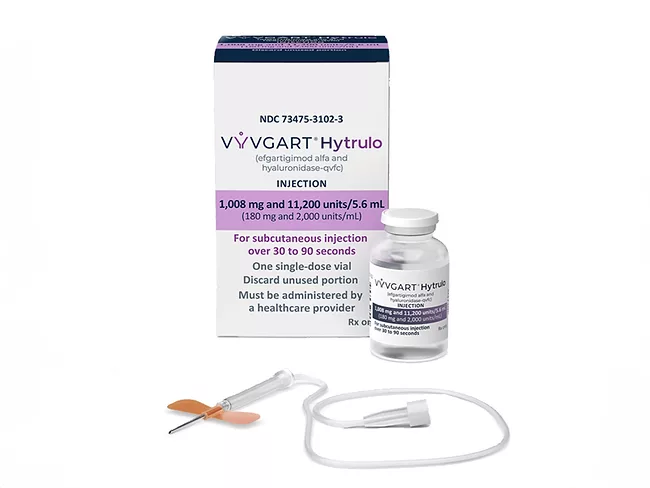
Argenx NV is now well on the way to establishing a Vyvgart (efgartigimod alfa) franchise in severe autoimmune diseases, after getting the nod from the EMA in the treatment of progressive or relapsing chronic inflammatory demyelinating polyneuropathy.
The U.S. FDA issued a complete response letter (CRL) to Telix Pharmaceuticals Ltd. for its NDA for glioma imaging agent, TLX-101-CDx (floretyrosine F18 or 18F-FET, Pixclara), citing the need for additional confirmatory clinical evidence.
It’s time for the U.S. Congress to finally put some guardrails on the 340B prescription drug discount program it created more than 30 years ago as a way to help fund health care for low-income patients. That’s the overall conclusion of a majority staff report from the Senate Health, Education, Labor and Pensions Committee that follows a years-long investigation into the program.
Nervousness about the Trump administration’s attitude to vaccines has spurred the formation of the Vaccine Integrity Project, which has the aim of safeguarding the use of vaccines and ensuring vaccine policy “remains grounded in the best available science,” and is “free from external influence.”
The intriguing VEGFxPD-1 bispecific antibody space gained oomph with phase III results disclosed April 23 by Akeso Pharmaceuticals Inc. related to Harmoni-6, testing ivonescimab in combination with platinum-based chemotherapy compared with Tevimbra (tislelizumab, Beigene Ltd.), a PD-1 inhibitor also paired with platinum-based chemo in patients with locally advanced or metastatic squamous non-small-cell lung cancer irrespective of PD-L1 expression. Those data were followed by a green light from the U.S. FDA April 24 for marketing the PD-1 monoclonal antibody penpulimab in combination with cisplatin or carboplatin and gemcitabine for the first-line treatment of adult recurrent or metastatic non-keratinizing nasopharyngeal carcinoma.
In all practicality, U.S. FDA Commissioner Marty Makary’s recently announced policy directive removing industry representatives from the agency’s advisory committees may have little effect on the makeup of the drugs and devices committees, which typically include them as nonvoting members.
A U.S. FDA CDER official is among the first to say the quiet part out loud in proposing a Sept. 12 deadline for the agency to respond to Vanda Pharmaceuticals Inc.’s request for summary judgment or a hearing on CDER’s refusal to approve tradipitant to treat gastroparesis.
Europe was a bigger counterpart to China in pharmaceutical dealmaking than the U.S. last year, speakers at Chinabio Partnering Forum said April 23, and the trend is likely to continue in 2025 with the shuttering of U.S. capital and volatility ailing global markets.
 RSS
RSS