The end of the year will be the end of an era at the FDA, as Bob Temple shuts his door at CDER for the last time Dec. 31. After more than half a century at the FDA’s drug center, Temple has become the backbone of CDER’s new drug program, providing expertise and stability as other personnel have come and gone.
A Chinese player entered the U.S. non-small-cell lung cancer (NSCLC) arena as the U.S. FDA cleared Xcovery Holdings Inc.’s Ensacove (ensartinib) as a first-line therapy for adults with anaplastic lymphoma kinase (ALK)-positive locally advanced or metastatic disease who have not previously received an ALK-inhibitor. Xcovery, of Palm Beach Gardens, Fla., is a subsidiary of Betta Pharmaceuticals Co. Ltd, of Hangzhou, China.
Regenerative medicine company Mesoblast Ltd. received an early Christmas present from the FDA for approval of its allogeneic bone marrow-derived mesenchymal stromal cell (MSC) therapy, Ryoncil (remestemcel-L), for steroid-refractory acute graft-vs.-host disease (SR-aGvHD) in children 2 months and older, including adolescents.
With no time to spare, the U.S. Congress is coming together on a continuing resolution (CR) to keep the federal government running beyond Dec. 20. Intended to fund the government at current levels through March 14, the CR itself is temporary. But of the 1,500-plus pages in the package House leadership released late Dec. 17, only about 100 pages pertain to the actual CR. More than a third of the package is devoted to the health-care sector.
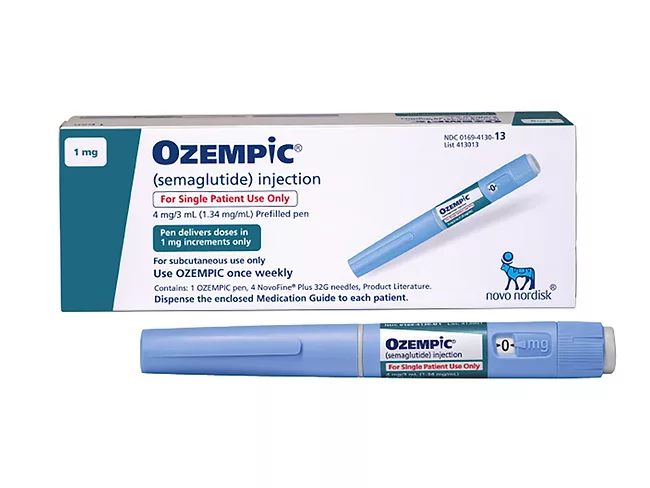
The Danish Medicines Agency is to ask the EMA’s pharmacovigilance committee to investigate a potential increased risk of an acute eye condition in diabetic patients being treated with the glucagon-like peptide-1 receptor agonist Ozempic (semaglutide).
A year after manufacturing issues resulted in a complete response letter for cosibelimab, the U.S. FDA approved Checkpoint Therapeutics Inc.’s drug, branded Unloxcyt, as the first anti-PD-L1 antibody for use in metastatic or locally advanced cutaneous squamous cell carcinoma patients who are not candidates for curative surgery or curative radiation.
While Spruce Biosciences Inc.’s tildacerfont missed its phase II primary endpoint in classic congenital adrenal hyperplasia (CAH) last March, the U.S. FDA approved Crenessity (crinecerfont) from Neurocrine Biosciences Inc. for treating pediatric and adult CAH patients. The nod could lead the drug to become a blockbuster, analysts said.
The EMA’s Committee for Medicinal Products for Human Use recommended 17 drugs for approval at its December meeting, bringing the total for 2024 to 114. That is up from the 77 drugs recommended for approval in 2023, of which 39 were novel.
After Keros Therapeutics Inc.’s voluntary halt of dosing in two arms of its phase II study in pulmonary arterial hypertension, the company’s stock crumpled after a year of muscular performance and its recent and massive deal with Takeda Pharmaceutical Co. Ltd.
Nearly three years after being terminated as president and CEO of Cytodyn Inc., Nader Pourhassan was convicted June 9 by a U.S. federal jury for his role in a securities fraud scheme to deceive investors about the Vancouver, Wash.-based company’s development of leronlimab. The jury also convicted Kazem Kazempour, the CEO of Amarex Clinical Research LLC, a contract research organization hired by Cytodyn, for his part in the scheme.
 RSS
RSS