The U.S. FDA has received a citizen petition to grant over-the-counter status to continuous positive airway pressure (CPAP) machines, an oddly timed petition given a recent enforcement action against one of the prime movers in the CPAP space.
The U.K.’s National Institute for Health and Care Excellence recent recommendation that selective internal radiation therapy could be used to treat neuroendocrine tumors that have metastasized to the liver is a boon for patients suffering from the disease. However, there is not yet a clear pathway for these patients to receive the therapy via the national health service.
New York-based Cleerly Labs Inc., petitioned several U.S. Medicare administrative contractors for coverage of the use of the company’s artificial intelligence product for analysis of CT coronary arteries to evaluate the disease burden of plaque.
The Parliament of the U.K. has dissolved right on schedule, leaving the members of the House of Commons with a raft of policy issues to deal with in the next assembly. One of these issues is a bill originating in the House of Lords, the Artificial Intelligence Bill, which seems technologically agnostic and thus may represent a risk of duplicative oversight of AI for health care purposes.
The U.S. Department of Justice announced May 29 that Innovasis Inc., of Salt Lake City and two of the company’s executives have agreed to pay $12 million over allegations of payment of kickbacks to surgeons.
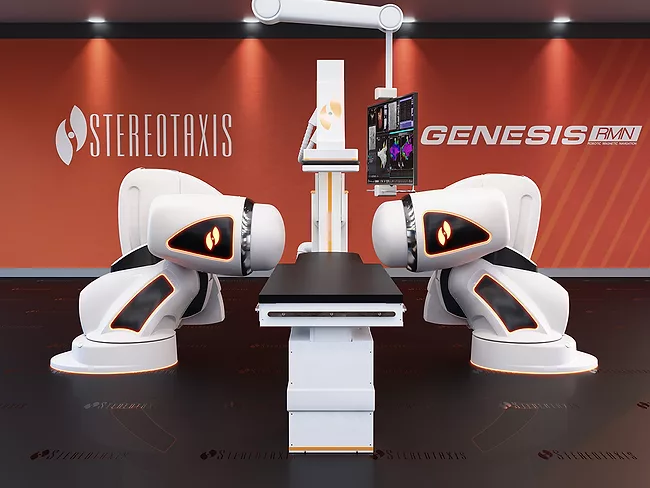
Stereotaxis Inc. recently received CE mark recertification for all its devices currently available in Europe under the new Medical Device Regulation (MDR) regulatory framework. The MDR has replaced the European Medical Device Directive and includes more stringent standards but meeting the new requirements comes with frustrations and costs for many companies.
Despite U.S. NIH policy and its peer-review grant process, providing for inclusive enrollment in phase III NIH-funded clinical trials seems to be a check-the-box exercise for many researchers. In a review of a sample of phase III NIH-funded trials conducted between 2016 and 2020, the Health and Human Services Office of Inspector General found that two-thirds had the required inclusive enrollment plans, but 57% of the trial plans provided no explanation or rationale for the enrollment targets.
The European Council formally approved another delay for the In Vitro Diagnostic Regulation
implementation, which now gives developers of existing high-risk in vitro diagnostics until December 2027 to obtain a renewed CE mark.
The problem of counterfeit devices has perplexed the U.S. FDA for some time, given that the agency had previously been forced to send the illicit products back to the originator, only to see the same devices reenter the U.S.
The American Clinical Laboratory Association has followed through on its promise to file suit against the U.S. FDA over the agency’s final rule for lab-developed tests. The lawsuit will be heard in the U.S. District Court for the Eastern District of Texas, which is also the venue for litigation against another federal government agency, the Federal Trade Commission, suggesting that litigants expect a favorable review of their case in this court.
 RSS
RSS