After a hiatus of more than nine months, the U.S. FDA’s Oncologic Drugs Advisory Committee (ODAC) will meet April 30 to discuss two Astrazeneca plc applications – an NDA for camizestrant used in combination with a CDK4/6 inhibitor to treat HR+HER2- locally advanced or metastatic breast cancer and an sNDA for Truqap (capivasertib) to treat metastatic hormone-sensitive prostate cancer that’s phosphatase and tensin homolog deficient.
Now that the FDA is on board with doing away with the U.S.’ unique two-tier biosimilar pathway, the biosimilar industry is urging Congress to pass the bipartisan Biosimilar Red Tape Elimination Act, which would recognize that biosimilars and interchangeables are one and the same.
Grace Therapeutics Inc.’s hopes of becoming the first company in decades to update the standard of care in aneurysmal subarachnoid hemorrhage were delayed after the U.S. FDA issued a complete response letter (CRL) for its GTx-104 NDA, citing manufacturing and nonclinical deficiencies rather than concerns over efficacy or safety.
Four months after receiving a complete response letter from the U.S. FDA for tolebrutinib to treat non-relapsing secondary progressive multiple sclerosis, Sanofi SA received a positive opinion recommending approval in the EU.
The U.S. FDA’s recent pledge to make public complete response letters (CRLs) for drugs and biologics that failed to gain approval has encountered some objections from industry regarding the potential for disclosure of trade secrets and proprietary information.
Children and adults with a type of congenital hearing loss now have a free treatment option, with the U.S. FDA’s accelerated approval of Regeneron Pharmaceuticals Inc.’s DB-OTO, an AAV-mediated gene therapy. Branded Otarmeni (lunsotogene parvec), it is cleared specifically for hearing loss caused by variants in the otoferlin gene.
The U.S. FDA and CMS are teaming up to give Medicare beneficiaries quicker access to breakthrough medical devices and provide manufacturers with certainty of reimbursement.
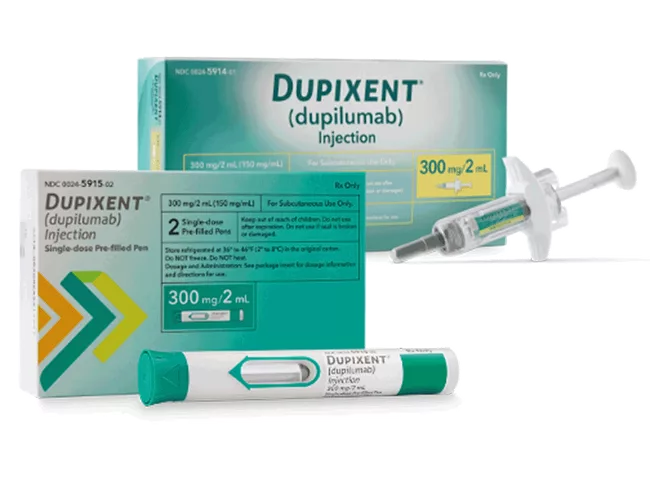
As Sanofi SA gets ready to welcome a new CEO, the company along with partner Regeneron Pharmaceuticals Inc. said a happy hello as well to robust sales of Dupixent (dupilumab, dupi) and gained U.S. FDA clearance for the IL-4 receptor alpha antagonist to treat children, ages 2 to 11, with chronic spontaneous urticaria who remain symptomatic despite histamine-1 antihistamine treatment.
When the U.S. CMS didn’t get takers for its voluntary Better Approaches to Lifestyle and Nutrition for Comprehensive Health (BALANCE) model to cover obesity drugs under Medicare Part D, the agency punted. It announced late April 21 that it will indefinitely delay the BALANCE model in Medicare but extend its temporary Medicare GLP-1 Bridge demonstration model through the end of 2027. (The Medicaid BALANCE model will still kick in this year in states that choose to participate in it.)
Delta-Fly Pharma Inc. is pressing ahead with discussions with the FDA for its lead acute myeloid leukemia (AML) candidate, radgocitabine (DFP-10917), despite a phase III miss on its primary endpoint, instead leaning on earlier-stage efficacy signals and emerging combination data to support a potential path toward conditional approval.
 RSS
RSS