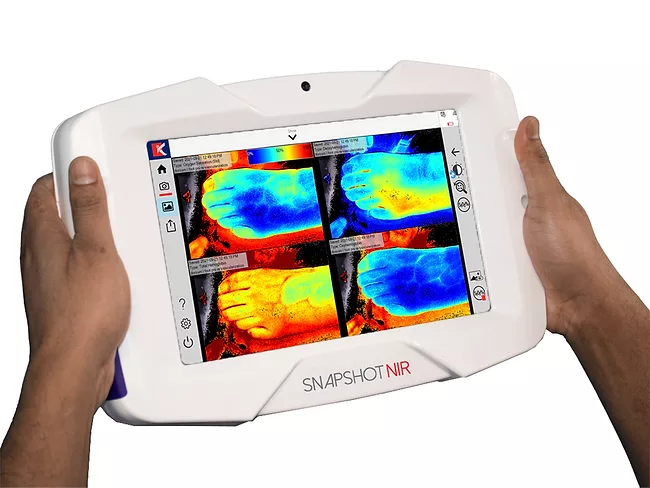
Kent Imaging Inc. received CE marking for its SnapshotNIR imaging device which uses near-infrared spectroscopy to measure oxygenated and deoxygenated hemoglobin in the microvasculature. The non-invasive point-of-care device provides real-time data to clinicians to help them make decisions which can change the trajectory of a wound, from chronic and non-healing, into a healing one, significantly improving the patient’s quality of life.
About five months after the U.S. FDA disclosed its roadmap to move away from animal testing in favor of new approaches for biopharma drug development, the U.S. National Institutes of Health (NIH) said it is awarding $87 million in contracts over three years to launch the Standardized Organoid Modeling Center.
The winding regulatory road for the BLA to Capricor Therapeutics Inc.’s cell therapy for Duchenne muscular dystrophy has more clarity. Out of a recent type A meeting between Capricor and the U.S. FDA, prompted by a complete response letter in July regarding lead asset CAP-1002 (deramiocel), the two are in agreement about a path to potential approval.
The struggle to avoid a partial U.S. government shutdown at midnight Sept. 30 is getting a lot of attention, as the stakes increase every day of the political standoff. Meanwhile, Sept. 30 also could be the end of the 43-year-old Small Business Innovation Research (SBIR) program, which has been a funding boon for biotech and med-tech startups, if Congress can’t come together on a reauthorization bill.
The FDA has awarded orphan drug designation to Cure Rare Disease’s CRD-003 for the treatment of limb-girdle muscular dystrophy type R9 (LGMD2i/R9), a congenital muscular dystrophy caused by biallelic mutations in the FKRP gene.
Resvita Bio Inc. has held a pre-IND meeting with the FDA for RVB-003, its lead investigational therapy for Netherton syndrome. The FDA’s feedback gives the company a pathway to submit an IND for RVB-003 in the first half of next year, with a clinical efficacy read-out anticipated by early 2027.
Word Sept. 4 from Agios Pharmaceuticals Inc. that the U.S. FDA extended the PDUFA date for the sNDA related to Pyrukynd (mitapivat), after the Cambridge, Mass.-based firm submitted a proposed risk evaluation and mitigation strategy (REMS), drew Wall Street’s attention to the regulatory approach.
As is the case with the Made in China 2025 initiative, the Make in India program has at least a decade of history to look back on, with some benefits accruing to the nation’s med-tech sector. All the same, Gunjan Bagla, CEO of Los Angeles-based Amritt Inc., told BioWorld that the initiative could be more successful if the legislature would tweak the laws to create a more helpful environment for industry.
China’s National Medical Products Administration is arguably more active than regulatory agencies in many nations in advancing guidance for AI in medical technology, but Chang-Hong Whitney, President/CEO of Whitney Consulting Ltd., told BioWorld that the premarket review process still carries some unpredictability.
Japan’s Pharmaceuticals and Medical Devices Agency has traditionally been less than receptive to clinical data from other nations, but that aversion is slowly giving way. Ames Gross of Pacific Bridge Medical told BioWorld that a trial conducted in another nation with significant representation of those of Japanese ancestry can go a long way toward obviating the need for a trial conducted in Japan.
 RSS
RSS