Test developers and the U.S. FDA are scrambling to meet the testing needs of the American public, however, it's somewhat unclear what the agency's priorities are for the emergency use authorization (EUA) program. Jeffrey Shapiro, of Hyman Phelps & McNamara, made the case that the FDA’s Center for Devices and Radiological Health (CDRH) should be more transparent about its priorities for EUA review.
The U.S FDA’s response to the pandemic has been all-consuming, but epidemiologist Michael Mina of Harvard blasted the agency’s handling of rapid testing. Mina said the agency is in possession of emergency use authorization filings for rapid antigen tests that should be acceptable, but that the FDA is “the only bottleneck” in the rapid antigen testing pipeline.
The latest global regulatory news, changes and updates affecting medical devices and technologies, including: OIG: Noridian overpaid for facet-joint injections; Hill-Rom patient lift recalled; New legislation directed to heart valve disease.
The U.S. FDA has given a green light to Brainlab AG for two new additions to its robotic surgery systems. The agency granted 510(k) clearances for the Loop-X mobile imaging robot and the Cirq Robotic Alignment module for spine procedures, paving the way for U.S. market entry.
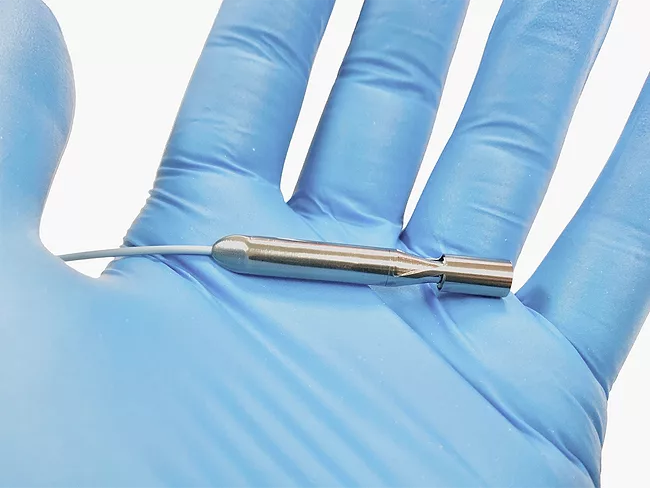
TORONTO – Puzzle Medical Devices Inc. has been granted a U.S. FDA breakthrough device designation for a transcatheter heart pump designed for fragile patients with few minimally invasive options for treating advanced heart failure.
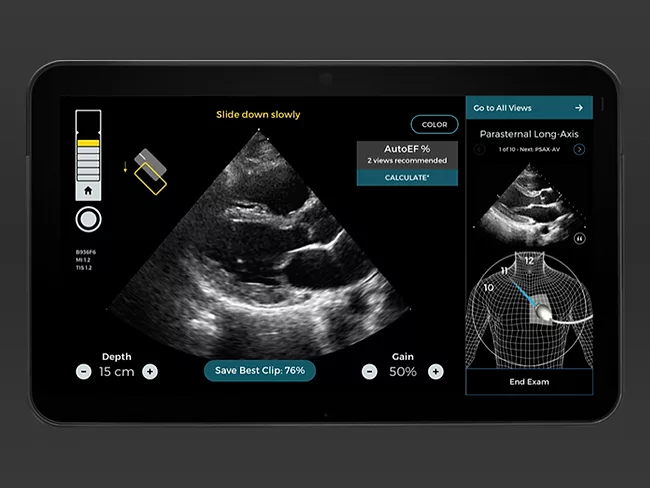
Last year, artificial intelligence (AI)-focused Caption Health Inc. won the U.S. FDA’s nod for software that guides untrained clinicians step-by-step in providing a cardiac ultrasound exam, a process normally performed by a highly skilled specialist. Now, the Brisbane, Calif.-based company has published data showing nurses without prior ultrasound experience who used Caption Guidance software captured ultrasound images of diagnostic quality to assess known cardiac conditions.
The latest global regulatory news, changes and updates affecting medical devices and technologies, including: White House names pick for CMS administrator’s post; FDA posts advisory for pulse oximetry; CDC: Telehealth visits dropped over last half of 2020; CRS says user fee shares of total review costs on the rise; Federal Circuit kicks case back to PTAB.
Emitbio Inc., a life science company developing light-based therapies, is seeking emergency use authorization (EUA) from the U.S. FDA for its investigational device to treat mild to moderate COVID-19 infection at home. The portable, hand-held device works by directing precise wavelengths of visible light to the back of the throat and surrounding tissues. It is not yet available for sale in the U.S.
The latest global regulatory news, changes and updates affecting medical devices and technologies, including: BD offers little detail in reaction to advisory hearing; FDA invites stakeholders to user fee negotiations; MHRA wary of paclitaxel.
A U.S. FDA advisory committee voted 14 nays to three ayes that the benefits of the Lutonix 014 drug-coated balloon (DCB) do not outweigh the risks in a panel proceeding peppered by problems with missing data and a lack of operator blinding. The panel widely saw the use of paclitaxel-eluting technologies in other areas of the vasculature as a reassurance that this device might perform as promised, but the outcome nonetheless leaves the sponsor with a new round of negotiations with the FDA as to how to move forward.
 RSS
RSS