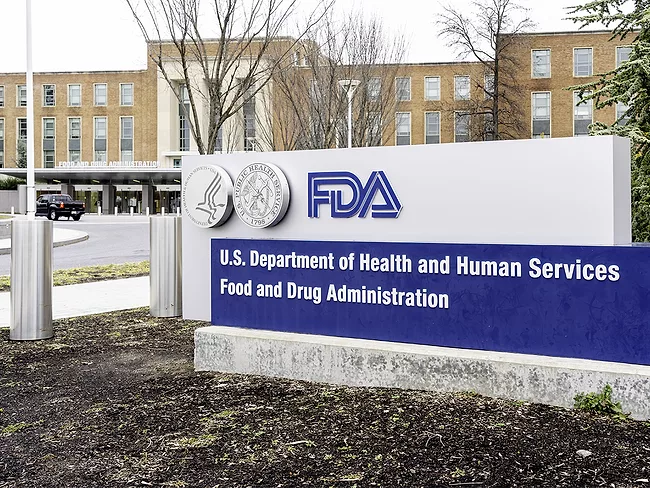
U.S. FDA warning letters have been a staple of regulatory life since the late 1990s, but James Boiani, a regulatory attorney with Epstein, Becker & Green P.C., said it’s no stretch of the imagination that warning letter volumes will jump in 2021. This is to some extent because the volume of warning letters dropped significantly over the past four years, and Boiani advised that all FDA-regulated industries will see more warning letters unless they are communicative with the agency about inspectional findings.
The U.S. FDA is still struggling to keep up with the volume of diagnostic emergency use authorizations (EUAs), but it is not for want of effort. Tim Stenzel, director of the FDA’s Office of In Vitro Diagnostics and Radiological Health (OIR), said on the Feb. 3 testing town hall that the agency is processing nine such applications per day, a big jump over the rate of one per day in the early weeks of the COVID-19 pandemic.
The latest global regulatory news, changes and updates affecting medical devices and technologies, including: Task force gives CAS screening another thumbs down; USPTO expands program with Japan’s, South Korea’s patent offices; Boston Sci recalls electrode for ICD due to risk of fracture; CDSCO posts lists of approved tests.
The U.S. FDA’s safer technologies program, or STeP, may seem uncontroversial, but agency staff said on a Feb. 1 conference call that the program could be delayed by the change in administration at the White House. This is possibly an artifact of the Biden administration’s Jan. 20 executive order (EO) that applies a freeze to federal agency activities for 60 days, an EO that could affect a wide swath of federal agency activity.
The latest global regulatory news, changes and updates affecting medical devices and technologies, including: MITA unveils policy concerns for 2021; NRC seeks nominees for medical isotopes adcomm; Senators: More protection needed for genomic data; Veterans’ genomic data put at risk; DNA sequencing claims struck down.
Medtronic plc received U.S. FDA premarket approval of its Diamondtemp Ablation (DTA) system for treatment of patients with recurrent, symptomatic paroxysmal atrial fibrillation. The temperature-controlled radiofrequency (RF) ablation system features industrial-grade diamonds, which provide 200 to 400 times the thermal conductivity seen in conventional ablation and enable more efficient delivery of energy to regions of the heart responsible for the erratic electrical signals underlying atrial fibrillation (AF).
The U.S. Centers for Medicare & Medicaid Services (CMS) had packaged a proposal to redefine the term “reasonable and necessary” along with the proposal to cover FDA-designated breakthrough devices, but ultimately punted on the definitional question until the end of this year. Mark Leahey, president and CEO of the Medical Device Manufacturers Association (MDMA), told BioWorld that it may be just as well that the agency didn’t expeditiously push through the reasonable and necessary question because of the enormous complexity of the proposal.
Boston Scientific Corp. has received the U.S. FDA’s nod for its Synergy Megatron drug-eluting stent (DES) system. The company said the premarket approval makes Synergy Megatron the first platform in the U.S. that is designed for large, proximal vessels. The Synergy Megatron biopolymer (BP) stent is indicated “for improving coronary artery luminal diameter in patients with symptomatic ischemic heart disease, stable or unstable angina, non-ST elevation myocardial infarction or documented silent ischemia due to atherosclerotic lesions in native coronary arteries.
The latest global regulatory news, changes and updates affecting medical devices and technologies, including: FDA reissues policy for coagulation systems; FDA announces recall of Penumbra’s Jet 7; Stericycle to buy buses as part of settlement; Athena agrees to $18M fine; WHO refreshes essential diagnostics list; TGA pulls two pandemic-driven exemptions.
The latest global regulatory news, changes and updates affecting medical devices and technologies, including: Krishnamoorthi eyes ventilator contract; TGA fines company for failure to provide masks; U.S. PPE hoarder indicted; CAP supports Defense Production Act; South African variant in U.S.; GAO: More needs to be done to respond to COVID-19; Biden orders review of scientific-integrity policies.
 RSS
RSS