The latest global regulatory news, changes and updates affecting medical devices and technologies, including: CMS finalizes MCIT rule; HHS lists permanent waivers of notification; FDA schedules advisory meeting for latest Lutonix model; HHS announces telehealth grants; Telemarketer caught in sting over telehealth fraud; Churn at FDA chief counsel’s office.
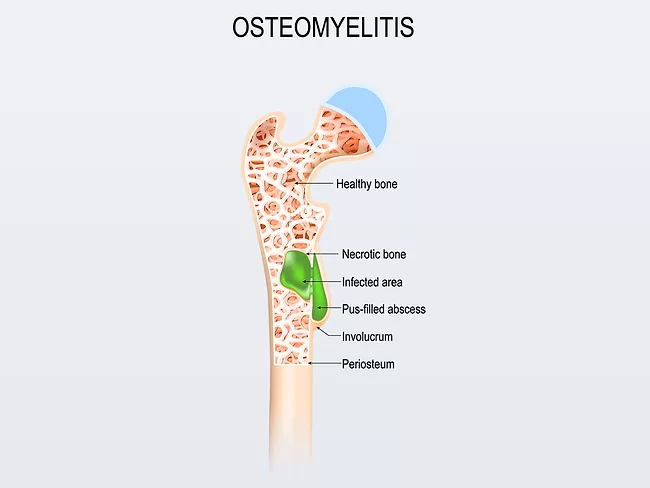
Cognitoss, a resorbable bone graft in development by Locate Bio Ltd., received U.S. FDA breakthrough device designation for treating chronic osteomyelitis, a progressive, inflammatory bone infection. The graft uses a new class of composite collagen product combined with a dual-phasic release of antibiotics to prevent reinfection.
TORONTO – Scan the literature on mental health technologies, and you’ll find treatment apps for everything from depression to addiction. What you won’t find, said Claude Hariton, vice president and chief scientific officer at Quebec City-based Diamentis Inc., are tools to diagnose mental diseases. It’s a gap the company hopes to fill with Retinal Signal Processing and Analysis (RSPA), a tool just accepted into the U.S. FDA’s breakthrough devices program that diagnoses mental diseases from retinal signals in the eye.
The latest global regulatory news, changes and updates affecting medical devices and technologies, including: FDA formally posts testing advisory after town hall discussion; HHS finalizes regulatory review rule; Lab in California hit for three months of false claims; BVMed calls for German med tech strategy.
Ultromics Ltd. received U.S. FDA 510(k) clearance for its artificial intelligence-driven decision support tool for the diagnosis of coronary artery disease (CAD). Used in conjunction with a clinician's assessment, Echogo Pro's algorithms improve disease prediction and support more accurate diagnosis. Echogo Pro is a stress-Echo module in the Oxford, U.K.-based company's Echogo suite for CAD diagnosis.
Computer system validation (CSV) has been the source of considerable drag on device makers’ efforts to realize value derived from investments in the company’s technology base, but this long-standing issue is finally drawing some much-needed attention.
The latest global regulatory news, changes and updates affecting medical devices and technologies, including: HHS unveils $22B testing fund; Trade associations sound off on Capitol Hill pandemonium; FDA reopens recall docket; Health care bills become U.S. law.
The U.S. FDA is actively working on guidance for conversion of emergency use authorizations (EUAs) to conventional premarket review programs, but the FDA’s Tim Stenzel said he does “not perceive a need to rush to convert EUAs” because of the volume of EUA applications, and because he does not expect the public health emergency “to end anytime soon.”
The latest global regulatory news, changes and updates affecting medical devices and technologies, including: FDA grants EUA to Quanterix for Simoa test; EC investing in startups; Alternatives to animal testing a challenge; USPTO seeks more uniformity between PTAB, courts; NICE nods to Olympus Plasma for BPH.
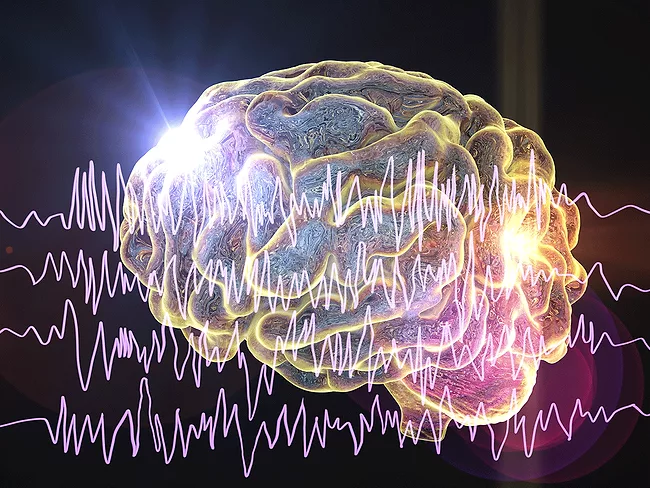
Bioserenity SAS has gained U.S. FDA clearance for the Neuronaute electroencephalography (EEG) system and Icecap EEG wearable device, which aim to help physicians remotely monitor and assess electrical brain activity of people with epilepsy. The company noted that the Icecap and Neuronaute system will facilitate access to care in a variety of settings, including rural and remote environments.

 RSS
RSS