The U.S. FDA’s safer technologies program, or STeP, is designed in part as a complement to the breakthrough devices program, but the September 2019 draft guidance lent little clarity as to what might constitute a significantly safer device. The Jan. 5, 2021, final guidance does little to clarify that question, however.
The latest global regulatory news, changes and updates affecting medical devices and technologies, including: GAO says wound care spending dropped between 2016 and 2018; FDA updates COVID testing data; May 2019 Q-sub guidance appears in final form.
The U.S. FDA’s device center may still be grappling with the COVID-19 pandemic throughout the remainder of fiscal year 2021, but that does not mean other considerations have disappeared. The FDA’s Erin Keith said the agency will keep working on a major overhaul of the quality systems regulation (QSR) but will also work toward expanding industry’s use of advanced manufacturing technologies, such as additive manufacturing.
The latest global regulatory news, changes and updates affecting medical devices and technologies, including: FDA: Curative test for COVID should be conducted per product label; FDA posts MEA final guidance; CMS eyes radiology quality measures; Ra Medical agrees to fines.
As is the case with many national governments, the U.S. federal government does not routinely measure its activities in the calendar year, but we at BioWorld don’t share that outlook. CY 2020 was odd in more ways than one from a regulatory standpoint, and thus we offer our version of a regulatory top 10 for a year that might not look much better in the rear-view mirror than it has looked as a current event.
The U.S. FDA has granted emergency use authorization (EUA) to Quanterix Corp.’s SARS-CoV-2 IgG antibody test, which tests blood samples for evidence of recent or prior COVID-19 infection. The test could also be used to measure antibody response to a COVID-19 vaccine. The Simoa Semi-Quantitative SARS-CoV-2 IgG antibody test is indicated for the qualitative and semi-quantitative detection of IgG antibodies to SARS-CoV-2 in human serum and dipotassium EDTA plasma from a venous blood draw.
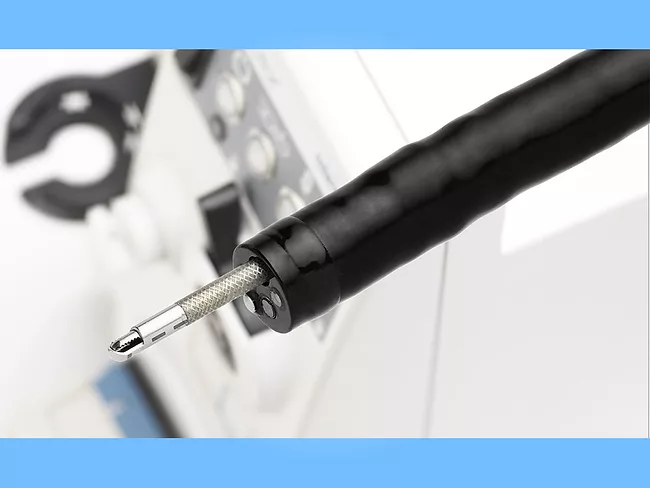
The U.S. FDA granted de novo marketing authorization to Interscope Inc.’s Endorotor system for direct endoscopic necrosectomy (DEN) of walled-off pancreatic necrosis, giving the specialty device a cutting edge over more generic tools often used for the challenging procedure. Endorotor received a CE mark for this indication in 2018 and also has FDA 510(k) clearance for post-endoscopic mucosal resection tissue persistence with a scarred base and for removal of endobronchial tumors and granulation tissue.
The latest global regulatory news, changes and updates affecting medical devices and technologies, including: MDCG posts guidance agenda for 2021; CPC comments on FDA’s skin biocompatibility draft.
Nevro Corp. has submitted a premarket approval supplement to the U.S. FDA seeking a green light for its Senza system to treat chronic pain associated with painful diabetic neuropathy (PDN). This submission is expected to allow the company to gain approval and kick off U.S. launch activities for this indication in the second half of next year. Nevro would be tapping into a big market, as diabetes affects roughly 1 in 10 adults in the U.S. and can damage peripheral nerves, resulting in severe pain and numbness in the extremities.
The latest global regulatory news, changes and updates affecting medical devices and technologies, including: U.S. FDA provides updates on power morcellation; FDA seeks nominations for advisory committee; CDSCO suspends import notification requirements.
 RSS
RSS