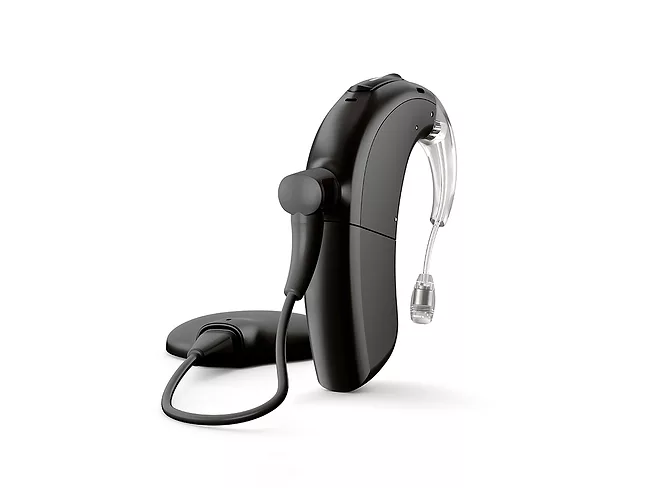
Advanced Bionics LLC heard good news from the U.S. FDA, which granted approval for the company’s Marvel cochlear implant (CI) platform and the first-ever sound processor designed specifically for children. The development brings the Marvel platform, initially created for hearing aids produced by Advanced Bionics' sister company, Phonak AG, to the sound processor for CIs for the first time.
Michael Mina, assistant professor of epidemiology at the Harvard T.H. Chan School of Public Health, again criticized the U.S. FDA for taking a conventional regulatory approach to rapid antigen tests for the pandemic. However, not everyone at the FDA’s parent department deserves brickbats. Mina said Assistant Secretary for Health Brett Giroir deserves a lot of credit for assisting in the effort to stand up pilot studies for rapid antigen tests that could be used to restore the U.S. economy even in the absence of a fully rolled-out vaccination campaign.
The latest global regulatory news, changes and updates affecting medical devices and technologies, including: FDA delays comment period for electromagnetic compatibility draft; CMS, ONC post info sharing, prior authorization rule; Van Hollen debuts diagnostic accuracy bill; CDC updates POC testing guidelines; GAO: Specimen biopsy handling errors relatively low.
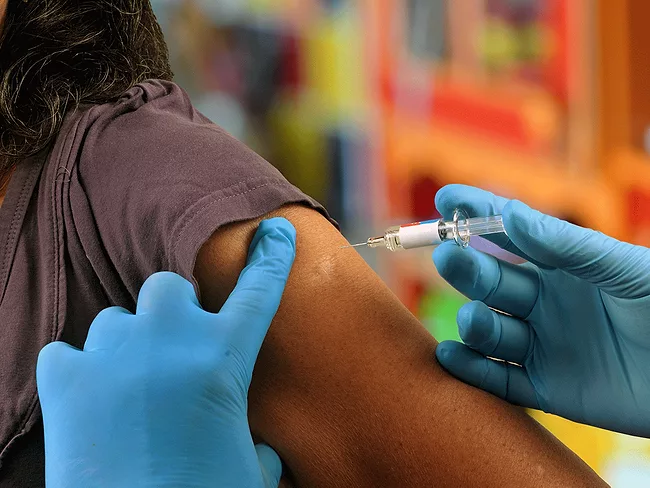
The FDA’s vaccine advisory committee voted 17-4 with one abstention Dec. 10 to recommend an emergency use authorization (EUA) for the Pfizer Inc./Biontech SE mRNA vaccine BNT-162b2 to prevent COVID-19 in individuals 16 and older.
The COVID-19 pandemic has been more than just a distraction for the U.S. FDA, which started 2020 with a number of ambitions regarding digital health regulation. Despite having unveiled the Digital Health Center of Excellence to great fanfare, the agency is struggling to wrap up major digital health programs, such as the precertification program for software as a medical device, leaving the FDA with a daunting agenda for digital health in the coming year.
The U.S. FDA has made it easier for people who want to get tested for COVID-19, granting emergency use authorization (EUA) for direct-to-consumer sales of Laboratory Corp. of America Holdings’ (Labcorp) Pixel COVID-19 test home collection kit. With this latest EUA, any individual 18 years and older can purchase the Pixel test system without a prescription.
The U.S. FDA authorized Burlington, N.C.-based Laboratory Corporation of America Holdings’ (Labcorp’s) Pixel COVID-19 test home collection kit for use by any individual 18 years and older without a prescription.
The latest U.S. FDA town hall for diagnostics included the usual technical questions about test validation, but there are some frustrations among test developers regarding turn-around times for emergency use authorizations (EUAs). Nonetheless, Tim Stenzel, director of the Office of In Vitro Diagnostics and Radiological Health (OIR) at the FDA, said the surge in staff assigned to review EUA filings has worked to some benefit, claiming that the agency has rendered a decision in connection with 65 applications in the two weeks leading up to the Dec. 9 town hall.
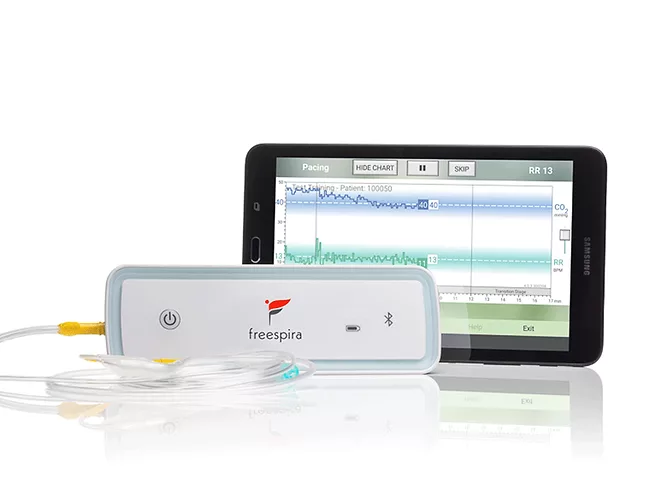
The rising tide of digital therapeutics approved and funded in the U.S. raised the outlook for Mahana Therapeutics Inc. and Freespira Inc. as both companies announced good news. Mahana's prescription digital therapeutic for gastrointestinal conditions, Parallel, received premarket authorization from the U.S. FDA and Freespira, formerly Palo Alto Health Sciences Inc., raised $10 million for its digital therapeutic for panic attacks, panic disorder and post-traumatic stress disorder.
Sonivie Ltd. has won breakthrough device designation from the U.S. FDA for the Therapeutic Intra-Vascular Ultrasound (TIVUS) system for renal artery denervation (RDN) to treat resistant hypertension. At the same time, the company revealed that it has bought the remaining intellectual property and other assets related to the use of the TIVUS System from Cardiosonic Inc.
 RSS
RSS