The U.S. FDA has nudged the emergency use authorization (EUA) program forward once again, this time with a template for applications for tests that can be performed entirely at home, in the office and at schools. FDA Commissioner Stephen Hahn said in an accompanying statement that tests of this sort “will be a game-changer in our fight against COVID-19 and will be crucial as the nation looks toward reopening.”
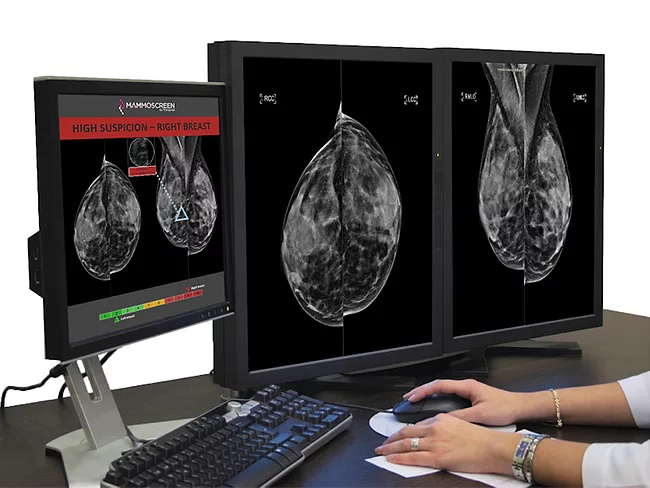
PARIS – Therapixel SA, of Nice, France, has obtained 510(k) clearance from the U.S. FDA for its Mammoscreen technology, a software platform based on artificial intelligence (AI) and used by radiologists for reading screening mammograms. “Obtaining FDA clearance is the result of working with radiologists over the past three years in order to develop a powerful tool providing relevant assistance in their day-to-day work,” Matthieu Leclerc-Chalvet, CEO of Therapixel, told BioWorld.
The U.S. FDA has rewritten the emergency use authorization (EUA) for the Laboratory Corp. of America Holdings Inc. (Labcorp) COVID-19 polymerase chain reaction (PCR) test to allow for diagnostic testing of those who are asymptomatic and those who have no reason to suspect they are infected with the SARS-CoV-2 virus.
The question of screening for the COVID-19 pandemic continues to absorb the interest of both the U.S. FDA and test developers, and Tim Stenzel, director of the FDA’s Office of In Vitro Diagnostics and Radiological Health (OIR), said in a July 22 webinar that the FDA is “very interested” in a fingerstick test at the point of care for screening purposes, adding that the agency sees any such applications as a priority.
Becton, Dickinson and Co. (BD) has received a green light for a premarket approval supplement from the U.S. FDA for an expanded version of its BD Onclarity HPV assay. It includes the expansion for genotype reporting beyond human papilloma virus (HPV) genotypes 16, 18, and 45.
Artificial intelligence (AI)-focused Caption Health Inc. has scored a green light from the U.S. FDA for an updated version of Caption Interpretation, which aims to help clinicians gain quick, easy and accurate measurements of cardiac ejection fraction (EF) at the point of care.
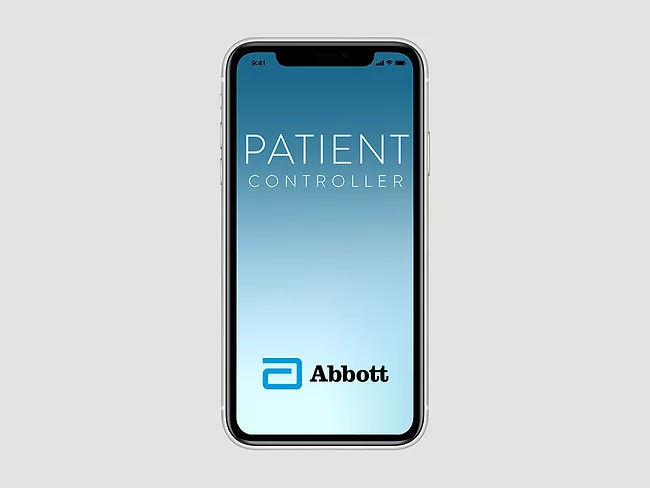
Abbott Laboratories has won the U.S. FDA’s nod for an iOS-compatible app that is designed to optimize care for people using the company’s neuromodulation devices to manage their chronic pain and movement disorders. The digital tool, which can be used on several Apple devices, is part of Abbott’s Neurosphere Digital Care connected care management platform, which launched in May.
PERTH, Australia – The U.S. FDA gave the thumbs up to Australia’s Micro-X Ltd. for its Rover mobile X-ray system. The 510(k) application was cleared in just five weeks. The concept for the Rover was originally developed under a contract with the Australian Department of Defense to prove that Micro-X’s technology could fulfill an unmet need for a full performance, digital medical X-ray imager that was light enough to be used in deployed medical facilities.
Interludes of classical music. Little kids talking in the background. Unmuted mics as panelists multitask. Gurgles of “underwater” sound. Periods of silence as speakers forget to unmute. And then the technical problems – lots of them. Such are the challenges of addressing a virtual FDA advisory committee in the time of COVID-19.
The U.S. FDA has put a considerable amount of emphasis on patient perspectives regarding medical devices in recent years, the subject of a recent webinar hosted by the Medical Device Innovation Consortium (MDIC). One of the speakers on the webinar, Carrie Kuehn, of Evidation Health of San Mateo, Calif., said that not only do device makers have a trove of valuable data at their fingertips with patient preference data, but also that the FDA’s message is, “if patients say something, we want to hear about it.”
 RSS
RSS