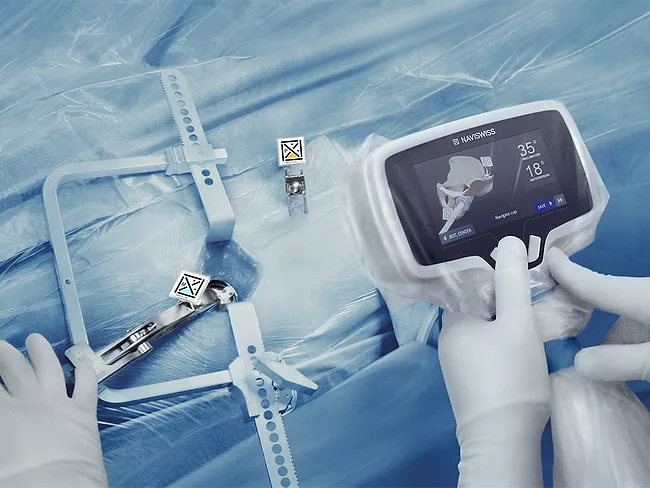
Smart assisted surgery company Naviswiss AG, of Brugg, Switzerland, has gained U.S. FDA clearance for its miniature navigation technology for hip replacement surgery. The hand-held system, with an open platform that supports all implant vendors, is being offered on a fee per-use basis.
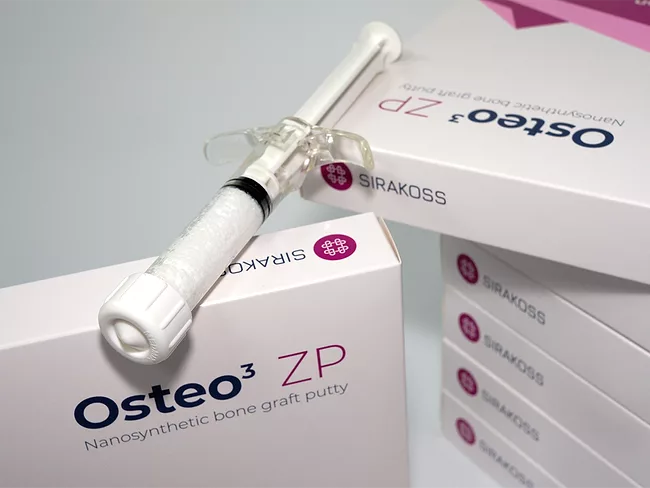
LONDON – Sirakoss Ltd. has received FDA 510(k) clearance for its nanoparticle synthetic bone graft substitute, after showing the ready-to-use putty is equivalent to the CE-approved dry formulation. Rather than granules that are mixed with a patient’s blood before administration, the inorganic calcium phosphate-based Osteo3 Zp putty consists of the granules suspended in a fully synthetic resorbable carrier.
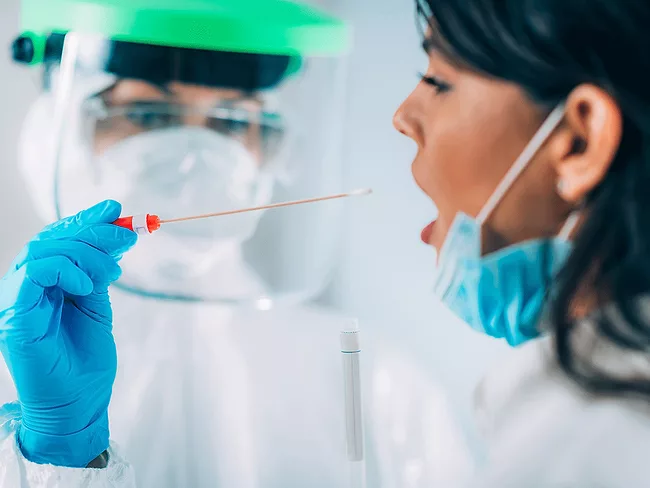
The U.S. FDA detailed which kinds of SARS-CoV-2 tests are getting top priority, with access to rolling, rapid reviews for emergency use authorization (EUA) during the unfolding pandemic. The agency is aiming to authorize point-of-care and at-home tests to better distribute the use of testing in various locations. It also is looking at automated and high-throughput tests that can offer analysis of larger batches of tests at one time.
In a step toward what may become the new normal, at least for now, the Pediatric Oncology Subcommittee of the FDA’s Oncologic Drugs Advisory Committee is meeting virtually Wednesday and Thursday to review pediatric development plans for four cancer drugs.
A wireless system to monitor mothers in labor and their fetuses has been introduced by Royal Philips NV in the U.S. Known as the Avalon CL Fetal and Maternal Pod and Patch, it is commercialized under recently updated guidance from the U.S. FDA. The Amsterdam-based company is continuing to pursue a standard 510(k) clearance for the system, which is marketed in European countries, Australia, New Zealand and Singapore.
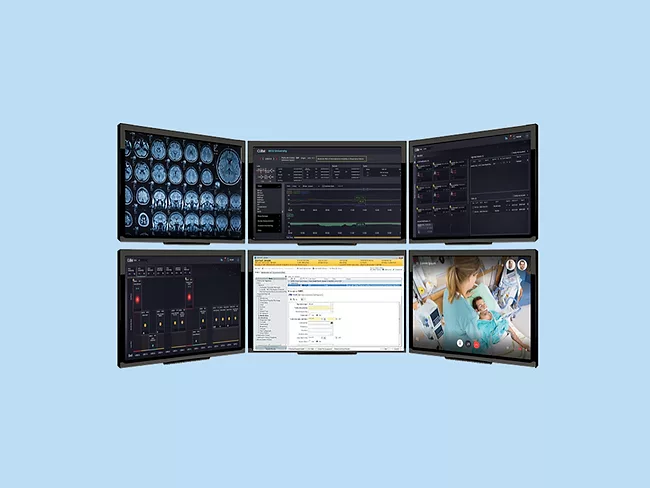
Clew Medical Ltd., of Netanya, Israel, has secured an emergency use authorization (EUA) from the U.S. FDA for its ClewICU system for use with COVID-19 patients in intensive care units (ICUs). The screening system is a standalone software as a medical device product that uses vital signs, laboratory data, medications and other information to assess the likelihood a patient has been infected with SARS-CoV-2, the virus that causes COVID-19.
The U.S. FDA granted San Diego-based Illumina Inc. an emergency use authorization (EUA) for the first COVID-19 diagnostic test that uses next-generation sequencing (NGS). In addition to diagnosing infection with SARS-CoV-2, the COVIDSeq test can help researchers track mutations in the coronavirus.
The impact of the COVID-19 pandemic has reached into quarters that are not historically problematic for makers of diagnostics, including China’s import and export practices for test kits. According to one caller on an FDA diagnostic town hall, export officials in China have a blacklist and a whitelist for test kits, but there is some dispute as to whether kits that are eligible for distribution in the U.S. can get off the blacklist unless that kit is specifically called out via the emergency use authorization (EUA) program.
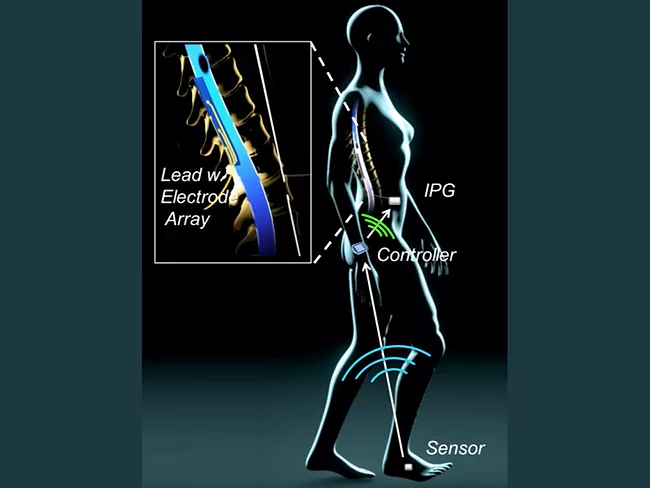
The U.S. FDA granted Gtx Medical BV a breakthrough device designation for its implantable Go-2 Targeted Epidural Spinal Stimulation (TESS) system. The device enabled patients who had sustained traumatic spinal cord injuries to regain voluntary control over previously paralyzed muscles and walk again four or more years after paralysis, according to a study previously published in Nature.
Rear Admiral John Polowczyk, vice director of logistics for the Joint Chiefs of Staff, said in a Senate hearing that the one solution to managing pandemic supplies might be to use federal taxpayer dollars to sustain inventories in private-sector warehouses.
 RSS
RSS