The U.S. FDA has greenlighted Ancora Heart Inc.’s IDE request to conduct the Corcinch-HF pivotal clinical trial. The study is intended to demonstrate the safety and effectiveness of the Accucinch ventricular restoration system in patients with heart failure and reduced ejection fraction (HFrEF).
Ethicon U.S. LLC has prevailed in a preliminary action seeking a temporary restraining order against Advanced Inventory Management (AIM) Inc., of Mokena, Ill., which is accused of having imported and sold surgical supplies falsely bearing the Ethicon trademark. Ethicon, a subsidiary of Johnson & Johnson of New Brunswick, N.J., further alleges the sutures were bacterially contaminated and defective.
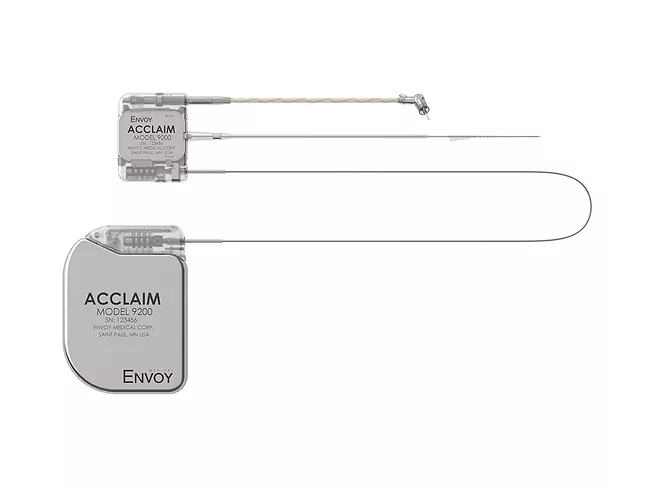
Envoy Medical Corp. got some early support for its Acclaim fully implantable cochlear implant, with a breakthrough device designation from the U.S. FDA. If approved, it would be the first cochlear implant to address hearing loss without the use of any external components.
Ekso Bionics Holdings Inc. has received a green light from the U.S. FDA to market its Eksonr robotic exoskeleton for use with patients with acquired brain injury (ABI). The company said it is the first exoskeleton product to receive the agency's nod for rehabilitation use with ABI, allowing a broader patient population to access the device. This is good news for Richmond, Calif.-based Ekso, which, like many other device companies, saw its earnings off during the first quarter.
The U.S. FDA’s response to the COVID-19 pandemic may have got off to a rocky start, but the agency’s device center has changed course rather quickly several times in recent months. Tim Stenzel, director of the FDA’s Office of In Vitro Diagnostics and Radiological Health, said on the latest COVID-19 town hall that the push is now on several relatively novel points of emphasis, including high-throughput testing, a technology that may prove critical to corralling the SARS-CoV-2 virus when flu season arrives later this year.
Medtronic plc has won the U.S. FDA’s nod for the first deep brain stimulation (DBS) system that integrates Brainsense, the company’s technology to sense and record brain signals for more personalized treatment. The next-generation Percept PC DBS with Brainsense is approved to treat symptoms associated with Parkinson’s disease, essential tremor, dystonia, epilepsy and obsessive-compulsive disorder.
Precardia Inc. received some good news from the U.S. FDA, which has granted the company's catheter-based system for treating volume overload in patients with acutely decompensated heart failure (ADHF) breakthrough device designation. The device is intended to quickly reduce congestion in the venous system, known as cardiac preload, with an eye toward improving overall cardio-renal function.
Sommetrics Inc. said Tuesday that it has requested emergency use authorization from the U.S. FDA to market its Aersleep II device for sleep apnea patients at risk of COVID-19. The aim is to reduce the transmission of SARS-CoV-2, the virus that causes COVID-19, by treating infected patients with sleep apnea with Aersleep instead of continuous positive airway pressure (CPAP) therapy.
The bad news is, yes, the U.S. is in for a second wave of COVID-19, which is expected to hit during the upcoming flu season. The good news is the nation is much better prepared for the next wave, the NIH’s Anthony Fauci told a House Energy and Commerce Committee Tuesday.
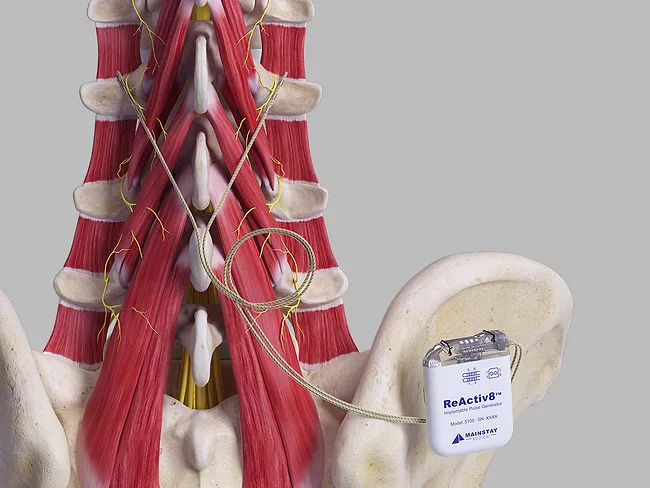
Mainstay Medical Holdings plc has won U.S. FDA approval for its Reactiv8 implantable neurostimulation device. The company is eyeing a commercial launch of the system in early 2021. The FDA approved Reactiv8 as an aid in managing intractable chronic low back pain associated with multifidus muscle dysfunction in adults who have failed therapy and are not candidates for spine surgery.
 RSS
RSS