The FDA’s safety and performance-based pathway for 510(k) devices promises to streamline premarket filings, and the FDA’s Jason Ryans said on a recent webinar that any changes to the related product-specific guidances would be applicable only prospectively. Ryan made no mention of a grace period for impending applications, however, suggesting that any such devices may have to be reworked or resubmitted into a more conventional premarket channel if they do not meet the new requirements.
Stephen Hahn of the MD Anderson Cancer Center generally managed to avoid any controversy in the Nov. 20 Senate confirmation hearing for the FDA commissioner’s job, stating for instance that he is “open to all science and data that could potentially support” drug reimportation as a solution to the drug pricing problem.
The FDA’s Safer Technologies Program, or STeP, is part of an overarching emphasis on safety, and the related draft guidance focuses largely on the process of applying for a STeP device. However, a member of the FDA staff said on a webinar that device accessories – and devices that make other devices safer – are also eligible for the program.
An FDA advisory panel struggled at times to give the agency clear advice on the role of materials in device failures, but the panel nonetheless lent its support to the notion that device makers should disclose all materials used to fabricate device implants in product labels.
GAITHERSBURG, Md. – The Nov. 13 U.S. FDA hearing on immune response to metal-containing implanted medical devices suggested that there are many more questions than answers about how to prevent the associated adverse events. However, a key hurdle is the absence of widely recognized tests for determining patient sensitivity to these metals.
Marlborough, Mass.-based Hologic Inc. got good news from the U.S. FDA, which has given the green light for the 3Dquorum imaging technology, which employs Genius AI. The technology works along with Hologic's Clarity HD high-resolution imaging technology to reduce tomosynthesis image volume for radiologists by 66%, the company said.
Nanthealth Inc. has received U.S. FDA clearance for a whole exome sequencing test to determine overall tumor mutational burden (TMB) in cancer tissue. Known as Omics Core, the first-of-its-kind in vitro diagnostic test is available now as part of Nanthealth's GPS Cancer molecular profiling suite.
The U.S. FDA's two-day advisory hearing on industrial ethylene oxide (EtO) sterilization of medical devices wrapped up with a discussion of how duodenoscopes can be made safer. The conclusion was largely that employee churn, training and work conditions were the biggest challenges – issues over which the FDA has nearly zero leverage.
The first day of the FDA's two-day hearing on ethylene oxide (EtO) sterilization of medical devices addressed several alternatives to EtO, but the advisory panel had little advice to offer the agency other than to encourage tweaks to sterilization procedures in order to get past the immediate problem.
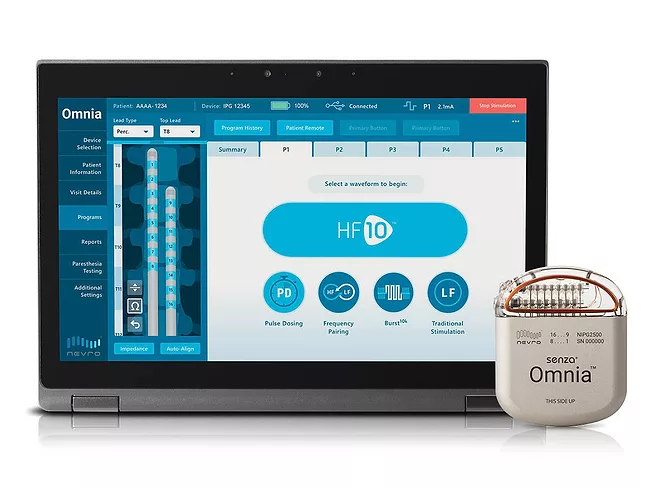
The U.S. FDA has approved the Senza Omnia Spinal Cord Stimulation (SCS) system from Redwood City, Calif.-based Nevro Corp. The system is the first such system that delivers Nevro's high frequency 10,000 Hz stimulation, known as HF10, but also all other therapeutic spinal cord stimulation frequencies.

 RSS
RSS