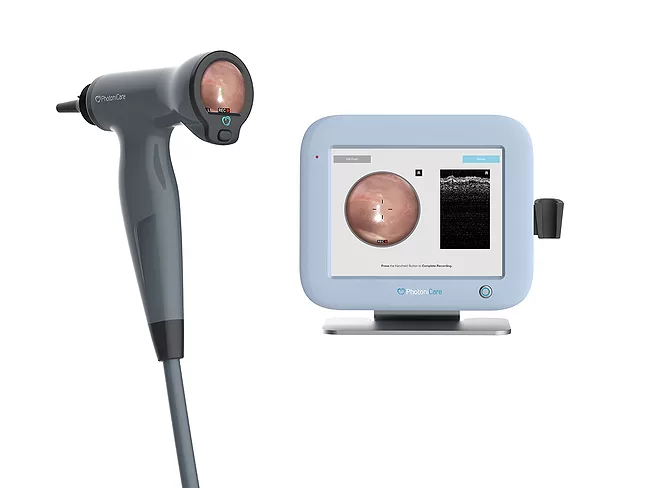
Ear infections are a common occurrence in kids, causing pain, fever and, in worst cases, hearing loss. Yet up to half of all cases are misdiagnosed, due to doctors’ inability to look deep into the middle ear where infections reside. Now, the U.S. FDA has cleared the Tomi Scope, a first-in-class technology from Photonicare Inc., of Champaign, Ill., that allows doctors to not only detect the presence or absence of fluid in the middle ear but characterize the type of fluid they see.
Neovasc Inc., of Richmond, British Columbia, has submitted a premarket approval application to the U.S. FDA for its Neovasc Reducer. The minimally invasive stent, which was granted breakthrough status in October 2018, is used to treat refractory angina.
The FDA's revised draft guidance for clinical decision support (CDS) systems was intended to fix several glaring holes in the first draft, but multiple stakeholders argued that the second draft contradicts the related provisions of the 21st Century Cures Act when it comes to CDS systems that purport to drive or guide clinical decision making.
HONG KONG – South Korea’s Medical IP Co. Ltd., an artificial intelligence (AI)-based medical 3D printing and software company, has won the FDA’s nod for its medical imaging analysis solution Medical Image Processing (Medip).
The U.S. FDA’s attempt to use objective performance criteria for class II devices offers several advantages for device makers. However, the Advanced Medical Technology Association (Advamed) said in comments to the docket for two such sub-guidances that the documents are too narrowly scoped to be of much use in many instances.
Augmedics Inc., a Chicago-based startup focused on augmented reality (AR) applications in health care, has scored a 510(k) clearance from the U.S. FDA for its Xvision Spine system. The company launched the device, which provides surgeons with X-ray quality insights into a patient’s anatomy and real-time surgical navigation, on Monday, with distribution slated to begin in the new year. While the FDA has cleared other AR products, Xvision Spine (XVS) is the first to be indicated for guided surgery.
Seven years after an advisory hearing on the subject, the FDA has determined that cranial electrotherapy stimulation (CES) devices will be slotted as class III devices when used for depression. The decision comes despite a number of irregularities that took place at the February 2012 advisory hearing.
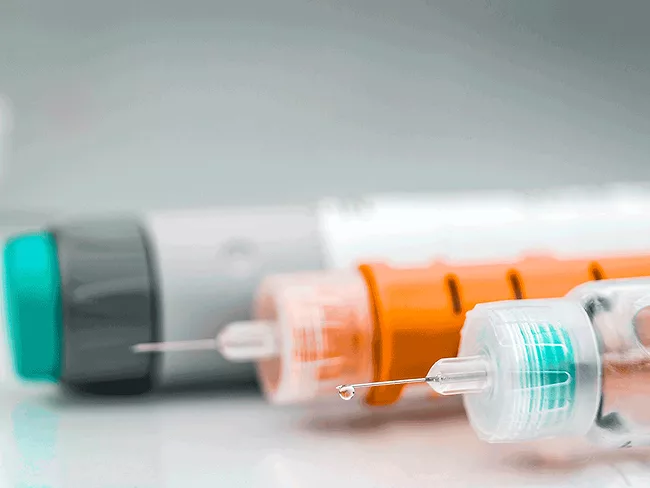
One sentence buried more than 1,500 pages into a fiscal 2020 spending bill the U.S. Senate passed Thursday could open the door to a broader range of insulin biosimilars. The provision, requested by the FDA, expands the definition of a “biological product” to include chemically synthesized polypeptides.
Dublin-based Medtronic plc reported Wednesday that the U.S. FDA has given the green light to its Stealth Autoguide system. The company said it is the first cranial robotic platform that integrates with its enabling technology portfolio to create an end-to-end procedural solution.
Heart failure is a leading cause of disability and death in the U.S., but many cases are diagnosed late due to limited access to echocardiography, the primary method of detecting the condition. To address that need, the U.S. FDA has granted breakthrough device designation to Eko Devices Inc., of Berkeley, Calif., for an electrocardiogram (ECG)-based algorithm that could serve as an easily accessible screening tool for heart failure during routine physical exams.
 RSS
RSS