The volume of U.S. FDA warning letters to device makers oscillated significantly in recent years, but the agency posted a handful of these letters to kick off the new year. Five letters were posted Jan. 14, and dated between Dec. 6 and Dec. 19, 2024, but otherwise seem to have little in common.
With key officials yet to be confirmed at the U.S. Department of Health and Human Services, the acting secretary imposed an immediate pause throughout the department on publicly issuing any document or communication without first getting it approved by a presidential appointee.
Roche AG secured U.S. FDA 510(k) clearance for its cobas liat sexually transmitted infection (STI) multiplex assay panels. The tests, which also received a Clinical Laboratory Improvement Amendments waiver, will enable clinicians to detect several STIs including chlamydia, gonorrhea and Mycoplasma genitalium, in as little as 20 minutes.
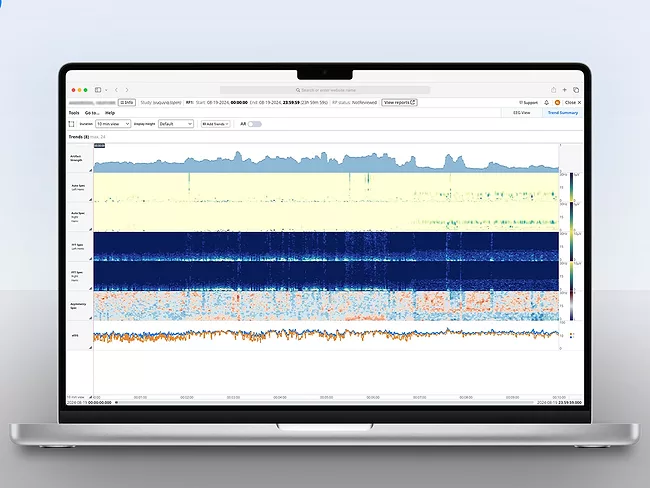
Standing for live visualization of brain circuits, LVIS Corp launched the cloud-based Neuromatch Access platform as a software as a service to help neurologists and medical professionals review, interpret and analyze electroencephalogram (EEG) data.
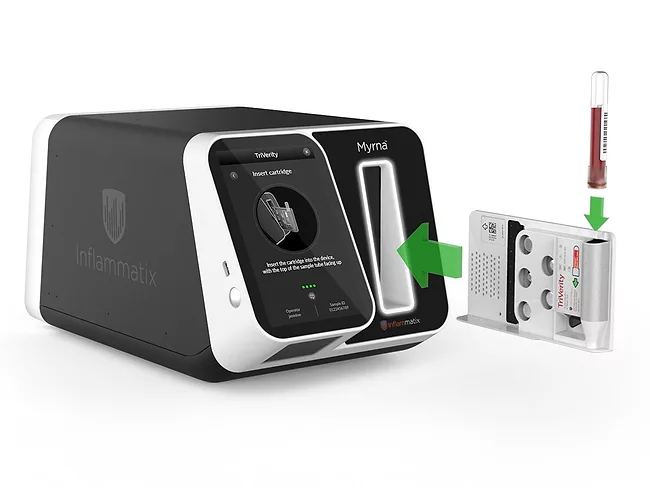
Just a few weeks later than expected, Inflammatix Inc. secured U.S. FDA clearance of the Triverity test system for use in emergency triage of patients with suspected acute infection or sepsis. The molecular blood test is the first to identify bacterial and viral infections and provide an all-cause risk evaluation of the likelihood of developing severe illness.
It’s one thing for the scientific community to propose a fundamental change to the way obesity is defined and diagnosed. But it’s another for that proposal to be adopted by regulators, especially when the current definition that relies primarily on the body mass index is entrenched in guidance and obesity drug development and approval.
Med-tech firms have gnashed their teeth for decades over the use of the term “recall,” given that some recalls are mere corrections to product labels while others entail a full product withdrawal. The U.S. FDA recently provided a glossary of terms under the heading of recall – a move that comes short of industry’s preference that the term be jettisoned altogether.
The sedate uptake of pulsed field ablation (PFA) in Europe failed to presage the enthusiasm that drove the technology’s extraordinarily rapid adoption in the U.S. in 2024. Used to treat atrial fibrillation, PFA received its first U.S. FDA approval in Dec. 2023. At the time, Clarivate estimated that PFA had 7% of the global cardiac ablation market. By year-end 2024, it had 20% and Boston Scientific Corp. projected that PFA would represent up to half of the market by the close of 2025.
The U.S. FDA’s Accreditation Scheme for Conformity Assessment (ASCA) program has its benefits, but industry had some sharp words for the agency in commenting on the 2024 ASCA draft guidance. The Advanced Medical Technology Association stated that FDA reviewers asked for full conformity test results for roughly 5% of premarket applications, a rate seen as excessive given the program’s design.
The U.S. FDA posted a draft guidance that would revisit a 2014 final guidance on sex-specific data drawn from medical device clinical trials, expanding the scope to include considerations of gender.
 RSS
RSS