The FDA’s August 2024 draft guidance for predetermined change control plans (PCCPs) for all device types has provoked some misgivings among industry, with both the Medical Device Manufacturers Association and the Advanced Medical Technology Association blasting the draft’s limitations on the scope of the changes that could be included in a PCCP.
The FDA announced a new pilot program for communication of medical device recalls, but industry may be wary of a program that seems to be driven toward early notification of what the agency believes “are likely to be high-risk recalls.” The agency’s device center states that this latest effort is designed to “improve the timeliness of communications” of corrective actions undertaken by device manufacturers. This would apply when the corrective action is as significant as a device removal and when the corrective action constitutes nothing more than an update to a product’s instructions for use.
The health care potential for generative artificial intelligence comes with hazards such as the inadvertent effects of poor prompt engineering practices, but Anil Bhatta of Deloitte Consulting told a U.S. FDA advisory committee that this risk could be managed by rules that would thwart any consequent problems, such as an inadvertent jailbreak of the algorithm’s intended use.
The first day of the U.S. FDA’s two-day advisory hearing on generative artificial intelligence reflected some of the anxieties attached to this emerging technology, with the phenomenon of hallucinations driving several calls for more stringent regulation of this class of products that might be applied toward other entries in the class of artificial intelligence.
On the heels of U.S. FDA approval for Neurophet Aqua, an updated version of its artificial intelligence (AI)-based magnetic resonance imaging analysis software for the brain, Neurophet Inc. is preparing for an IPO in 2025 and expansion into U.S. and European markets.
Former U.S. FDA Commissioner Margaret Hamburg has added her voice to concerns that the incoming Trump administration’s pledge to slim down federal agencies will damage public health. “These are certainly challenging times,” Hamburg told delegates at the World Science Forum, Budapest, Hungary, meeting to discuss issues dominating the interface between science and policy.
President-elect Donald Trump’s nomination of Robert F. Kennedy Jr. as U.S. Secretary of Health and Human Services (HHS) grabbed headlines globally, but the political jostling to come will determine whether Kennedy can secure the seat.
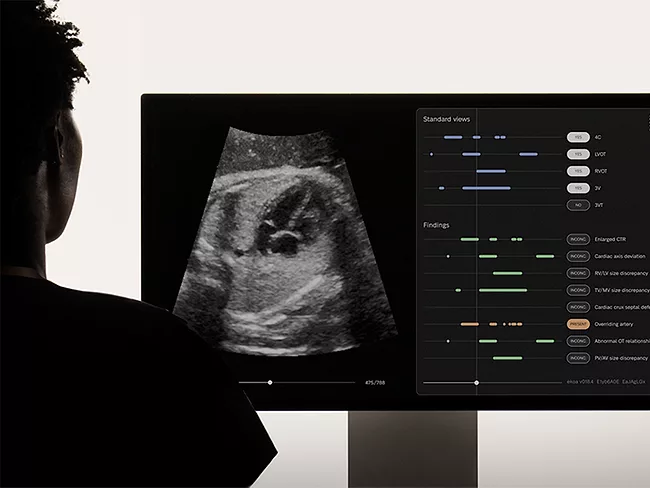
The U.S. FDA granted Brightheart SAS 510(k) clearance for its artificial intelligence software which helps doctors detect congenital heart defects in fetuses. The software will transform prenatal ultrasound evaluations of the fetal heart and improve the outcomes for newborns, Cécile Dupont, Brightheart’s CEO, told BioWorld.
Smartcardia SA received U.S. FDA clearance for mobile outpatient cardiac telemetry for its seven-lead live ECG monitoring patch and cloud platform. With the approval, the solution can now be used for remote live monitoring of a patient’s ECG and immediately notify clinicians in cases of arrhythmias.
Makers of devices and diagnostics face a new set of policy questions following the 2024 U.S. general elections, but many of the impending changes at the executive branch seem directed more toward drugs and vaccines, seemingly leaving the device and diagnostics industries largely out of harm’s way.
 RSS
RSS