Seastar Medical Holding Corp. was granted a third breakthrough device designation by the U.S. FDA for its Selective Cytopheretic device (SCD), a biomimetic membrane-based device used to treat patients with acute inflammatory conditions, which can cause organ failure and death. The latest designation is for its use in patients with hepatorenal syndrome. It follows other indications including cardiorenal syndrome and in adults with acute kidney injury (AKI).
The U.S. FDA is once again revising its guidance on how drug and device makers can share scientific reprints and reference texts with health care providers regarding off-label uses of their approved or cleared products.
No one is looking in the rearview mirror at Medtronic plc as a fresh U.S. FDA approval for the next generation version of its intrathecal drug delivery system allows the company to leave behind a spate of problems associated with its Sychromed II device. The device delivers medication directly to the fluid surrounding the spinal cord via a small catheter positioned to deposit the drug at the site of most severe pain. The targeted delivery improves management of chronic and cancer-related pain as well as management of severe spasticity without use of systemic opioids.
The FDA town hall on the final day of the 2023 edition of the Med Tech Conference included the usual patter about the achievements at the agency’s Center for Devices and Radiological Health (CDRH), but a few useful nuggets of information nonetheless slipped through in this year’s session. CDRH director Jeff Shuren acknowledged that the agency is steering device advisory committee hearings away from votes on whether to approve a product, an approach he said is under consideration at the agency’s other product centers as well.
Responding to the burgeoning field of digital health, the U.S. FDA reported the creation of a new Digital Health Advisory Committee that it expects to be up and running in 2024.
The U.S. FDA 510(k) clearance of Airamed GmbH’s Airascore software could see millions of people benefitting from early accurate diagnosis of Alzheimer’s disease and other types of dementia. Airascore is a medical image management and processing system that uses deep learning and artificial intelligence (AI) to assess brain volumetry data on MRI scans in as little as five minutes.
The U.S. FDA’s final guidance for clinical decision support (CDS) systems may be the subject of two citizen’s petitions requesting the agency scrap the guidance and start over, but that doesn’t mean the agency is not enforcing the terms of the guidance. Danvers, Mass.-based Abiomed Inc., took in a Sept. 19 warning letter stating that the company’s Impella Connect system qualifies as a CDS product because it provides “patient-specific medical information to detect a life-threatening condition,” an interpretation that is sure to intensify the larger debate about whether the CDS final guidance is an extra-statutory exercise in regulatory engineering.
The U.S. FDA’s draft rule for regulation of lab-developed tests (LDTs) carries an exceptionally ambitious timeline of completion and enactment by the time the next user fee agreement kicks in, and some see big problems with the timeline laid out by the agency. However, the FDA’s Elizabeth Hillebrenner said that Congress can tweak user fee legislation such that a specific set of user fee sources kicks in off schedule, thus giving the agency a little more leeway in completing any activity related to the proposed rule.
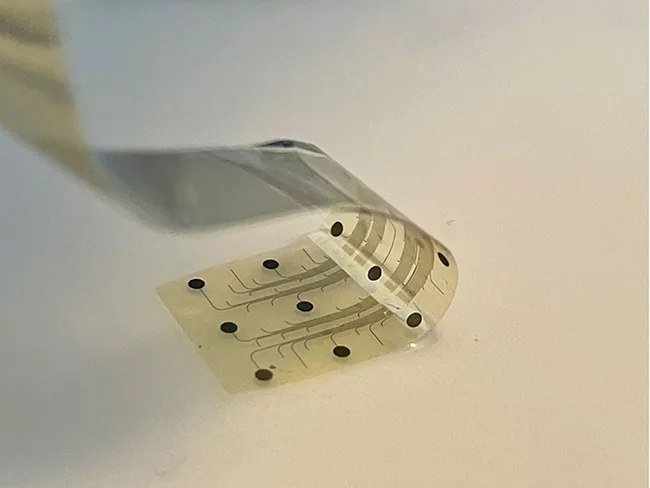
Inbrain Neuroelectronics SL was granted a breakthrough device designation from the U.S. FDA for its graphene-based neural platform as an adjunctive therapy for treating Parkinson’s disease. The platform, called intelligent network modulation system, harnesses the power of graphene and artificial intelligence to deliver highly focused, adaptive neuroelectronic therapy that re-balances pathological neural networks, easing the symptoms of Parkinson’s.
The U.S. FDA has finally let fly with a draft rule for regulation of lab-developed tests (LDTs), an 83-page document that delves into the legal controversies regarding whether the agency has the requisite statutory authority. However, Allyson Mullen, a director in the D.C. office of Hyman, Phelps & McNamara P.C., told BioWorld that the emergence of this draft rule doesn’t mean Congress won’t eventually be dragged back into the LDT fray, particularly if stakeholders litigate to overturn the draft.