Two days after the U.S. FDA announced approval of gene therapy Lenmeldy (atidarsagene autotemcel), making it the first treatment option for rare disease metachromatic leukodystrophy, Orchard Therapeutics and parent firm Kyowa Kirin Co. Ltd. disclosed the wholesale acquisition price of $4.25 million for the one-time treatment, which edges out hemophilia B gene therapy Hemgenix (etranacogene dezaparvovec) to become the world’s most expensive drug.
Vicore Pharma Holding AB was granted a U.S. FDA breakthrough device designation for Almee, a cognitive behavioral therapy (CBT) software, to be used as an adjunct treatment by patients with anxiety symptoms due to pulmonary fibrosis. Vicore developed the nine-week CBT digital therapy in partnership with Alex Therapeutics AB.
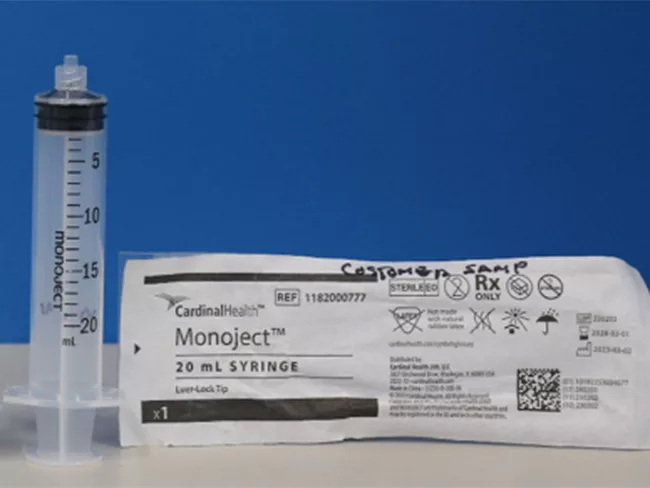
The U.S. FDA has followed up on reports of problematic syringes made by several companies in mainland China, recommending that U.S. suppliers, consumers and health care organizations stop using these products unless no alternatives are available. The agency said it has issued warning letters to three of these companies, at least one of which appears to have been the supplier of Monoject syringes that have been the subjects of recent FDA recalls.
About six months after Johnson & Johnson (J&J) returned rights to the compound, oral Tryvio (aprocitentan) won FDA clearance for Idorsia Ltd. Given once daily at a 12.5 mg dose, Tryvio is indicated for hypertension in combination with other blood pressure drugs in patients whose condition is not adequately controlled.
The U.S. FDA has approved Beigene Co. Ltd.’s Tevimbra (tislelizumab-jsgr) as a monotherapy for treating adults with unresectable or metastatic esophageal squamous cell carcinoma following prior chemotherapy that did not include a PD-1 inhibitor. A humanized IgG4 anti-PD-1 monoclonal antibody, tislelizumab is designed to minimize binding to Fc-gamma receptors on macrophages, helping to aid the body’s immune cells to detect and fight tumors.
The U.S. FDA is holding a series of town halls on the use of sterilization methods as alternatives to ethylene oxide (EtO) in response to other federal agency rulemaking, and some of these changes in sterilization methods will not require a new regulatory filing.
At first glance, the number of drugs that received accelerated approval from the U.S. FDA’s Center for Drug Evaluation and Research (CDER) in 2023 was nothing to write home about. Yes, CDER granted nine accelerated approvals last year, up from six in 2022. But the proportion of novel drugs with accelerated approval was 16% both years. And when compared with the 12 drugs in 2020 and the 14 that received accelerated approval in 2021, last year’s crop was a little lackluster. However, a deeper look at the 2023 class of accelerated approvals shows a historic milestone. For the first time since the path was created in 1992, the number of novel biologics getting accelerated approval at CDER outpaced the number of small-molecule drugs.
The U.S. FDA posted two warning letters to device makers in the second week of March 2024, one each to Exactech Inc., of Gainesville, Fla., and the other to Nobles Medical Technology II Inc., of Fountain Valley, Calif. The themes of these warnings are entirely different, with Noble receiving a warning regarding clinical trial oversight and Exactech taking a hit for routine good manufacturing compliance issues, showing that the FDA is active in the post-COVID compliance realm.
The U.S. FDA approved Orchard Therapeutics plc’s BLA for gene therapy atidarsagene autotemcel, making it the first treatment option for metachromatic leukodystrophy in the U.S. The one-time treatment, branded Lenmeldy, is indicated for children with presymptomatic late infantile, presymptomatic early juvenile or early symptomatic early juvenile disease.

 RSS
RSS