Allecra Therapeutics GmbH secured U.S. FDA approval for its beta-lactam/beta-lactamase inhibitor combination, Exblifep (cefepime/enmetazobactam), in complicated urinary tract infections, including pyelonephritis, in patients 18 years and older.
A China-based manufacturer of active pharmaceutical ingredients (API) suspended producing API for the U.S. market following an FDA inspection that found “significant deviations” from good manufacturing practices at the facility.
Korean neurodegenerative disease-focused Aribio Co. Ltd. gained the U.K.’s regulatory clearance to start the phase III Polaris-AD trial on AR-1001 (mirodenafil), an investigative therapy for early Alzheimer’s disease (AD). The U.K.’s Medicines and Healthcare products Regulatory Agency gave notice of acceptance to Seoul, South Korea- and San Diego-based Aribio for the clinical study on Feb. 21 after “confirming a favorable ethical opinion,” Aribio said. AR-1001 is an oral phosphodiesterase-5 inhibitor under development to treat early AD.
In the end, Minerva Neurosciences Inc. NDA submission wasn’t able to overcome the U.S. FDA’s concerns regarding data for dual 5-HT2A/sigma 2 antagonist roluperidone. The agency issued a complete response letter (CRL) for the application, which had been seeking approval as the first treatment specifically targeting negative symptoms of schizophrenia.
The U.S. FDA’s approach to predetermined change control plans (PCCP) for medical devices has been widely viewed through the lens of artificial intelligence software, but the potential scope of PCCP is much broader than merely evolutionary software and iterative device designs.
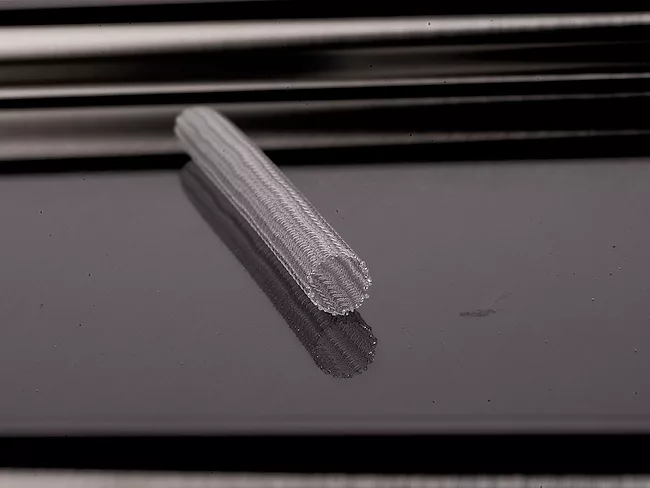
Woven Orthopedic Technologies LLC secured a second U.S. FDA 510(k) clearance for the use of its Ogmend implant enhancement system in spine surgery. The approval is for the large size Ogmend sleeve which is compatible with pedicle screws up to 10.5 mm and will give surgeons a tool to be able to easily secure stable fixation between the screw and bone during orthopedic surgery.
Abbvie Inc.’s blockbuster drug Humira is getting a 10th challenger that could give all the other adalimumab biosimilars a run for their money – depending on pricing and formulary coverage, of course. After delays caused by the COVID-19 pandemic and manufacturing issues, the U.S. FDA approved Simlandi, previously known as AVT-02, as a Humira biosimilar and interchangeable Feb. 23.
Korean neurodegenerative disease-focused Aribio Co. Ltd. gained the U.K.’s regulatory clearance to start the phase III Polaris-AD trial on AR-1001 (mirodenafil), an investigative therapy for early Alzheimer’s disease (AD). The U.K.’s Medicines and Healthcare products Regulatory Agency gave notice of acceptance to Seoul, South Korea- and San Diego-based Aribio for the clinical study on Feb. 21 after “confirming a favorable ethical opinion,” Aribio said. AR-1001 is an oral phosphodiesterase-5 inhibitor under development to treat early AD.
In recent years, the U.S. Congress has come to rely unduly on continuing budget resolutions to fund government operations, and fiscal year 2024 is no exception. The current continuing resolution (CR) for the FDA budget is set to expire March 1, but there is concern that Congress will resort yet again to a CR to cover the balance of fiscal 2024, a predicament which suggests that the FDA’s appropriations may be flat relative to fiscal year 2023.
The good news is that the U.S. FDA’s complete response letter (CRL) for Venatorx Pharmaceuticals Inc.’s intravenous antibiotic combination, cefepime-taniborbactam, in complicated urinary tract infections (cUTIs) requested no additional clinical testing. The bad news is the inevitable delay for a drug Venatorx and partner Melinta Therapeutics Inc. are aiming to position as a much-needed option for the fight against drug-resistant gram-negative infections.

 RSS
RSS