The FDA’s final rule for the de novo petition process took nearly three years to wrap up, a timeline likely extended by the COVID-19 pandemic, but the final rule retains some controversial features seen in the 2018 draft. Among these is a provision for FDA inspections before determining whether to grant the petition, a provision that was blasted by multiple commenters as extra-statutory and a needless source of drag on these applications.
After nearly 20 years in development, Takeda Pharmaceutical Co. Ltd.’s antiviral drug, maribavir, will get its day before the FDA’s Antimicrobial Drugs Advisory Committee Oct. 7. During the course of its development by various companies, the drug’s indication has morphed from a prophylaxis to a treatment of resistant or refractory cytomegalovirus infection in both solid organ and hematopoietic stem cell transplant recipients.
The FDA has granted clearance of Siemens Medical Solutions Inc.’s photon-counting computed tomography (CT) scanner, Naeotom Alpha. The new diagnostic imaging device uses a photon-counting detector that measures individual X-rays that pass through a patient's body, as opposed to current systems that use detectors that measure the total energy contained in X-rays at once. The scanner then transforms the information from the X-ray photons into a detailed three-dimensional image, which can be used by physicians to assist diagnosis or treatment preparation planning.
The FDA’s 2019 approval of Jacobus Pharmaceutical Co. Inc.’s Ruzurgi to treat children ages 6 to 17 with Lambert-Eaton myasthenic syndrome must be set aside because it violated the Orphan Drug Act in light of Catalyst Pharmaceuticals Inc.’s seven-year orphan exclusivity for its LEMS drug, Firdapse, the U.S. Court of Appeals for the 11th Circuit ruled Sept. 30.
Jury trials for product liability litigation are not always the last stop for these lawsuits, but courts are more frequently banning device makers from presenting evidence related to premarket filings in these proceedings. One example of this was the pelvic mesh trial of McGinnis v. Bard, in which the trial judge allowed the plaintiff to make nearly two dozen references to the FDA without allowing rebuttal from counsel for the defense, thus biasing a jury that awarded the plaintiff $68 million without hearing the entirety of the evidence.
As expected, Mirum Pharmaceuticals Inc. won FDA clearance for Livmarli (maralixibat), a minimally absorbed ileal bile acid transporter inhibitor, for cholestatic pruritus in patients with the rare liver disease Alagille syndrome, 1 year of age and older.
The FDA unveiled a draft guidance addressing the responsibilities of clinical investigators for safety reporting for investigational drugs and devices, a novel attempt to combine the disparate adverse event reporting timelines for investigational drugs and devices.
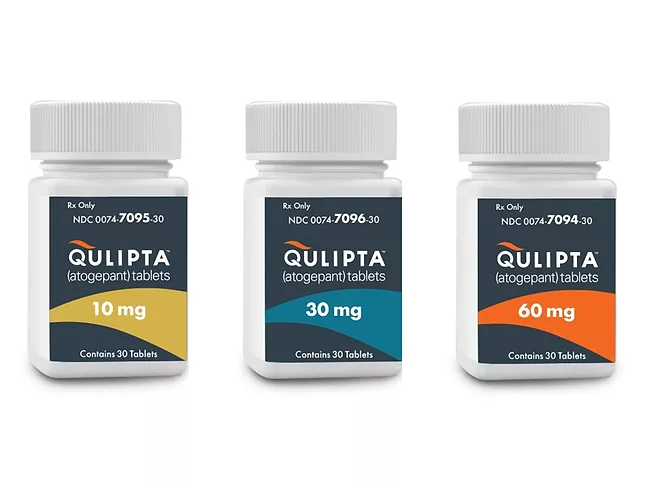
With the FDA approval of Abbvie Inc.’s Qulipta (atogepant) to prevent episodic migraine in adults, the oral calcitonin gene-related peptide (CGRP) receptor antagonist became the first specifically developed for preventing migraine.
As part of its real-world evidence (RWE) program, the U.S. FDA is issuing a draft guidance on using electronic health records and medical claims data in clinical trials to support a drug’s safety and effectiveness.
Thanks to a drop in the cost of conducting U.S. FDA reviews, it’s getting even cheaper to use a priority review voucher (PRV) to shave four months off the agency’s standard 10-month drug review.
 RSS
RSS