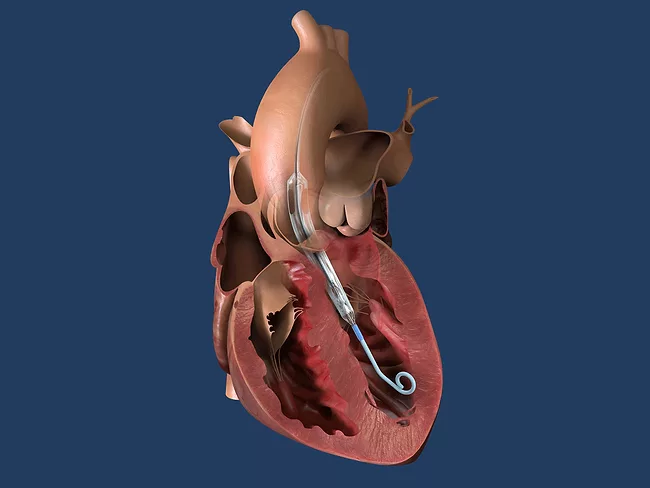
Abiomed Inc. is one of a number of companies whose share prices took a hit in the early days of the COVID-19 pandemic, but the company has since rebounded, thanks in part to the news that the FDA has granted the company a breakthrough device designation for its Impella ECP device. The external counterpulsation (ECP) system may eventually make significant headway in the hemodynamic support space thanks to the small size of the device, a key feature for patients undergoing high-risk percutaneous coronary intervention (PCI) procedures.
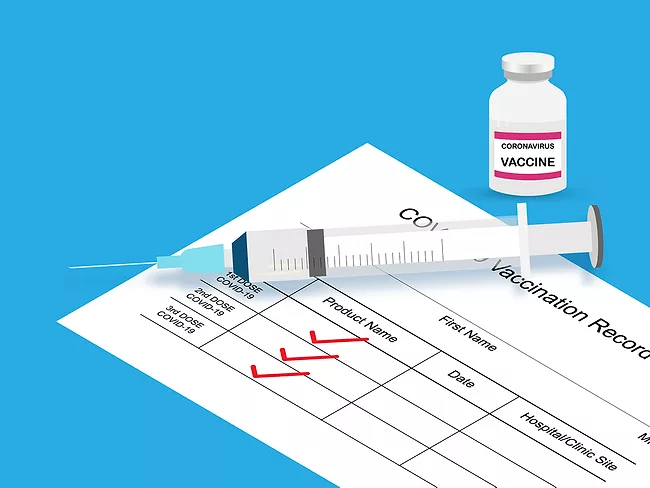
Plans for offering COVID-19 vaccine booster shots in the U.S. took a big step forward Aug. 18, as Health and Human Services (HHS) public health and medical experts laid out their intention to offer booster shots across the country for people 18 and older beginning the week of Sept. 20 and starting eight months after an individual's second dose.
Abbott Laboratories received FDA approval for its Amplatzer Amulet left atrial appendage occluder to treat people with atrial fibrillation who are at risk of ischemic stroke about a month earlier than generally expected, given the backlog at the FDA. The dual-closure device closes the left atrial appendage during the procedure, reducing the risk of blood clots immediately and eliminating the need for blood thinners both during the healing process and longer term.
The U.S. FDA said the results of a Section 522 postmarket surveillance study of transvaginal mesh devices by Boston Scientific Corp. suggested similar effectiveness and safety outcomes at 36 months compared to native tissue repair. However, the agency said patients with mesh repair for pelvic organ prolapse (POP) are exposed to additional risks, such as mesh exposure and erosion, and thus the agency is disinclined to allow these devices back onto the market.
The FDA has granted Anchordx Medical Co. Ltd.’s Urifind, an early detection test for bladder cancer, a breakthrough device designation (BTD). This marks the first BTD given to a liquid biopsy test for bladder cancer detection in China, putting it in good stead as it gears up for an IPO.
Pfizer Inc.’s Ticovac has been approved by the FDA for immunizing those ages 1 year and older against tick-borne encephalitis, a disease that’s not endemic to the U.S. but increasingly is found in Europe and Asia. Ticovac, developed with a master seed virus, was first approved outside the U.S. 45 years ago. Before the FDA approval, the CDC had recommended that travelers on their way to high-risk areas be vaccinated in Europe though the process could take up to six months.
TORONTO – Western New York Imaging Group, a one-hour drive across the U.S.-Canadian border, will soon be the site for a hard launch of Champ, a system developed by Voxneuro Inc. that evaluates suspected cognitive brain disorder or symptoms such as fatigue, memory loss or brain fog. This comes after Voxneuro won FDA registration of the cognitive platform as a class II exempt medical license, followed last month by Health Canada approval of the system for help diagnosing concussion, traumatic brain injury and dementia.
Merck & Co. Inc.'s $1.05 billion acquisition of Peloton Therapeutics Inc. in 2019, a big bet on the hypoxia inducible factor-2 alpha inhibitor belzutifan, has paid off with an earlier-than-anticipated FDA approval of the drug for cancers associated with von Hippel-Lindau disease. The therapy will be marketed as Welireg.
 RSS
RSS