It’s not often that getting an NDA rejected by the U.S. FDA is cause for a company’s stock to rise. But in the case of Ascendis Pharma A/S, the agency’s anticipated complete response letter (CRL) for Transcon PTH (palopegteriparatide) offered some much-needed clarity and a potentially optimistic time frame for an NDA resubmission seeking approval of the once-daily hormone replacement therapy for hypoparathyroidism, news that sent the company’s shares (NASDAQ:ASND) up 24%, or $16.78, to close May 1 at $86.74.
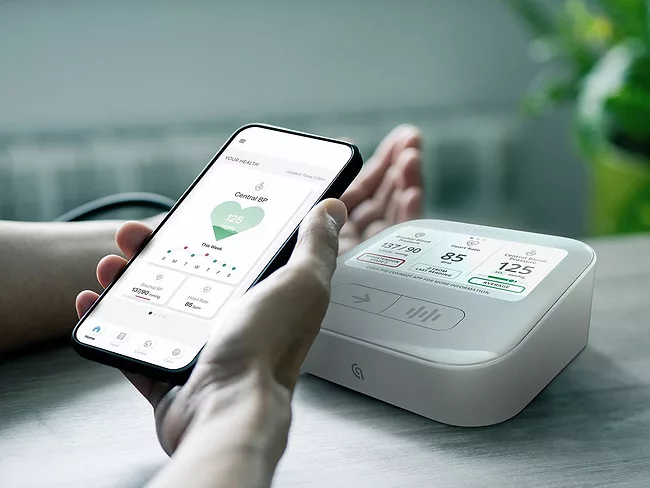
Cardiex Ltd. won U.S. FDA clearance for its Conneqt Pulse vascular biometric monitor. According to the digital health and wearables company, the device is the first in the world to provide measurements of both brachial blood pressure in the arm and central blood pressure in the heart and aorta, as well as arterial waveform analysis and other clinically relevant vascular biomarkers, outside the hospital, research institutions or clinical trial sites.
The U.S. FDA’s Oncologic Drugs Advisory Committee has recommended by a wide majority that the PARP inhibitor Lynparza (olaparib) in a combination therapy for treating prostate cancer should be restricted to only patients whose tumors have a BRCA mutation.
Rnaimmune Inc., a nonwholly owned subsidiary of Sirnaomics Ltd., has received clearance from the FDA for its IND application to conduct a phase I trial for RV-1730, a SARS-CoV-2 vaccine booster candidate.
Ocugen Inc.’s OCU-410ST (AAV5-hRORA) has been awarded orphan drug designation by the FDA for the treatment of ABCA4-associated retinopathies, including Stargardt disease, retinitis pigmentosa 19 (RP19) and cone-rod dystrophy 3 (CORD3) diseases.
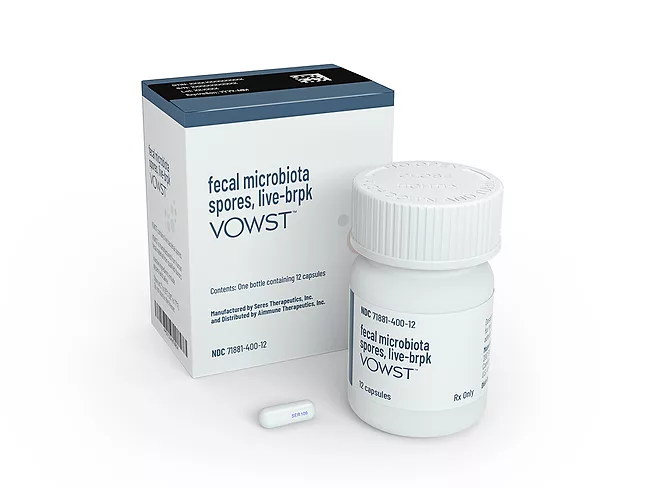
The supply chain for Seres Therapeutics Inc.’s oral microbiome therapeutic Vowst, formerly known as SER-109, to prevent recurrent Clostridium difficile infection (rCDI) is “well-established,” said David Arkowitz, the firm’s chief financial officer and head of business development. “It’s the same supply chain that we used for phase III [trials], and we’ve been manufacturing product for launch for some time.” Arkowitz spoke during a conference call with investors April 27, regarding the previous day’s U.S. FDA go-ahead for Vowst, cleared for adults with rCDI, including first recurrence following antibacterial therapy.
The legislative pile-on continues as the U.S. Congress considers more ways to take down health care costs while defending innovation. The House Energy and Commerce Subcommittee on Health met April 26 to consider 17 draft discussion bills offered as bipartisan solutions to lower costs by increasing transparency and competition across the health care playing field.
The U.S. FDA’s Oncologic Drugs Advisory Committee meets April 28 to discuss the future of Astrazeneca plc and Merck & Co. Inc.’s supplemental NDA for Lynparza (olaparib) for an expanded label to treat prostate cancer. It has a few bones to pick. The FDA said it is concerned that the efficacy and safety have not been demonstrated outside of the small population of patients with tumor BRCA mutations and that the addition of olaparib to abiraterone may cause harm in patients who are definitively negative for tumor BRCA mutations.

 RSS
RSS