The FDA’s premarket review mechanisms for class II medical devices may strike some as little more than so much regulatory esoterica, and several courts have ruled that information about the 510(k) process is inadmissible during jury trials due to the possibility of sowing confusion among jurors. An appellate court in New Jersey has ruled that such an exclusion of evidence is prejudicial in a case involving surgical mesh manufactured by two device companies, however, opening a larger debate about the propriety of such exclusions in product liability litigation for medical devices.
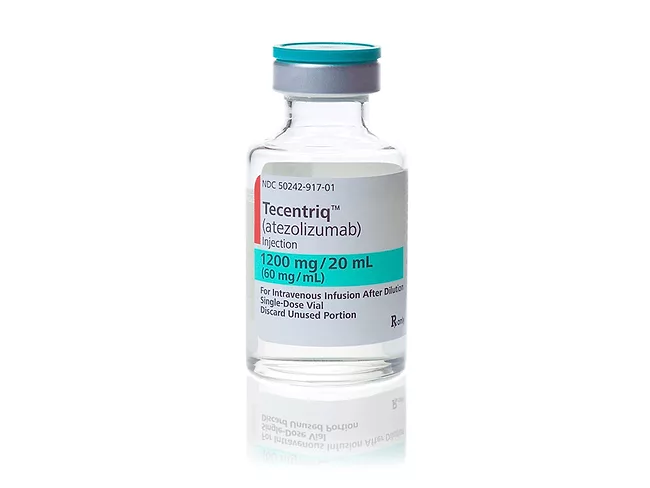
In a virtual meeting fraught with technical difficulties, the FDA’s Oncologic Drugs Advisory Committee (ODAC) voted 7-2 April 27 that the accelerated approval for Tecentriq (atezolizumab) in combination with nab-paclitaxel as a treatment for unresectable locally advanced or metastatic triple-negative breast cancer (mTNBC) in adults with PD-L1+ tumors should continue as additional trials are conducted or completed.
About a year and a half after Enzyvant Inc.'s tissue-based therapy for children born without a thymus met with a complete response letter over chemistry, manufacturing and controls concerns, its BLA is once again on track for FDA review, the company told BioWorld. Following a resubmission intended to fully address the agency's concerns, the application has a new PDUFA date of Oct. 8.
The Medical Device Innovation Consortium (MDIC) has been hard at work on the Make CAPA Cool program in an effort to beef up device makers’ corrective and preventive action (CAPA) programs. Kathryn Merrill, regulatory program director for Dublin-based Medtronic plc, said on an April 26 webinar that participants in the program have shaved CAPA times from 381 days to as few as 63 days, an improvement that industry hopes will ward off warning letters and product quality issues.
The FDA has granted de novo authorization to Neurolutions Inc. for its Ipsihand upper extremity rehabilitation system. The first-of-its kind device leverages robotics and brain-computer interface (BCI) technology to facilitate muscle training in patients with upper limb weakness or immobility following a stroke.
Depression treatment still isn’t “once and done,” but the time needed to reduce symptoms continues to drop for patients using electromagnetic stimulation. Brainsway Ltd.’s Theta Burst brings treatment times down to just three minutes with its FDA 510(k) clearance.
As part of a U.S. FDA evaluation of confirmatory trials for anti-PD-1/PD-L1 antibodies, the agency’s Oncologic Drugs Advisory Committee (ODAC) is being asked this week to consider whether three blockbuster biologics should continue to be available for certain cancer indications for which they received accelerated approval. At question is whether the data from the confirmatory trials for the Roche Group’s Tecentriq (atezolizumab), Merck & Co. Inc.’s Keytruda (pembrolizumab) and Bristol Myers Squibb Co.’s Opdivo (nivolumab) has proved sufficient benefit in particular indications and, if not, whether alternative or ongoing trials could do so.
The FDA has approved Roche AG’s Ventana MMR Rxdx panel for patients with advanced or recurrent endometrial cancer. The companion diagnostic is the first to identify patients who are eligible for treatment with Glaxosmithkline plc’s (GSK’s) Jemperli (dostarlimab-gxly) monotherapy. The PD-1 antibody immunotherapy received FDA approval on Thursday.
Nearly a full month ahead of the PDUFA date, ADC Therapeutics SA said Friday the FDA has granted accelerated approval for Zynlonta (loncastuximab tesirine), a CD19-targeted antibody-drug conjugate for the single-agent treatment of adults with relapsed or refractory large B-cell lymphoma after two or more lines of systemic therapy. The approved indication includes the treatment of patients with diffuse large B-cell lymphoma not otherwise specified and those with DLBCL arising from low grade lymphoma and high grade B-cell lymphoma, which ADC's CEO Chris Martin said would be an important point of differentiation for the product.
TORONTO – Perimeter Medical Imaging Inc. has been awarded an FDA breakthrough device designation for a machine learning medical platform it said drives ultra-high-resolution, real-time imaging of breast cancer. Data collected from multiple pathology labs in Texas this past year were fed through the optical coherence tomography (OCT) imaging system which now is at the stage where its Imgassist artificial intelligence (AI)-based algorithms can be tested.
 RSS
RSS