The COVID-19 pandemic brought in-person inspections of device manufacturing sites to a near halt, but that has left the agency with a significant backlog in these inspections. The FDA’s Associate Commissioner for Regulatory Affairs Judith McMeekin said recently that the FDA is intent on prodding Congress to provide the Office of Regulatory Affairs (ORA) with more monies, particularly given the meager increases in funding for oversight of the med-tech industry in the past few years.
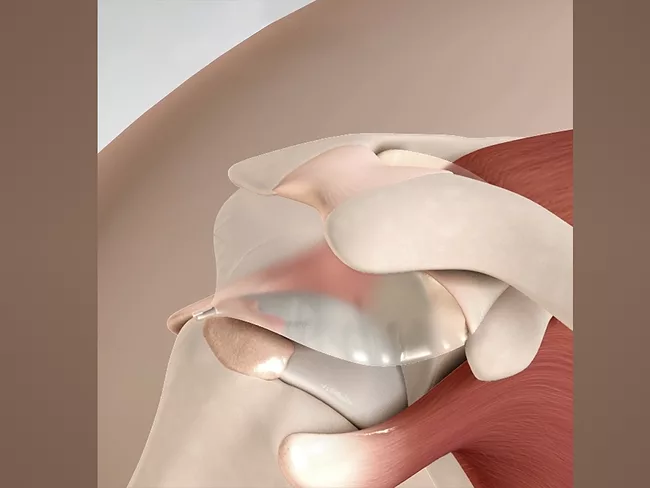
Stryker Corp. has won the FDA’s nod for an implantable balloon spacer to aid in the healing of torn rotator cuffs. The de novo clearance of the Inspace subacromial tissue spacer system comes more than a decade after the biodegradable shoulder repair implant first debuted in European markets. The minimally invasive Inspace device is intended for arthroscopy treatment of massive irreparable rotator cuff tears (MIRCTs).
Negotiations between the FDA and industry over the next device user fee are going on behind closed doors, but the agency’s summaries of these meetings suggest there are sharp disagreements. While the FDA continues to press industry on additional fees for the total product life cycle advisory program, industry’s dissatisfaction with the FDA’s fiscal management of the user fee program has prompted a demand for a one-off audit of the agency’s use of those user fees.
The FDA took Amgen Inc. to task for promotions claiming Neulasta (pegfilgrastim) Onpro on-body injector is more effective than pegfilgrastim delivered via a prefilled syringe.
The COVID-19 pandemic may have been largely responsible for the lower volume of enforcement activities against device makers in 2020, but the volume of these activities seems to be ramping up in 2021. Recently, the FDA posted a large batch of warning letters to device makers while the U.S. Department of Justice (DoJ) announced two new enforcement actions, including a $27 million fine to the operators of durable medical equipment distributorships for kickbacks, part of a growing set of signals that enforcement is back in vogue in the U.S.
TORONTO – Spino Modulation Inc., a subsidiary of Montreal-based med-tech company Spinologics Inc., has received breakthrough device designation for a vertebral body tethering (VBT) device to treat adolescent idiopathic scoliosis, one of three types of scoliosis that cause the spine to develop an abnormal curve.
Safety will be the focus July 15 when the FDA’s Cardiovascular and Renal Drugs Advisory Committee dives into the data for Fibrogen Inc.’s roxadustat as a treatment for anemia due to chronic kidney disease.
The FDA’s draft guidance for the form and content of unique device identifiers (UDIs) may have lacked the controversy of some other policies, but the 2016 draft languished for five years even though only 10 comments appear in the docket. While the agency made some concessions regarding substantial edits of the draft, the final retains a need for data delimiters in the definition of “easily readable” plain text in UDIs, despite industry’s argument that this was not required in the agency’s UDI rulemaking.
Looking to increase adoption among more tobacco users, Carrot Inc. expanded the indications for use of its smoking cessation breathalyzer with a new FDA 510(k) clearance to include the claims related to a recent study in the labeling and promotion of the sensor. The clinical trial demonstrated the Bluetooth-enabled sensor’s ability to increase a person’s motivation to quit.
The FDA granted breakthrough device designation for the Hyalex Cartilage System, a biomimetic materials platform designed to restore function and repair cartilage defects in the knee. The system, developed by Hyalex Orthopaedics Inc., combines two polymers that improve adhesion on one side and create a low-friction surface that protects the cartilage counterface on the other.
 RSS
RSS