The FDA has posted an update on its surveillance of adverse events for bronchoscopes, noting that the number of medical device reports (MDR) has risen to between 100 and 200 such reports per year in the U.S. However, the agency noted that there are half a million procedures performed with these devices each year in the U.S. alone, and that these data are insufficient to infer a specific incidence of adverse events.
While stakeholders have concerns about the costs of registries for medical devices, they are still generally seen as less expensive and simpler to administer than randomized, controlled clinical trials (RCTs). A new journal article compares the quality of the data from a registry and the data generated by a clinical trial, and despite an interest in ascertaining whether registry data provided similar data quality, the authors concluded that registry data is still more useful as a means of supporting, rather than supplanting, the RCT.
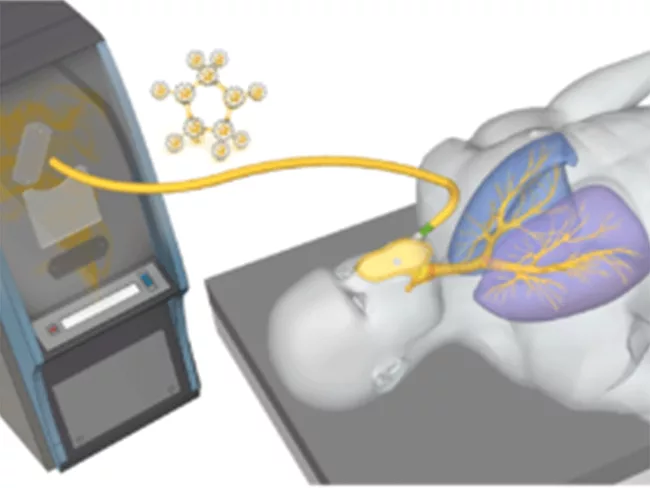
PERTH, Australia – Cyclopharm Ltd. said it received a complete response letter (CRL) from the FDA for its Technegas NDA for pulmonary embolisms. The CRL relates to better defining and validating production and delivery of the Technegas particle and other aspects of crucible manufacturing and dosimetry that need to be addressed before the NDA can be approved.
The U.S. Senate and the House of Representatives have reintroduced the Verifying Leading-edge IVCT Development (VALID) Act, a bill that would authorize the FDA to regulate lab-developed tests (LDT). The question of the agency’s statutory authority to regulate LDTs is part of a long-running debate, but the immediate question is whether Congress will see fit to deal with the question this year rather than wait until 2022, when the next device user fee will require legislative authorization.
The U.S. House Appropriations subcommittee passed an appropriations bill for the FDA that would add $257 million to the agency’s budget authority for fiscal year 2022, an increase of 8% over the currently enacted level. The Alliance for a Stronger FDA said in a June 25 statement that it will work to ensure the Senate comes up with similar numbers, characterizing the push to fully fund the agency as “a multi-year marathon, not a sprint.”
The FDA’s device center recently updated its guidance for testing and labeling of devices for compatibility with magnetic resonance (MR) fields. Some items, such as orthopedic plates and screws, might not have been evaluated for compatibility up to now. The FDA’s Sunder Rajan said that existing 510(k) and PMA devices are grandfathered in under the legacy policy, but that all implants will have to be evaluated for MRI compatibility going forward, even devices not previously subject to testing.
Accelerated approval based on a phase II single-arm trial doesn’t appear to be in the cards for Incyte Corp.’s retifanlimab as a second-line treatment for advanced or metastatic squamous cell anal cancer (SCAC). Following the lead of FDA reviewers June 24, the agency’s Oncologic Drugs Advisory Committee (ODAC) voted 13-4 to recommend that the agency defer its approval decision until more data are available from POD1UM-303, a confirmatory trial in platinum-naïve advanced SCAC.
New FDA breakthrough therapy designations awarded for two investigational Alzheimer's disease (AD) candidates, Eli Lilly and Co.'s donanemab and the Bioarctic AB-Eisai Co. Ltd.-developed asset lecanemab (BAN-2401) underline ongoing willingness at the U.S. regulator to invest deeper attention in the potential of amyloid plaque reduction to slow progress of the disease, a critical and costly challenge estimated to affect more than 6 million Americans.
There is “a wide gap” in the availability of pediatric medical devices that suggest most of these were developed for adolescents, according to a new study on FDA premarket approval applications (PMAs). The findings stem from an evaluation of 297 PMA documents for 149 high-risk devices, 68% of which include pediatric age indications. Pediatric medical devices have lagged behind their adult counterparts in terms of availability, options and innovation. The new findings add to the current relatively limited body of research considering the ample medical device space but are consistent with previous findings that most devices indicated for children are limited to those over 18 years of age.
The follow-up to the U.S. 21st Century Cures Act, dubbed Cures 2.0, encodes several anticipated features such as a Medicare coverage mechanism for breakthrough devices and the Advanced Research Projects Agency for Health (ARPA-H). Less expected was a provision for the use of real-world evidence in evaluation of the safety and effectiveness of drugs and biologics after FDA approval, a provision that could prove useful in post-approval evaluations of products such as Biogen’s Aduhelm.
 RSS
RSS