Cymedica Orthopedics Inc. received FDA clearance for its Intellihab system to reduce pain associated with osteoarthritis in the knee. The system uses neuromuscular electrical stimulation to strengthen muscles supporting the knee without requiring typical exercises such as squats that could increase pain and further degrade the joint. Intellihab includes a knee brace that emits the pulses and a smartphone app patients use to track and manage the therapy.
The FDA’s two-day advisory hearing yielded recommendations for risk designation for a number of product types, such as plunger-like joint manipulators, which received a unanimous endorsement for a class III designation. The advisory panel was split on the risks associated with electro-acupuncture stimulators, which the FDA must now decide whether to classify as a class III device, a move that would force a number of existing devices into clinical trials for an expensive and time-consuming PMA application.
Recognizing that people with cancer want to know what symptoms they may experience and how a particular therapy may affect their quality of life, the FDA is issuing a draft guidance advising sponsors on incorporating a core set of patient-reported outcomes (PROs) into cancer clinical trials.
The FDA’s Accreditation Scheme for Conformity Assessment (ASCA) program promises to smooth out the path from development to market access for device makers, but there are a few potential biocompatibility hiccups. Among these is that any customized preparation of a sample for biocompatibility testing would render that product ineligible for the ASCA pilot, but a product containing nanomaterials is also not eligible because of concerns over biocompatibility.
In a bid to bring more drug manufacturing back to the U.S. and to ensure an adequate supply of essential medicines, even in public health emergencies, the U.S. Department of Health and Human Services is forming a public-private consortium on advanced manufacturing and the onshoring of domestic production.
Imagine an orthopedic implant that not only accelerates bone healing but also captures data to support real-time clinical decisionmaking. That’s the vision of Intelligent Implants Ltd., whose Smartfuse system recently won FDA breakthrough device designation. The first indication is for lumbar spinal fusions.
The decision by the U.S. Centers for Medicare & Medicaid Services (CMS) to suspend the Medicare Coverage of Innovative Technology (MCIT) rule a second time was controversial, but CMS’s Tamara Syrek Jensen vowed that the agency has made no final decision. Jensen acknowledged that the agency has not foreclosed a full-blown rescission of the MCIT proposal, a not-implausible outcome given the prospect that legislation in the works in the House Energy and Commerce Committee could render the rule moot.
The FDA has lifted clinical holds on four studies from Bluebird Bio Inc., following recent similar actions with other gene therapy programs. Two of the studies concern phase I/II and phase III clinical trials of the gene therapy Lentiglobin (BB-1111) in treating sickle cell disease. The remaining two studies are phase III clinical trials of betibeglogene autotemcel gene therapy, which share a vector with Lentiglobin, for treating transfusion-dependent beta-thalassemia.
Novo Nordisk A/S will this month launch its weekly weight loss glucagon-like peptide-1 injection Wegovy (semaglutide) at the same monthly cost as its older daily shot Saxenda (liraglutide), following FDA approval in overweight and obese adults.
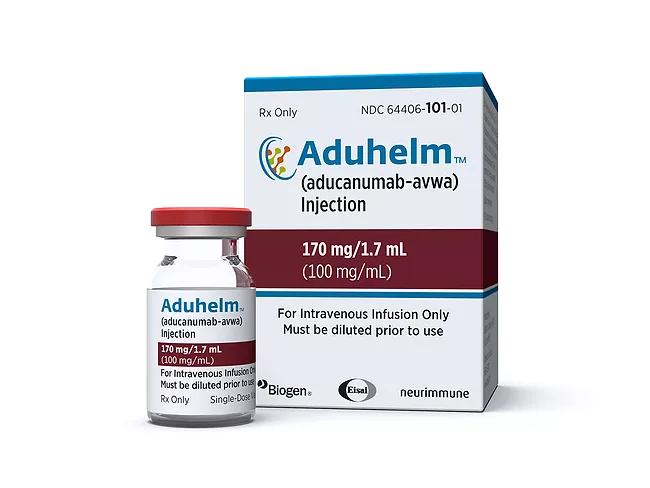
By granting accelerated approval for Biogen Inc.’s Aduhelm (aducanumab) for Alzheimer’s disease (AD), the FDA is “essentially confirming that the beta-amyloid hypothesis has been validated,” Mizuho analyst Salim Syed said in an alert to investors. Shares of Cambridge, Mass.-based Biogen (NASDAQ:BIIB) closed $395.85, up $109.71, or 38.3%, as Wall Street hailed the first new AD therapy to reach the market since 2003.
 RSS
RSS