In response to the COVID-19 pandemic, health systems around the world are looking to digital technologies to support health delivery but where exactly can these technologies have the most impact? At the Medtech Forum in Barcelona, European leaders gathered to discuss practical examples of how digital tools can help make health systems more efficient.
A proposal hammered out by the EU, India, South Africa and the U.S. to allow IP waivers for COVID-19 vaccines is headed to all members of the World Trade Organization (WTO) for consideration.
Making his first in-person appearance April 27 before the House Energy and Commerce Subcommittee on Health, U.S. Health and Human Services Secretary Xavier Becerra was prepared to answer questions about President Joe Biden’s fiscal 2023 budget that would increase HHS’ discretionary budget to $127 billion, nearly a 27% increase over the 2021 enacted level.
Regulatory snapshots, including global submissions and approvals, clinical trial approvals and other regulatory decisions and designations: Clarius Mobile Health.
Regulatory snapshots, including global submissions and approvals, clinical trial approvals and other regulatory decisions and designations: The Orthopaedic Implant Company, Zeiss.
The U.S. FDA’s device center reported April 18 that it has revoked the emergency use authorizations (EUAs) for five tests for the SARS-CoV-2 virus, a seemingly significant reduction in the inventory of tests for the COVID-19 pandemic. However, the sponsor of the test in each of these revocations requested that the EUA be revoked, an indication that the market for some types of these tests is saturated.
Regulatory snapshots, including global submissions and approvals, clinical trial approvals and other regulatory decisions and designations: Bendit Technologies, Cosara, Genetron, Ihealthscreen, Microgem, Smart Medical Systems.
The FDA has granted an emergency use authorization (EUA) to Inspect IR Systems LLC, of Frisco, Texas, for the company’s namesake test that evaluates the patient’s breath for the presence of volatile organic compounds (VOC) indicative of the SARS-CoV-2 virus. The test is expected to increase the volume of testing by only 64,000 per month at the current rate of production, however, making this a technological breakthrough of limited impact on the COVID-19 pandemic.
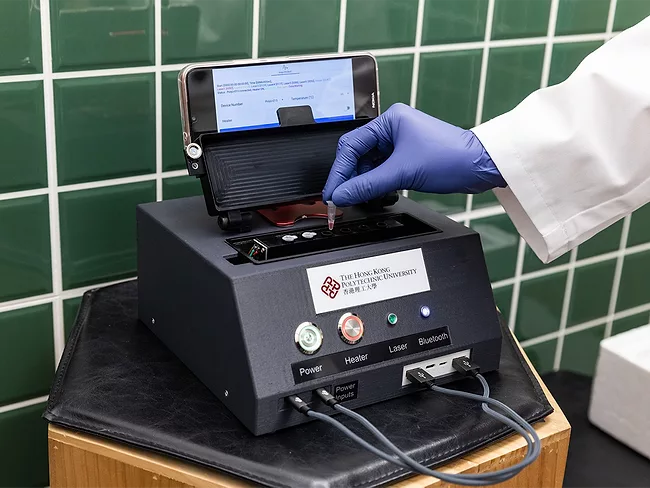
An interdisciplinary research team from the Hong Kong Polytechnic University has developed a portable testing device that can detect the COVID-19 virus within 40 minutes.
In its first report on device application processing times since it completed most of its medical device reforms, Australia’s Therapeutic Goods Administration (TGA) met all the legislated time frames for processing medical device applications during the six-month period from July 31 to December 2021.
 RSS
RSS