Regulatory snapshots, including global submissions and approvals, clinical trial approvals and other regulatory decisions and designations: Icad, Olympus, Robocath.
The pandemic exponentially amplified the move to more patient-driven health care with at-home monitoring, wearable medical devices and telemedicine. Testing has arguably seen the greatest shift, led by emergency use authorizations (EUA) for dozens of rapid tests for SARS-CoV-2. Laboratory Corp. of American Holdings Inc. (Labcorp) stands to benefit even more from the trend with an EUA for an over-the-counter multiplex respiratory virus test and the launch of an at-home collection kit for testing hemoglobin A1c (HbA1c) this week.
Regulatory snapshots, including global submissions and approvals, clinical trial approvals and other regulatory decisions and designations: Exactech, Jointmedica, Labcorp.
Among the policies the U.S. FDA’s device center leveraged for testing during the COVID-19 pandemic was the long-standing enforcement discretion lever, which drew less attention than the agency’s use of emergency use authorizations (EUAs). Nonetheless, the Government Accountability Office (GAO) urged the FDA to develop a formal policy for the use of enforcement discretion for pandemic-related tests, including some metrics for when that discretion would come to an end.
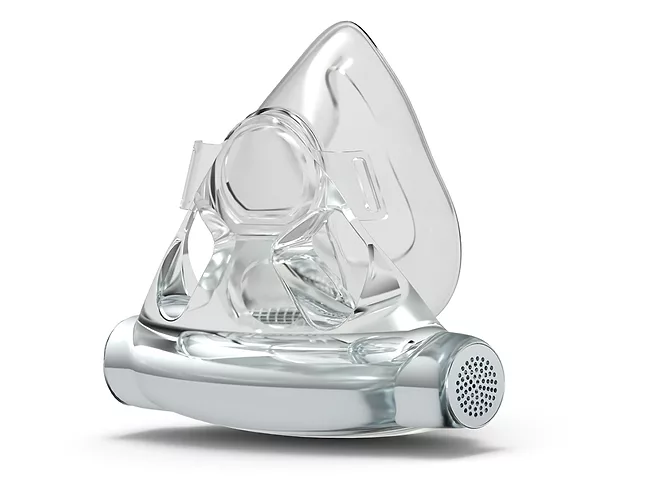
Henley Ion LLC has released data showing its filter-less respirator device can remove more than 99% of SARS-CoV-2 bioaerosols. The mask prototype developed by physician and surgeon Julian Henley, uses micronized electrostatic precipitation (mEP) to remove infectious aerosol particles from both inhaled and exhaled air. Results from the study have been published in the Viruses journal and confirm the device can provide equivalent protection from infectious bioaerosols as N95 respirators.
News that the U.S. Trade Representative (USTR) had signed off on a compromise World Trade Organization (WTO) proposal to waive IP rights for COVID-19 vaccines caught Congress by surprise earlier in early May. Now, some members, both Democrats and Republicans, are reminding USTR Katherine Tai that she has an obligation to consult with Congress on such trade issues.
In an effort to increase global access to COVID-19 technologies, the World Health Organization’s COVID-19 Technology Access Pool and the Medicines Patent Pool finalized a licensing agreement May 12 with the U.S. NIH for research tools, early stage vaccines and diagnostics.
Regulatory snapshots, including global submissions and approvals, clinical trial approvals and other regulatory decisions and designations: Accelus, Cepheid, Medmira, Remedee Labs, Wysa.
With its focus on transformative high-risk, high-reward research to drive biomedical breakthroughs, the new Advanced Research Projects Agency for Health (ARPA-H) may be a good concept, but it shouldn’t come at the expense of increased investment in basic research at the NIH, according to the bipartisan leadership of U.S. House appropriators.
The in vitro diagnostics industry has turned in an impressive response to the COVID-19 pandemic, but a few problems are bound to surface. The U.S. FDA reported May 10 that the Accula test by San Diego-based Mesa Biotech Inc. has been recalled due to contamination of test materials at the manufacturing site, a problem that could lead to false negative findings with the test.

 RSS
RSS