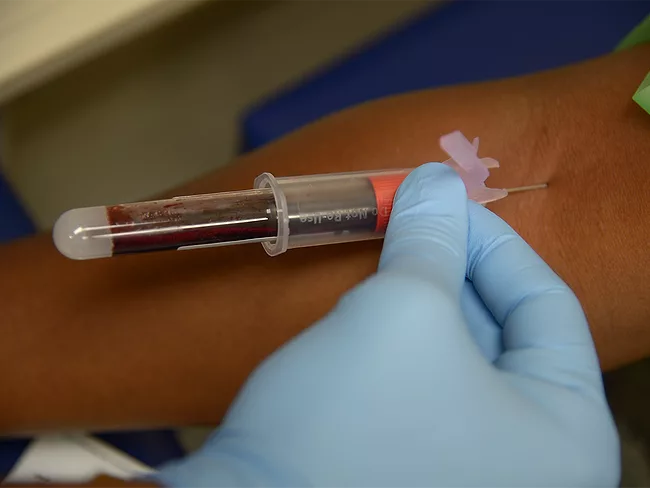
As doctors and public health officials brace for a possible fall coronavirus surge, one of the challenges continues to be predicting who will have a mild, moderate or severe case of COVID-19.
President Joseph Biden’s recent statement that the COVID-19 pandemic is over may or may not reflect popular fatigue with the associated public health emergency (PHE), but the statement struck a different tone in some quarters on Capitol Hill. Sen. Richard Burr (R-N.C.) was one of several who argued that the need for the PHE had thus necessarily run its course, with Burr specifically calling into question the need for additional funding for COVID-related federal health efforts.
The U.S. response to the emergence of the COVID-19 pandemic may by now be the stuff of public health policy lore, with both the FDA and the CDC contributing to the chaos in the first months of the pandemic. The Office of Inspector General has issued an analysis of the situation, and while OIG revisited some of the known miscues, the report also made the case that a national strategy for pandemic response will be needed if federal government efforts in the future are to be less a hazard to the lives of American citizens than those seen in the first half of 2020.
From the beginning of the monkeypox outbreak in the U.S. in May, the federal government has bungled the response, according to both Democratic and Republican members of the Senate Health, Education, Labor and Pensions (HELP) Committee.
Regulatory snapshots, including global submissions and approvals, clinical trial approvals and other regulatory decisions and designations: Diasorin, Tasso.
A team of researchers at Toyohashi University of Technology in Japan have come up with a semiconductor sensor that can detect minute traces of biomarkers for infections or diseases.
Regulatory snapshots, including global submissions and approvals, clinical trial approvals and other regulatory decisions and designations: Ecential Robotics, Genbody, Revelle, Viz.ai.
Med-tech happenings, including deals and partnerships, grants, preclinical data and other news in brief: Alnylam, Bio-Techne, Cerveau, Fluidx, Openeye, Pharmajet, Sense Biodetection, Tecomedical.
The COVID-19 pandemic encouraged a lot of things, including shoddy product quality, but a recent FDA warning letter suggests that the associated need for tests also encouraged a few operations that had less than a full commitment to quality management.
Cue Health Inc. rolled out a same-day, at-home, test-to-treatment program through its Cue Health app for any patient in the U.S. with a positive result from its COVID-19 test. The service includes a virtual, on-demand visit with a health care professional to discuss the test result; a prescription for medication to treat the virus, if appropriate; and home delivery of the medication, typically within hours of the visit. Medications may also be made available for pickup at a local pharmacy.
 RSS
RSS