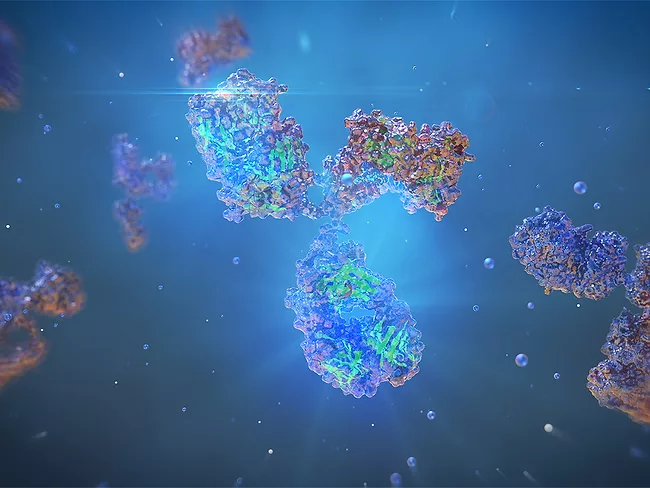
Vitiligo is caused by autoreactive CD8+ T cells that react against skin melanocytes, where IL-15 has been shown to activate these T cells. Innovent Biologics (Suzhou) Co. Ltd. recently presented data on their monoclonal antibody (mAb) – IBI-3013 – that targets IL-15. IBI-3013 was evaluated in vitro in immune cell expansion and CD8 T-cell activation assays, as well as in vivo in a skin inflammation model and in a graft-vs.-host disease (GVHD) model.
OGG1 is a key enzyme in the base excision repair pathway, responsible for removing oxidized bases from DNA. In idiopathic pulmonary fibrosis (IPF), emerging evidence suggests that OGG1 also contributes to profibrotic gene expression, indicating a role beyond DNA repair.
At the recent American Association for Cancer Research (AACR) Special Conference on Advances in Pancreatic Cancer Research, researchers from Cellectar Biosciences Inc. presented preclinical data on [225Ac]CLR-121225 (CLR-225), a novel actinium-based radio conjugate alpha-emitter for treatment in hypoxic pancreatic ductal adenocarcinoma.
Neuromyelitis optica spectrum disorder (NMOSD) is neuroinflammatory disease characterized by optic neuritis and myelitis with presence of anti-aquaporin-4 (AQP4) antibodies. Satralizumab is an anti-IL-6 receptor (IL-6R) humanized antibody approved for preventing relapses in NMOSD (AQP4 IgG positive) in adults and children in Japan.
Human rhinovirus (HRV) is the most frequent cause of upper respiratory infections and a key trigger of asthma exacerbations. No effective anti-HRV therapies exist, and vaccine efforts have been unsuccessful due to its extreme genetic and antigenic diversity, with over 160 known serotypes.
Ovarian cancer remains unresponsive to immune checkpoint inhibitors due to its ability to suppress cytotoxicity from immune cells that are infiltrating the tumor, where the O-glycosylation pathway may be disrupted. Precision Biologics Inc. is developing PB-vcMMAE-5, an antibody-drug conjugate composed of the monoclonal antibody PB-223, which targets tumor-specific truncated core-2 O-glycans, conjugated to microtubule inhibitor MMAE and with a drug-to-antibody ratio of 3.92.
Convelo Therapeutics Inc. has presented data on their 3-β-hydroxysteroid-Δ8,Δ7-isomerase (EBP) inhibitor CVL-1001 as a remyelinating compound for treating multiple sclerosis.
In pulmonary hypertension (PH), upregulated signaling by ActRIIA ligands, such as myostatin, activin A and GDF11, activates SMAD2/3 mediated pathways that drive pulmonary vascular remodeling and right ventricular dysfunction. Therapeutic blockade of these ligands using ligand traps such as sotatercept improves vascular remodeling and ameliorates PH pathology.
Interleukin-1 receptor-associated kinase 4 (IRAK-4) is a modulator of IL-1 receptor and Toll-like receptor (TLR) signaling and has emerged as a promising therapeutic target for several inflammatory diseases. Gilead Sciences Inc. and Nurix Therapeutics Inc. recently presented data generated in a preclinical murine model of AD with their IRAK-4 degrader GS-6791.
Chineses researchers investigated the relationship between formyl peptide receptor 1 (FPR1) expression and neurodegeneration in multiple sclerosis (MS), specifically evaluating the therapeutic potential of the FPR1 antagonist T-0080.
 RSS
RSS