In recent years, the introduction of immune checkpoint inhibitors to the oncolytic pipeline has been a significant breakthrough in cancer treatment, but unfortunately some tumors respond only minimally. Besides CTLA-4, and since the approval of PD-1/PD-L1 inhibitors, only the anti-LAG3 strategy (relatlimab, Bristol Myers Squibb Co.) has been good enough to reach the market. In a session dealing with emerging checkpoints beyond PD-1, CTLA-4 and LAG3, Drew Rasco from the START Center for Cancer Care depicted a new player on the ground of immunotherapeutic options.
M-43 is a recombinant analogue of fibroblast growth factor-1 (FGF-1) that has been previously shown to bind the insulin receptor (InsR), activate insulin-like cellular signaling and reduce insulin resistance. Researchers from Celon Pharma SP have recently presented results on the efficacy of the candidate as assessed in Zucker diabetic fatty (ZDF) rats.
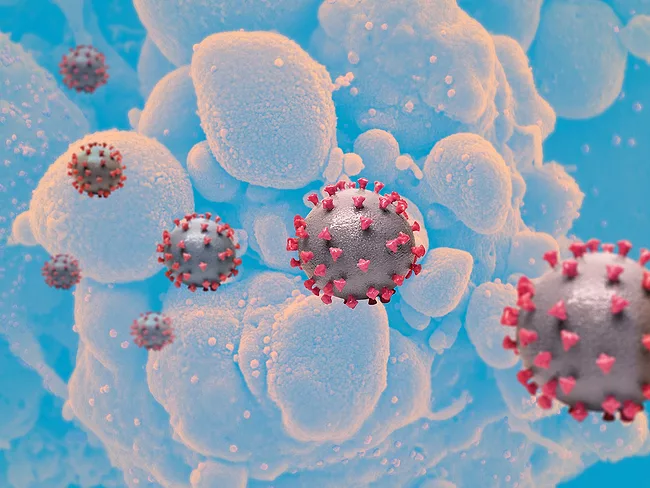
Due to the continual emergence of SARS-CoV-2 mutants, there is an unmet clinical need for broad-spectrum treatments for COVID-19. A potential target for novel treatments is the S2 subunit of the SARS-CoV-2 spike (S) protein, which has been highly conserved across the different variants of the virus.
At the AACR-NCI-EORTC meeting in Boston, Aurigene Oncology Ltd. reported their research on paralogue selective degraders of SMARCA2 (AU-SM2-1) and SMARCA4 (AU-SM4-1).
Cancer treatments for targeting tumor amplifications lag behind those targeting point mutations – and part of the reason may be that amplifications often reside on extrachromosomal DNA (ecDNA). Since ecDNA was first described back in 1965 as minute chromatin bodies in brain cancer cells, the use of large-scale DNA sequencing techniques has revealed the presence of ecDNA across a wide range of cancer types. “The circular structure of ecDNA is associated with increased proto-oncogenic capacity in comparison to linear amplifications. Another key feature is that ecDNA does not contain centromeres,” Roel Verhaak, from Yale School of Medicine, told the audience in a session at the 2023 AACR-NCI-EORTC Conference on Molecular Targets and Cancer Therapeutics in Boston.
At the ECNP meeting this week in Barcelona, researchers from Cerevance Inc. presented preclinical data for the selective orexin OX1 receptor (OX1R) antagonist CVN-766, following evaluation in models of schizophrenia. The potency and selectivity of CVN-766 were assessed in recombinant cells overexpressing either human or mouse OXR1 or OXR2.
In a study published in Nature on Oct. 11, coinciding with the beginning of IDWeek 2023 in Boston, researchers from Harvard Medical School described EVEscape, a method for anticipating the movements of SARS‑CoV‑2 by predicting potential mutations likely to escape current vaccines and treatments.
A team from Atrogi AB has reported the activity of ATR-127, a novel dual adrenergic agonist targeting β2- and β3-adrenoceptors (ARs), for the potential treatment of steatohepatitis, obesity and diabetes.
Researchers from Yuhan Corp. presented the discovery and preclinical evaluation of a novel long-acting dual agonist of the glucagon like peptide-1 (GLP-1) and growth differentiation factor 15 (GDF-15), YH-40863.
 RSS
RSS