Melanoma is one of the most mutation-prone cancers, with 90% of cases involving the V600E mutation in BRAF kinase. Several therapies are available against melanoma, but each one is associated with substantial drawbacks. Researchers at Shanghai Institute of Materia Medica of the Chinese Academy of Sciences and collaborators reasoned that it might be effective to simultaneously inhibit both angiogenesis and immunosuppression in the tumor microenvironment.
Seed Therapeutics Inc. has gained IND clearance from the U.S. FDA for ST-01156, a brain-penetrant RBM39 degrader. The clearance enables initiation of a first-in-human phase I trial in patients with advanced solid tumors and hematological malignancies, prioritizing biomarker-selected RBM39-dependent cancers. Dosing is expected to begin in the first quarter of next year.
Telomir Pharmaceuticals Inc. has released new in vitro data revealing that Telomir-1 potently inhibits three key histone demethylase enzymes – JMJD3, FBXL10 and FBXL11 – that regulate gene expression through epigenetic mechanisms.
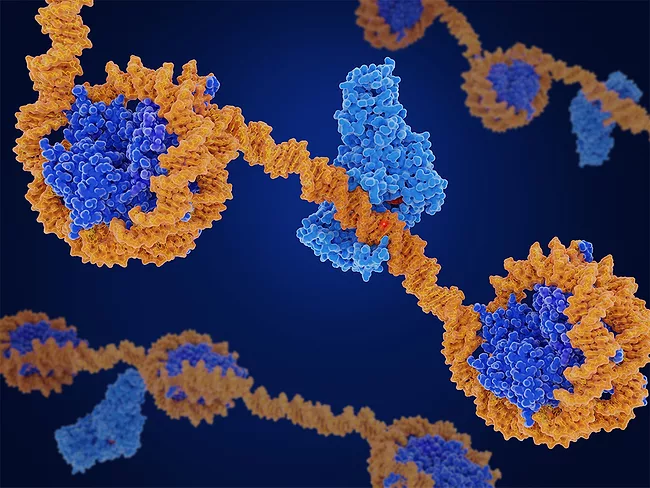
Experimental drugs that directly inhibit the NSD2 enzyme have shown potential as an effective strategy against hard-to-treat cancers, such as lung and pancreatic tumors driven by KRAS mutations. The therapeutic mechanism involves reversing a histone H3 methylation that promotes open chromatin and the expression of oncogenes.
Quantumpharm Inc., known as Xtalpi Inc., announced receiving $51 million up front from a potential $5.99 billion deal with Dovetree LLC on Aug. 6. The collaboration, first inked through a letter of intent between the two parties on June 23, will combine Shenzhen, China-based Xtalpi’s AI-based and robotics-driven discovery platform with Dovetree’s “biological insights.” The goal will be to select and validate potential first-in-class candidates for Dovetree across five areas of oncology, immunology and inflammatory diseases, neurological disorders and metabolic dysregulation.
Foshan Ionova Biotherapeutics Co. Ltd. has described proteolysis targeting chimeras (PROTACs) comprising an E3 ubiquitin-protein ligase binding moiety covalently linked to an androgen receptor variant 7 (AR-v7) targeting moiety acting as AR-v7 degradation inducers reported to be useful for the treatment of prostate cancer.
Haisco Pharmaceutical Group Co. Ltd. has disclosed fibroblast growth factor receptor 2 (FGFR2) inhibitors reported to be useful for the treatment of cancer.
K36 Therapeutics Inc. has obtained IND clearance from the U.S. FDA for KTX-2001, a selective, oral, small-molecule inhibitor of nuclear receptor-binding SET domain protein 2 (NSD2), a histone methyltransferase and oncogene that activates gene expression in some cancers.
Proteinqure Inc. has received regulatory clearances from the U.FDA and Health Canada to initiate a phase I trial of lead candidate, PQ-203. The trial will begin in Canada and expand to U.S. sites later in 2025. The FDA also granted PQ-203 fast track designation for triple-negative breast cancer (TNBC).
Shanghai Fosun Pharmaceutical Industry Development Co. Ltd. has identified drug-conjugates comprising a radionuclide-labeled molecular probe linked to ligand targeting fibroblast activation protein α (FAP) through a linker reported to be useful for the treatment and diagnosis of cancer.
 RSS
RSS